Student interviews show demand for individual support, hands‑on learning, and emotional supports
May 12, 2026 | WINCHESTER CITY PBLC SCHS, School Districts, Virginia
This article was created by AI summarizing key points discussed. AI makes mistakes, so for full details and context, please refer to the video of the full meeting. Please report any errors so we can fix them. Report an error »
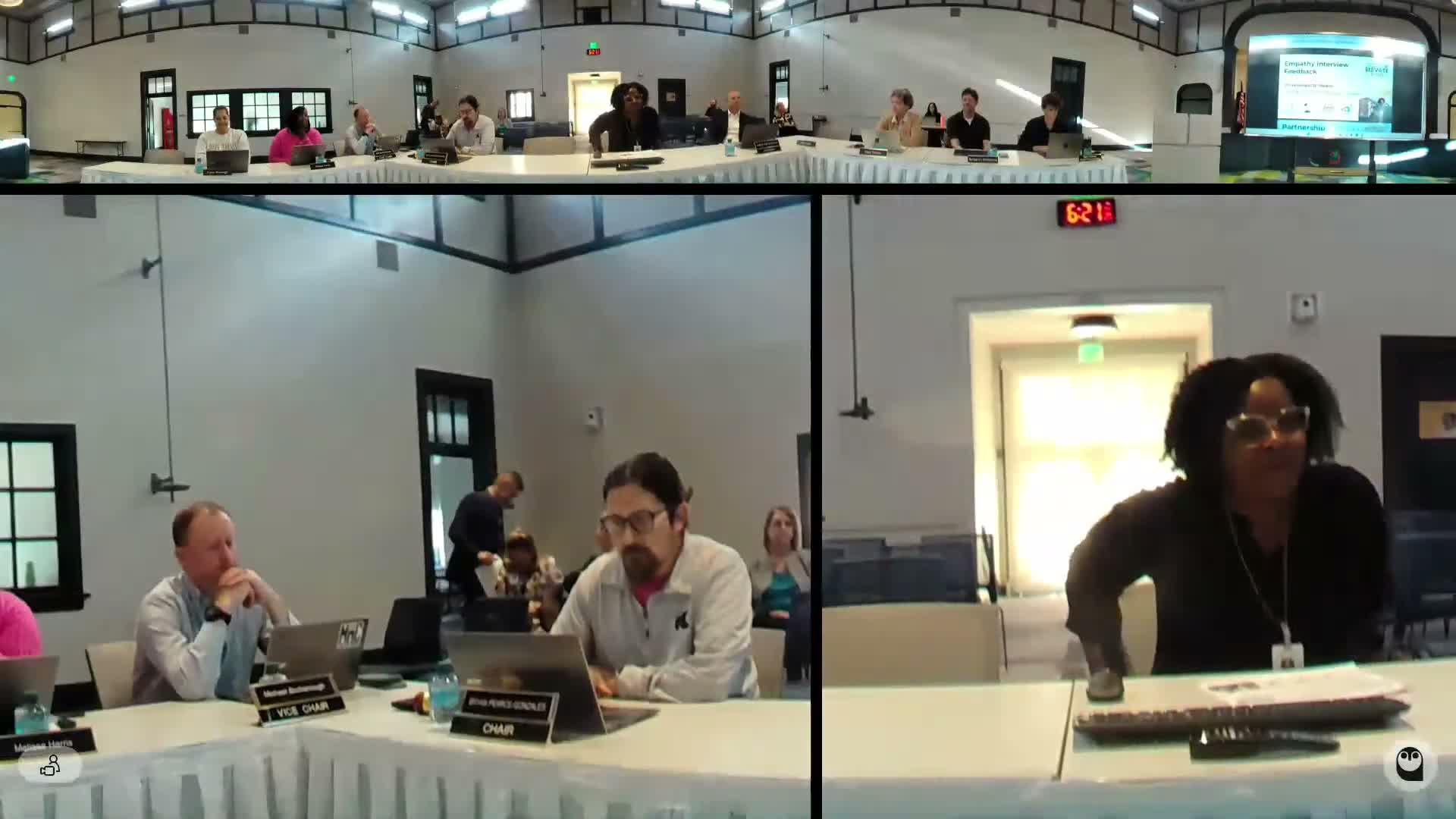
Dr. Walker summarized findings from a partnership with the Human Restoration Project that used peer‑to‑peer empathy interviews at three school sites.
The process included training student interviewers, conducting approximately 58 recorded conversations (each with one interviewer and a group of 3–6 students), and a student sense‑making session; staff reported that 217 students’ voices were captured across the three buildings. Dr. Walker said the analysis produced 10 themes; the top three were a need for individual support and personal attention (32 students cited this), a desire for hands‑on interactive learning, and interest in career‑focused, real‑world applications.
Dr. Walker read representative student comments and recommended three key actions: integrate movement and short brain breaks, expand project‑based learning to limit lecture, and increase flexible emotional supports by training additional staff for basic supports. Board members who spoke connected the recommendations to teacher workload and curriculum pacing; several members said they want to find ways to create time and space for more hands‑on activities while recognizing the constraints of pacing guides.
Next steps listed by staff include deeper team analysis of the interview data, sharing outcomes with school staff, and developing recommendations for implementation or expansion in the 2026–27 school year.
"The point is to amplify student voice," Dr. Walker said, adding the goal is to convert neutral responses into clearer positive outcomes by addressing identified challenges.
The process included training student interviewers, conducting approximately 58 recorded conversations (each with one interviewer and a group of 3–6 students), and a student sense‑making session; staff reported that 217 students’ voices were captured across the three buildings. Dr. Walker said the analysis produced 10 themes; the top three were a need for individual support and personal attention (32 students cited this), a desire for hands‑on interactive learning, and interest in career‑focused, real‑world applications.
Dr. Walker read representative student comments and recommended three key actions: integrate movement and short brain breaks, expand project‑based learning to limit lecture, and increase flexible emotional supports by training additional staff for basic supports. Board members who spoke connected the recommendations to teacher workload and curriculum pacing; several members said they want to find ways to create time and space for more hands‑on activities while recognizing the constraints of pacing guides.
Next steps listed by staff include deeper team analysis of the interview data, sharing outcomes with school staff, and developing recommendations for implementation or expansion in the 2026–27 school year.
"The point is to amplify student voice," Dr. Walker said, adding the goal is to convert neutral responses into clearer positive outcomes by addressing identified challenges.
Don't Miss a Word: See the Full Meeting!
Go beyond summaries. Unlock every video, transcript, and key insight with a Founder Membership.
✓
Get instant access to full meeting videos
✓
Search and clip any phrase from complete transcripts
✓
Receive AI-powered summaries & custom alerts
✓
Enjoy lifetime, unrestricted access to government data
30-day money-back guarantee
