Residents press county on 'paper' water, data-center impacts during review of water plan
May 12, 2026 | Grand County Commission, Grand County Boards and Commissions, Grand County, Utah
This article was created by AI summarizing key points discussed. AI makes mistakes, so for full details and context, please refer to the video of the full meeting. Please report any errors so we can fix them. Report an error »
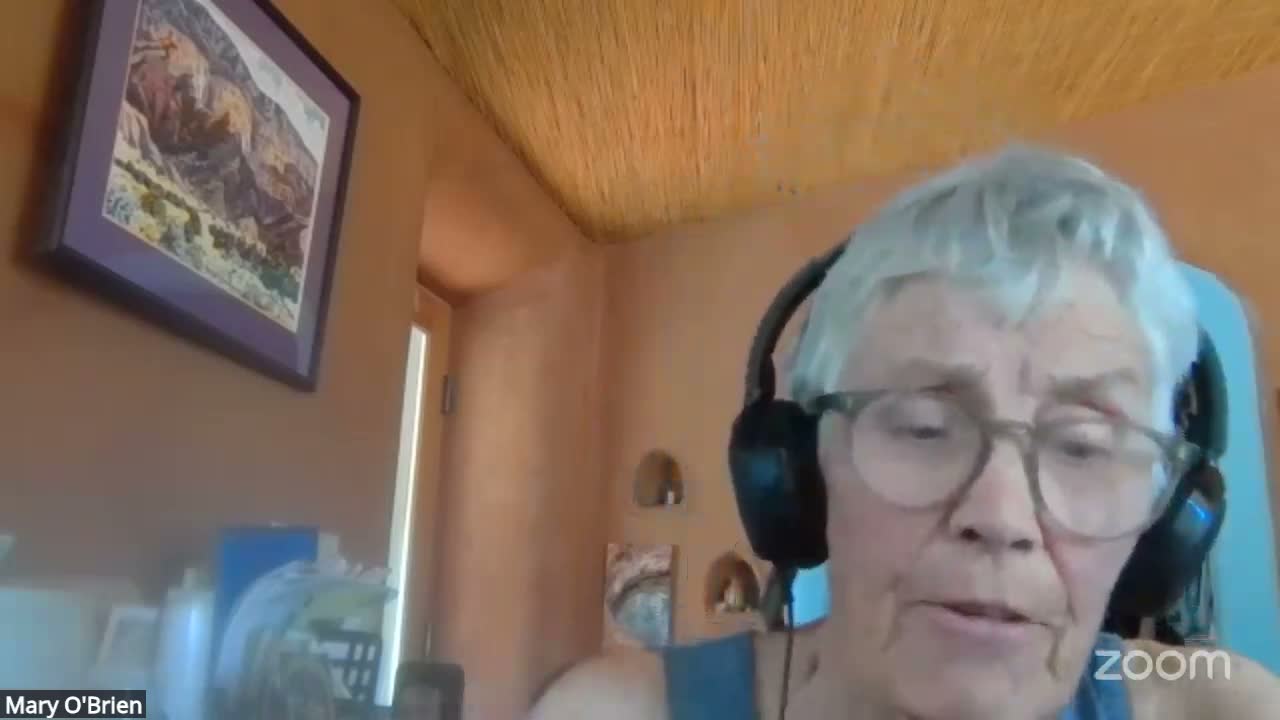
At the start of the meeting, public commenters pressed the commission to more clearly distinguish between legal water rights on paper and actual available water.
Mary O'Brien told commissioners that the draft's language implied an unchanged "water supply" through 2060 and asked, "What kind of water availability? Paper water or wet water?" She cited recent declines in regional water bodies and springs to question projections contained in provider documents referenced by the draft.
Another resident, Pete Grosz, said relying on Colorado River yield for new development is risky because the river is overallocated and the infrastructure costs for pumping and storage are nontrivial. Allison Mathis, a homeowner, said the draft should account for climate-change impacts on snowpack and aquifer recharge: "Any planning ... without taking into account reality, which is climate change, ... is kind of by definition not planning."
Commissioners acknowledged those concerns but reiterated that the county's water preservation element is intended to guide land-use decisions and is not a substitute for water-provider conservation or supply planning. Commissioners asked staff to remove or clearly cite supply-related statements and to focus the county document on demand-side measures the county can influence, such as landscaping standards, secondary-water hookup policies and infrastructure maintenance.
Separately, commissioners discussed the possible local impacts of data centers. A commissioner noted that some data-center proposals elsewhere had raised concerns about water and power demand and urged staff to research model code approaches, including conditional-use conditions, closed-loop water systems and energy offset requirements. The commission asked staff to compile examples from other counties and to coordinate those findings with ongoing code updates.
No regulatory action on data centers or water rights was taken at the meeting; commissioners directed staff to research and return with options for future consideration.
Mary O'Brien told commissioners that the draft's language implied an unchanged "water supply" through 2060 and asked, "What kind of water availability? Paper water or wet water?" She cited recent declines in regional water bodies and springs to question projections contained in provider documents referenced by the draft.
Another resident, Pete Grosz, said relying on Colorado River yield for new development is risky because the river is overallocated and the infrastructure costs for pumping and storage are nontrivial. Allison Mathis, a homeowner, said the draft should account for climate-change impacts on snowpack and aquifer recharge: "Any planning ... without taking into account reality, which is climate change, ... is kind of by definition not planning."
Commissioners acknowledged those concerns but reiterated that the county's water preservation element is intended to guide land-use decisions and is not a substitute for water-provider conservation or supply planning. Commissioners asked staff to remove or clearly cite supply-related statements and to focus the county document on demand-side measures the county can influence, such as landscaping standards, secondary-water hookup policies and infrastructure maintenance.
Separately, commissioners discussed the possible local impacts of data centers. A commissioner noted that some data-center proposals elsewhere had raised concerns about water and power demand and urged staff to research model code approaches, including conditional-use conditions, closed-loop water systems and energy offset requirements. The commission asked staff to compile examples from other counties and to coordinate those findings with ongoing code updates.
No regulatory action on data centers or water rights was taken at the meeting; commissioners directed staff to research and return with options for future consideration.
Don't Miss a Word: See the Full Meeting!
Go beyond summaries. Unlock every video, transcript, and key insight with a Founder Membership.
✓
Get instant access to full meeting videos
✓
Search and clip any phrase from complete transcripts
✓
Receive AI-powered summaries & custom alerts
✓
Enjoy lifetime, unrestricted access to government data
30-day money-back guarantee
