ETC Institute: Homewood rates extremely high on quality of life, streets and stormwater flagged as priorities
May 12, 2026 | Homewood City, Jefferson County, Alabama
This article was created by AI summarizing key points discussed. AI makes mistakes, so for full details and context, please refer to the video of the full meeting. Please report any errors so we can fix them. Report an error »
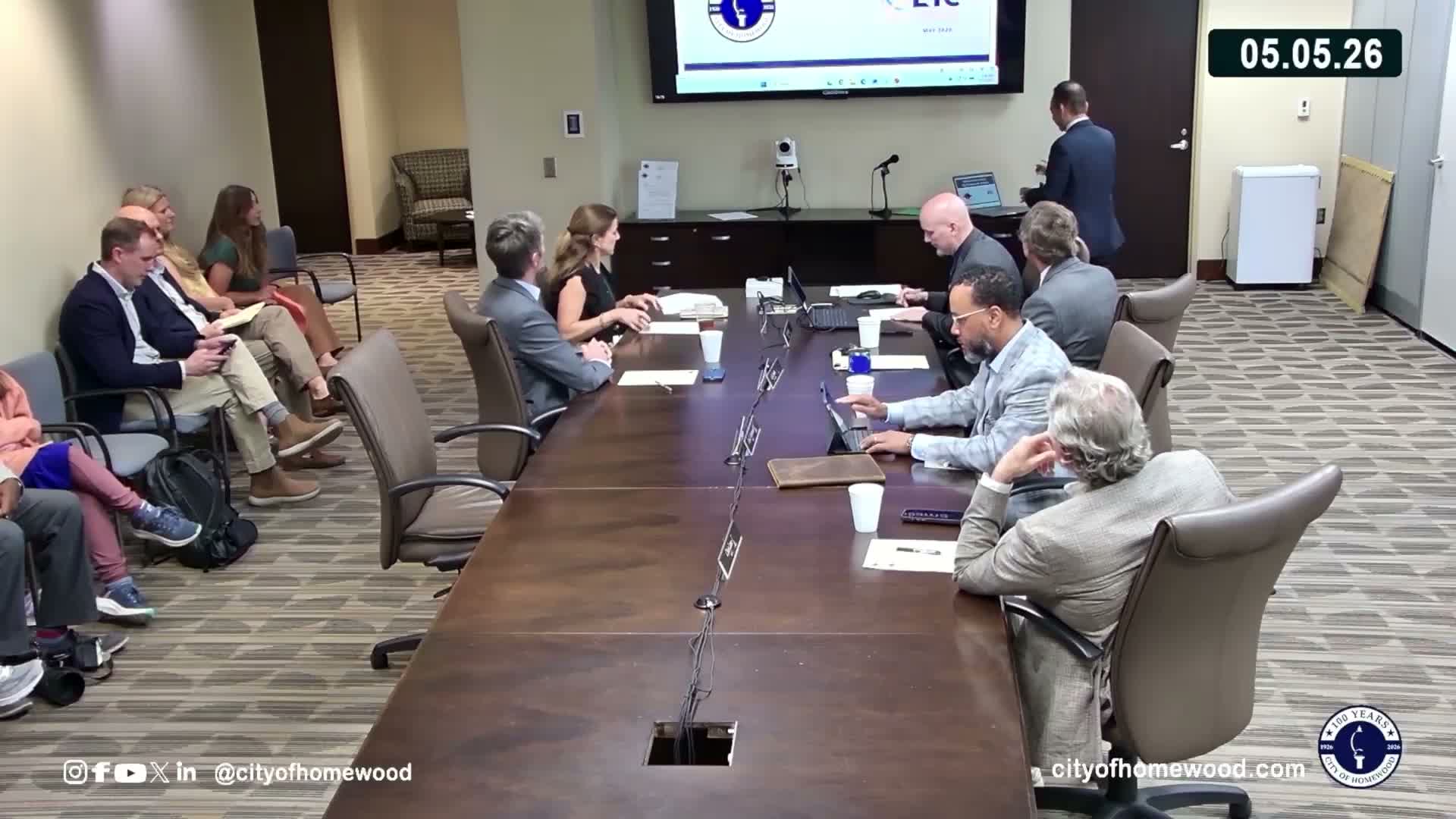
Jason Morado, vice president and director of community research at ETC Institute, presented results of Homewood’s first community survey, reporting 460 completed responses and a margin of error of ±4.5 percentage points at the 95% confidence level. Morado said the survey was administered by mail and online and that respondents were balanced by age, household income and geography to reflect Homewood’s population.
The survey showed exceptionally positive perceptions: 99% of respondents rated Homewood as an excellent or good place to live, and 98% rated it an excellent or good place to raise children. Morado said Homewood rated above the U.S. average in 47 of 49 comparison areas and more than 40 percentage points higher than national averages on some service-quality measures.
City services that scored highest included the school system, parks and recreation, public safety services and library facilities, where more than 90% of respondents reported being satisfied or very satisfied. Areas with lower relative satisfaction included traffic flow and congestion and stormwater management; Morado noted those two areas had the most room for improvement in residents’ responses.
A council member asked about parking downtown, which Morado said was included in the full report: availability of parking downtown registered lower satisfaction (Morado reported roughly 31% satisfied, about 20% neutral and 49% dissatisfied on the downtown parking question). Morado also showed maps by census block group that, he said, demonstrate broad, citywide satisfaction rather than isolated pockets of dissatisfaction.
Morado said the full report and accompanying maps — including per-question maps and GIS shapefiles — will be posted online the next morning. He suggested the city could repeat the survey every two to three years to track trends. The presentation concluded with staff and council clarifying that more granular cross-tabulations (for example, comparing only cities of a similar population) can be produced but will reduce sample sizes for direct comparison.
The survey showed exceptionally positive perceptions: 99% of respondents rated Homewood as an excellent or good place to live, and 98% rated it an excellent or good place to raise children. Morado said Homewood rated above the U.S. average in 47 of 49 comparison areas and more than 40 percentage points higher than national averages on some service-quality measures.
City services that scored highest included the school system, parks and recreation, public safety services and library facilities, where more than 90% of respondents reported being satisfied or very satisfied. Areas with lower relative satisfaction included traffic flow and congestion and stormwater management; Morado noted those two areas had the most room for improvement in residents’ responses.
A council member asked about parking downtown, which Morado said was included in the full report: availability of parking downtown registered lower satisfaction (Morado reported roughly 31% satisfied, about 20% neutral and 49% dissatisfied on the downtown parking question). Morado also showed maps by census block group that, he said, demonstrate broad, citywide satisfaction rather than isolated pockets of dissatisfaction.
Morado said the full report and accompanying maps — including per-question maps and GIS shapefiles — will be posted online the next morning. He suggested the city could repeat the survey every two to three years to track trends. The presentation concluded with staff and council clarifying that more granular cross-tabulations (for example, comparing only cities of a similar population) can be produced but will reduce sample sizes for direct comparison.
View the Full Meeting & All Its Details
This article offers just a summary. Unlock complete video, transcripts, and insights as a Founder Member.
✓
Watch full, unedited meeting videos
✓
Search every word spoken in unlimited transcripts
✓
AI summaries & real-time alerts (all government levels)
✓
Permanent access to expanding government content
30-day money-back guarantee
