District briefing details ESSA accountability changes and how school grades could shift
May 12, 2026 | Chapel Hill-Carrboro City Schools, School Districts, North Carolina
This article was created by AI summarizing key points discussed. AI makes mistakes, so for full details and context, please refer to the video of the full meeting. Please report any errors so we can fix them. Report an error »
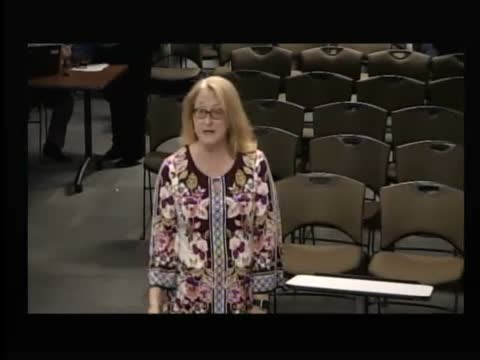
District staff gave a detailed briefing on state ESSA (Every Student Succeeds Act) accountability changes and what they will mean for local school performance grades, subgroup reporting and long‑term targets.
The presenter (speaker 7) said targets will now be set for each school based on that school’s baseline performance and warned schools will have to meet year‑to‑year stretch goals. “Targets are now based on each individual school's performance,” the presenter said, explaining the shift from a single state baseline to school‑specific interim targets.
Key changes the presenter outlined:
- School‑by‑school long‑term goals and interim targets for each subgroup with at least 30 students; subgroup grades will be calculated and published.
- Weighting of school performance grades: roughly 80% proficiency (levels 3–5) and 20% growth in the composite calculation.
- A new English‑learner progress metric that measures meeting individualized yearly progress based on access scores and a multi‑year exit timeline.
- Grading‑scale changes that increase the chance of lower letter grades: the presenter said the F cutoff has moved to 60 (from a previous lower threshold), a shift that could make previously higher‑graded schools appear to decline on paper.
The presenter stressed complexities and potential communication challenges: because the state changed both metrics and the grading scale, some schools could earn lower letter grades even with improved student outcomes. “The F cutoff is 60,” the presenter said, noting that a 59 would be an F under the new scale.
Board members and attendees asked technical questions about subgroup sizing, aggregation and how three‑year rolling data will be used where subgroup counts are small. The presenter said the district expects available data this summer and will prepare layered communications for principals, PTAs and families to explain grade changes and the underlying metrics.
The briefing closed with a reminder that schools deemed underperforming for the same subgroup across multiple years could enter targeted support (TSI) status and that the district would need to align school improvement plans and administrator evaluations to the new ESSA targets.
The presenter (speaker 7) said targets will now be set for each school based on that school’s baseline performance and warned schools will have to meet year‑to‑year stretch goals. “Targets are now based on each individual school's performance,” the presenter said, explaining the shift from a single state baseline to school‑specific interim targets.
Key changes the presenter outlined:
- School‑by‑school long‑term goals and interim targets for each subgroup with at least 30 students; subgroup grades will be calculated and published.
- Weighting of school performance grades: roughly 80% proficiency (levels 3–5) and 20% growth in the composite calculation.
- A new English‑learner progress metric that measures meeting individualized yearly progress based on access scores and a multi‑year exit timeline.
- Grading‑scale changes that increase the chance of lower letter grades: the presenter said the F cutoff has moved to 60 (from a previous lower threshold), a shift that could make previously higher‑graded schools appear to decline on paper.
The presenter stressed complexities and potential communication challenges: because the state changed both metrics and the grading scale, some schools could earn lower letter grades even with improved student outcomes. “The F cutoff is 60,” the presenter said, noting that a 59 would be an F under the new scale.
Board members and attendees asked technical questions about subgroup sizing, aggregation and how three‑year rolling data will be used where subgroup counts are small. The presenter said the district expects available data this summer and will prepare layered communications for principals, PTAs and families to explain grade changes and the underlying metrics.
The briefing closed with a reminder that schools deemed underperforming for the same subgroup across multiple years could enter targeted support (TSI) status and that the district would need to align school improvement plans and administrator evaluations to the new ESSA targets.
View the Full Meeting & All Its Details
This article offers just a summary. Unlock complete video, transcripts, and insights as a Founder Member.
✓
Watch full, unedited meeting videos
✓
Search every word spoken in unlimited transcripts
✓
AI summaries & real-time alerts (all government levels)
✓
Permanent access to expanding government content
30-day money-back guarantee
