Ulster County panel approves expansion of countywide emergency radio system, asks for follow-up cost details
May 12, 2026 | Ulster County, New York
This article was created by AI summarizing key points discussed. AI makes mistakes, so for full details and context, please refer to the video of the full meeting. Please report any errors so we can fix them. Report an error »
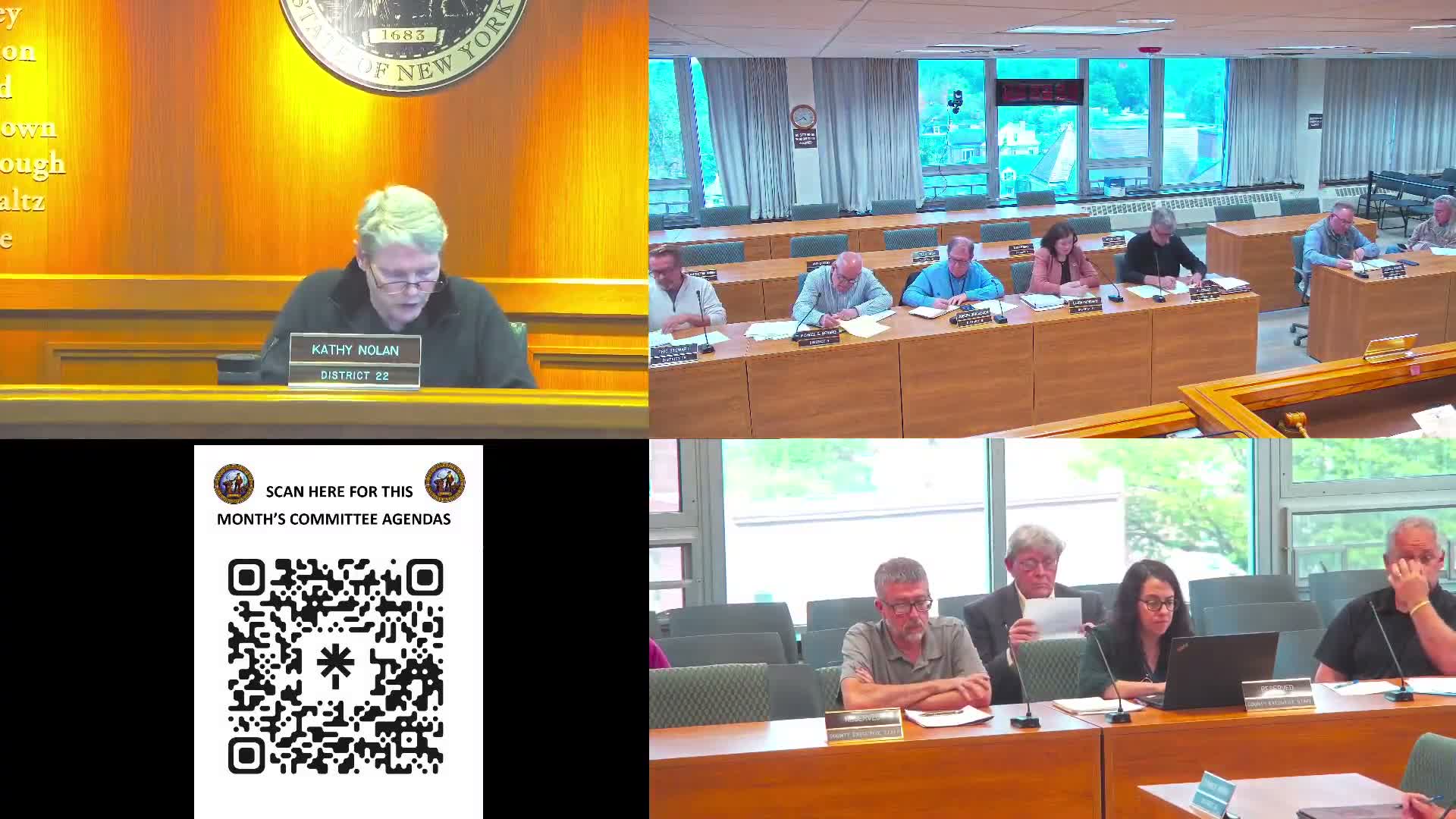
The Ulster County Public Works and Design Projects Committee voted unanimously May 11 to approve an amendment to capital project No. 482 for the countywide emergency radio system, while asking administration staff to provide a clearer history and current cost breakdown.
The measure, presented as Resolution 236, amends the 2026 capital fund budget in light of increased state aid and authorizes design work for multiple tower sites across the county. Planning Director Doyle said the county is considering additions and expansions at Sam’s Point, Pine Hill, Phoenicia, Marlborough and Manchester, and that the design and construction-inspection work across those sites is “about $700,000.”
Why it matters: the radio expansion aims to improve hand-held radio coverage for first responders across Ulster County. Committee members pressed for context on why the project’s price tag has grown, how many facilities are new versus colocations, and what the county should expect in future construction costs.
Doyle told the committee the plan is not 16 brand-new towers. “Some constructing. Some of these are colocated towers, so we’ll be actually renting space on private facilities,” Doyle said, and described the Sam’s Point change as “literally adding, I believe, 15 or 20 feet to that tower” to accommodate additional antennas. On the overall program, Deputy Executive Don Quisnell said the project first entered the capital program in 2015–2016 at roughly $19.8 million and that the current capital program reflects a roughly $36–$37 million price tag, with about $33 million already established through legislative appropriations.
Several legislators asked for more detail. “It just seems like this is an extremely large amount of numbers and zeros that we’re dealing with,” Legislator Stewart said, urging the administration to explain the initial estimates, what has changed and how much more the county can expect to spend. Chair Nolan and others agreed the committee should receive a presentation showing the project’s history from 2016 to the present before the next legislative steps.
The committee approved the resolution after the discussion, with Chair Nolan saying staff would “get some information that will fill this in.” Director Doyle recommended a fuller report to the committee in June that would accompany the contracting documents and map the proposed tower locations.
What’s next: staff will provide the committee with the project history, a breakdown of the recent design-cost request and any cost estimates produced by the vendor or engineers. The resolution authorizes the next phase of design work; construction costs for individual sites were not available at the meeting.
The measure, presented as Resolution 236, amends the 2026 capital fund budget in light of increased state aid and authorizes design work for multiple tower sites across the county. Planning Director Doyle said the county is considering additions and expansions at Sam’s Point, Pine Hill, Phoenicia, Marlborough and Manchester, and that the design and construction-inspection work across those sites is “about $700,000.”
Why it matters: the radio expansion aims to improve hand-held radio coverage for first responders across Ulster County. Committee members pressed for context on why the project’s price tag has grown, how many facilities are new versus colocations, and what the county should expect in future construction costs.
Doyle told the committee the plan is not 16 brand-new towers. “Some constructing. Some of these are colocated towers, so we’ll be actually renting space on private facilities,” Doyle said, and described the Sam’s Point change as “literally adding, I believe, 15 or 20 feet to that tower” to accommodate additional antennas. On the overall program, Deputy Executive Don Quisnell said the project first entered the capital program in 2015–2016 at roughly $19.8 million and that the current capital program reflects a roughly $36–$37 million price tag, with about $33 million already established through legislative appropriations.
Several legislators asked for more detail. “It just seems like this is an extremely large amount of numbers and zeros that we’re dealing with,” Legislator Stewart said, urging the administration to explain the initial estimates, what has changed and how much more the county can expect to spend. Chair Nolan and others agreed the committee should receive a presentation showing the project’s history from 2016 to the present before the next legislative steps.
The committee approved the resolution after the discussion, with Chair Nolan saying staff would “get some information that will fill this in.” Director Doyle recommended a fuller report to the committee in June that would accompany the contracting documents and map the proposed tower locations.
What’s next: staff will provide the committee with the project history, a breakdown of the recent design-cost request and any cost estimates produced by the vendor or engineers. The resolution authorizes the next phase of design work; construction costs for individual sites were not available at the meeting.
View the Full Meeting & All Its Details
This article offers just a summary. Unlock complete video, transcripts, and insights as a Founder Member.
✓
Watch full, unedited meeting videos
✓
Search every word spoken in unlimited transcripts
✓
AI summaries & real-time alerts (all government levels)
✓
Permanent access to expanding government content
30-day money-back guarantee
