Appropriations subcommittee hears wide slate of local LDSI requests for infrastructure, public safety, health and training
May 11, 2026 | 2025-2026 House Legislature MI, Michigan
This article was created by AI summarizing key points discussed. AI makes mistakes, so for full details and context, please refer to the video of the full meeting. Please report any errors so we can fix them. Report an error »
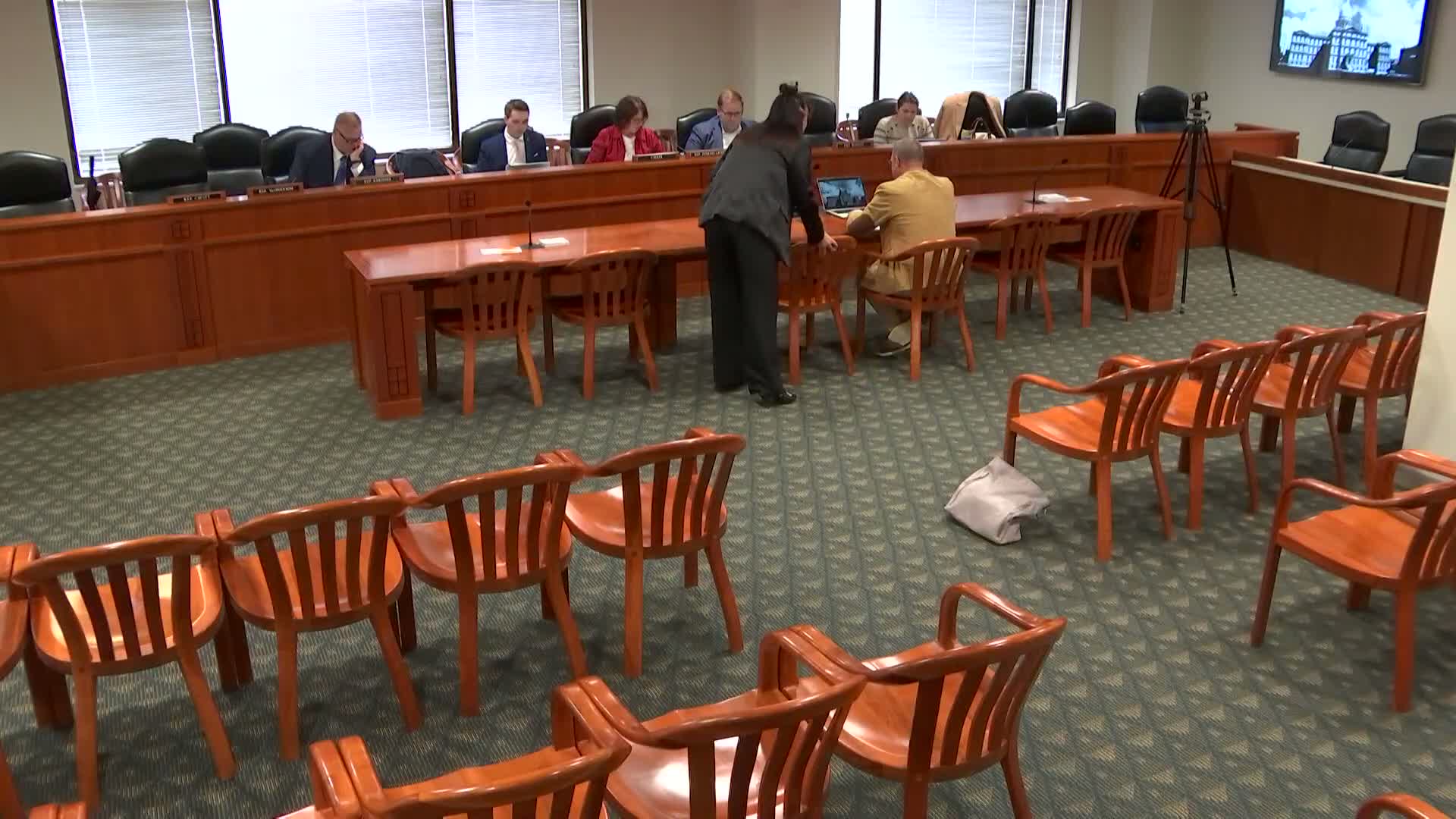
The Michigan House Appropriations Subcommittee on Labor and Economic Opportunity, chaired by Jenkins Arnaud, spent its Monday hearing listening to a long list of local and nonprofit requests for one‑time legislative directed spending. Presenters asked for funding to build or upgrade community facilities, shore up public‑safety infrastructure, expand health services and workforce training, and sustain victim‑oriented social services.
The session opened with a $1,000,000 request for a regulation‑size community ice arena in Bad Axe from the Huron County Hockey Association. Laura Maville, the association’s volunteer grant administrator, said the project is phased and that “we were able to come up with the first $900,000 out of pocket” and now seek state partnership to complete infrastructure for phase two. Maville told the panel the land has been transferred to the association and that utilities will be their responsibility.
Other requests included a $500,000 ask to complete a four‑season pavilion and year‑round farmers market space in Port Austin; Port Austin clerk Amanda Niinotowski said MEDC awarded $2.5 million toward a $4.7 million project and the village would cover remaining costs locally.
Several public‑safety requests followed. Rep. Alexander presented a $3,857,000 proposal for a new Harbor Beach fire station to move apparatus away from nearby chemical facilities; proponents said the new facility would also serve as a hardened shelter during severe weather. Inkster Fire Chief Jason Kaye asked for $1.2 million toward a $7 million replacement fire station, citing 5,500 annual calls and aging facilities. Meridian Township requested $1 million to add seven private dorm rooms at a central fire station to improve sleep and privacy for 24‑hour crews; the chief said call volume has risen roughly 57% since 2015.
Highland Park’s criminal‑justice center renovation and Solidarity’s solar street‑lighting project were both presented by Rep. Myers Phillips. Mayor Glenda McDonald and Chief James McMahon described work to move temporary trailer holding cells inside an existing building and said about $500,000 would complete those interior renovations. Solidarity executive director Shameka Nichols said the nonprofit has installed about 27 solar lights, is under contract for more, and would add 50 additional solar‑powered street lights with state support.
The panel also heard several health and human‑services requests: a $1.7 million ask to add radiation‑therapy capacity at OSF Saint Francis Hospital in Escanaba that proponents said would close a critical gap for the Upper Peninsula; a $1.7 million request to finish Corktown Health’s Hazel Park clinic to expand primary care, dental and behavioral services; and a $1,000,000 stabilization request for First Step, the Wayne County victim‑services provider, to offset federal funding shortfalls. Adrianna Buchanan Kronk of First Step said the agency reduced positions from 53 to 45 and still turns away roughly 200 families monthly because demand exceeds capacity.
Workforce and community projects included a request to renovate Griff’s Ice House in Grand Rapids to maintain the Grand Rapids Griffins’ AHL practice facility (a $3 million ask); a $2 million request to complete a Grand Rapids Public Museum expansion focused on school programming; and a $4.2 million request to build a Schoolcraft College/Bricklayers Local 2 training center that would deliver apprenticeship training plus college credit.
Advocates and presenters were routinely asked by subcommittee members about project timelines, matching funds, operational and maintenance responsibilities, and sustainability plans if state funds were not approved. For example, Port Austin officials said the pavilion is primarily funded by MEDC and local funds and hoped to be substantially complete in June–July; Kent County officials said RTIC camera purchases (a $1 million request) would require recipients to assume ongoing maintenance costs.
At the end of the hearing the subcommittee approved the minutes from its April 21 meeting on a voice vote and excused absent members without objection. The hearing concluded with the committee adjourning.
What’s next: presenters asked members to consider their requests as part of the larger budget and appropriations process; several said they were pursuing federal and private matches and would return with additional details if the subcommittee seeks follow‑up information.
The session opened with a $1,000,000 request for a regulation‑size community ice arena in Bad Axe from the Huron County Hockey Association. Laura Maville, the association’s volunteer grant administrator, said the project is phased and that “we were able to come up with the first $900,000 out of pocket” and now seek state partnership to complete infrastructure for phase two. Maville told the panel the land has been transferred to the association and that utilities will be their responsibility.
Other requests included a $500,000 ask to complete a four‑season pavilion and year‑round farmers market space in Port Austin; Port Austin clerk Amanda Niinotowski said MEDC awarded $2.5 million toward a $4.7 million project and the village would cover remaining costs locally.
Several public‑safety requests followed. Rep. Alexander presented a $3,857,000 proposal for a new Harbor Beach fire station to move apparatus away from nearby chemical facilities; proponents said the new facility would also serve as a hardened shelter during severe weather. Inkster Fire Chief Jason Kaye asked for $1.2 million toward a $7 million replacement fire station, citing 5,500 annual calls and aging facilities. Meridian Township requested $1 million to add seven private dorm rooms at a central fire station to improve sleep and privacy for 24‑hour crews; the chief said call volume has risen roughly 57% since 2015.
Highland Park’s criminal‑justice center renovation and Solidarity’s solar street‑lighting project were both presented by Rep. Myers Phillips. Mayor Glenda McDonald and Chief James McMahon described work to move temporary trailer holding cells inside an existing building and said about $500,000 would complete those interior renovations. Solidarity executive director Shameka Nichols said the nonprofit has installed about 27 solar lights, is under contract for more, and would add 50 additional solar‑powered street lights with state support.
The panel also heard several health and human‑services requests: a $1.7 million ask to add radiation‑therapy capacity at OSF Saint Francis Hospital in Escanaba that proponents said would close a critical gap for the Upper Peninsula; a $1.7 million request to finish Corktown Health’s Hazel Park clinic to expand primary care, dental and behavioral services; and a $1,000,000 stabilization request for First Step, the Wayne County victim‑services provider, to offset federal funding shortfalls. Adrianna Buchanan Kronk of First Step said the agency reduced positions from 53 to 45 and still turns away roughly 200 families monthly because demand exceeds capacity.
Workforce and community projects included a request to renovate Griff’s Ice House in Grand Rapids to maintain the Grand Rapids Griffins’ AHL practice facility (a $3 million ask); a $2 million request to complete a Grand Rapids Public Museum expansion focused on school programming; and a $4.2 million request to build a Schoolcraft College/Bricklayers Local 2 training center that would deliver apprenticeship training plus college credit.
Advocates and presenters were routinely asked by subcommittee members about project timelines, matching funds, operational and maintenance responsibilities, and sustainability plans if state funds were not approved. For example, Port Austin officials said the pavilion is primarily funded by MEDC and local funds and hoped to be substantially complete in June–July; Kent County officials said RTIC camera purchases (a $1 million request) would require recipients to assume ongoing maintenance costs.
At the end of the hearing the subcommittee approved the minutes from its April 21 meeting on a voice vote and excused absent members without objection. The hearing concluded with the committee adjourning.
What’s next: presenters asked members to consider their requests as part of the larger budget and appropriations process; several said they were pursuing federal and private matches and would return with additional details if the subcommittee seeks follow‑up information.
View the Full Meeting & All Its Details
This article offers just a summary. Unlock complete video, transcripts, and insights as a Founder Member.
✓
Watch full, unedited meeting videos
✓
Search every word spoken in unlimited transcripts
✓
AI summaries & real-time alerts (all government levels)
✓
Permanent access to expanding government content
30-day money-back guarantee
