Kanawha County Board hears $403 million preliminary FY 2027 budget; enrollment drop forces 137 funded-position reduction
May 11, 2026 | KANAWHA COUNTY SCHOOLS, School Districts, West Virginia
This article was created by AI summarizing key points discussed. AI makes mistakes, so for full details and context, please refer to the video of the full meeting. Please report any errors so we can fix them. Report an error »
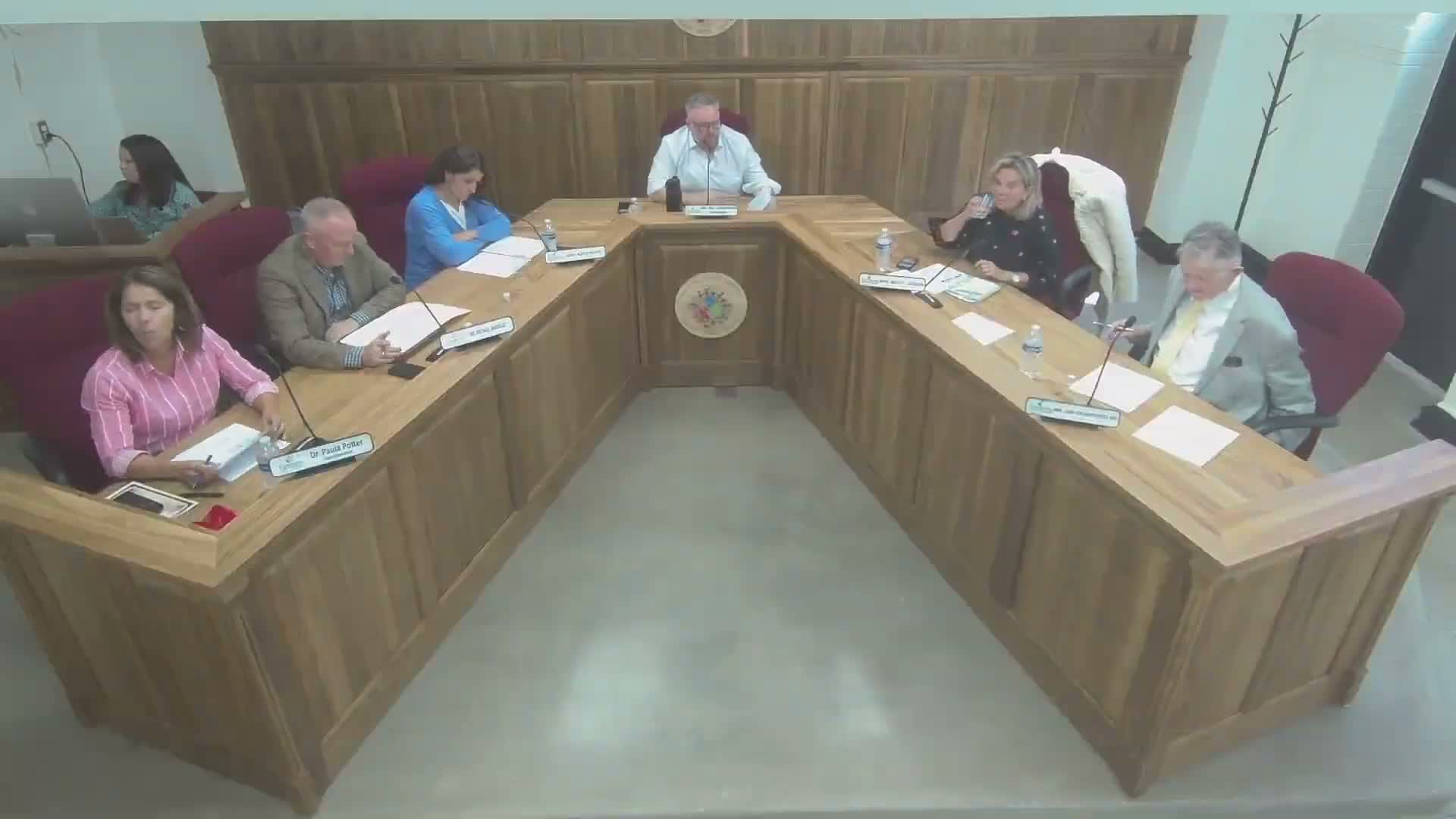
Melanie Meadows presented the Kanawha County Board of Education's preliminary operating budget for fiscal year 2027 at a statutory public hearing called at 4:00 p.m., saying the district's proposed grand total is about $403 million and represents roughly a 1% change from the prior year.
Meadows framed the budget around four primary funds — the general current expense fund (the district’s main operating fund), the special revenue fund (grants), the permanent improvement fund and the public library excess levy fund — and said wages and benefits remain the largest single cost. "We have to enter every account number into the accounting system. It has to be submitted to WVD," she said, adding that proposed revenues must equal proposed expenditures because accounting standards require a balanced budget.
The presenter told the board the district is seeing a notable enrollment decline, which directly reduces state-funded staffing. "This year we were down 137 funded positions compared to the prior year," Meadows said, breaking the drop roughly into 38 professional positions and 99 service positions. She said excess-levy dollars currently allow the district to staff above the state formula but warned that a loss of the levy would require the district to remain strictly in formula and would be difficult to sustain.
Meadows described a newly announced charter school, Phalan Academy in Marmet, and said the district must show charter allocations as an in-and-out on the budget. That change initially required her to remove about $1,200,000 from the district's projected state aid and to shave expenditures primarily from central-level maintenance, facilities and supplies; school-level allocations were preserved. Later in the detailed revenue slide, Meadows presented the charter allocation at $3,400,000 with a corresponding separate payment to the charter school.
On compensation, Meadows said the state mandated pay increases that are included in the salary lines of the proposed budget. "It is $15.60 for professionals, $8.70 for service," she said. She added that raises and bonuses must be authorized by the legislature or the board and are not given informally while staffing reductions occur.
Board members asked several procedural and detail questions: whether the district remains over the funding formula (Meadows confirmed the excess levy keeps staffing above formula), how many positions are funded by the levy (Meadows estimated "at least 100" but said she would provide an exact count later), how out-of-district special-education placements affect costs (Meadows estimated about $30,000 paid this year but did not have the precise count on hand), and the timing and reconciliation for charter enrollments (Meadows said the charter's initial projection is about 100 students and that settlements are reconciled in December with possible adjustments thereafter).
Meadows also reviewed the special revenue fund — grant programs such as Title I, IDEA, Perkins and others — totaling about $55.5 million and cautioned board members that preliminary federal allocations often change in the fall, producing supplements and negative supplements through November.
To illustrate operating costs, Meadows shared operational "fun facts": the district uses nearly 2,000 cases of toilet paper annually (costing more than $100,000), the largest elementary consumes thousands of milk cartons weekly, and operating one bus (using the district's older diesel-cost estimates) runs roughly $16,000 annually. She noted fuel and other market-driven costs would change and that fuel contracts are due to be rebid in the fall.
The board thanked Meadows for the review. The presenter said the budget approval meeting had been moved to Thursday; the chair then entertained a motion and the board adjourned.
Next steps: Meadows said she will follow up with exact counts for levy-funded positions and any late adjustments will be handled through routine budget revisions and supplements, including a planned July revision for a recently received insurance-premium increase.
Meadows framed the budget around four primary funds — the general current expense fund (the district’s main operating fund), the special revenue fund (grants), the permanent improvement fund and the public library excess levy fund — and said wages and benefits remain the largest single cost. "We have to enter every account number into the accounting system. It has to be submitted to WVD," she said, adding that proposed revenues must equal proposed expenditures because accounting standards require a balanced budget.
The presenter told the board the district is seeing a notable enrollment decline, which directly reduces state-funded staffing. "This year we were down 137 funded positions compared to the prior year," Meadows said, breaking the drop roughly into 38 professional positions and 99 service positions. She said excess-levy dollars currently allow the district to staff above the state formula but warned that a loss of the levy would require the district to remain strictly in formula and would be difficult to sustain.
Meadows described a newly announced charter school, Phalan Academy in Marmet, and said the district must show charter allocations as an in-and-out on the budget. That change initially required her to remove about $1,200,000 from the district's projected state aid and to shave expenditures primarily from central-level maintenance, facilities and supplies; school-level allocations were preserved. Later in the detailed revenue slide, Meadows presented the charter allocation at $3,400,000 with a corresponding separate payment to the charter school.
On compensation, Meadows said the state mandated pay increases that are included in the salary lines of the proposed budget. "It is $15.60 for professionals, $8.70 for service," she said. She added that raises and bonuses must be authorized by the legislature or the board and are not given informally while staffing reductions occur.
Board members asked several procedural and detail questions: whether the district remains over the funding formula (Meadows confirmed the excess levy keeps staffing above formula), how many positions are funded by the levy (Meadows estimated "at least 100" but said she would provide an exact count later), how out-of-district special-education placements affect costs (Meadows estimated about $30,000 paid this year but did not have the precise count on hand), and the timing and reconciliation for charter enrollments (Meadows said the charter's initial projection is about 100 students and that settlements are reconciled in December with possible adjustments thereafter).
Meadows also reviewed the special revenue fund — grant programs such as Title I, IDEA, Perkins and others — totaling about $55.5 million and cautioned board members that preliminary federal allocations often change in the fall, producing supplements and negative supplements through November.
To illustrate operating costs, Meadows shared operational "fun facts": the district uses nearly 2,000 cases of toilet paper annually (costing more than $100,000), the largest elementary consumes thousands of milk cartons weekly, and operating one bus (using the district's older diesel-cost estimates) runs roughly $16,000 annually. She noted fuel and other market-driven costs would change and that fuel contracts are due to be rebid in the fall.
The board thanked Meadows for the review. The presenter said the budget approval meeting had been moved to Thursday; the chair then entertained a motion and the board adjourned.
Next steps: Meadows said she will follow up with exact counts for levy-funded positions and any late adjustments will be handled through routine budget revisions and supplements, including a planned July revision for a recently received insurance-premium increase.
View the Full Meeting & All Its Details
This article offers just a summary. Unlock complete video, transcripts, and insights as a Founder Member.
✓
Watch full, unedited meeting videos
✓
Search every word spoken in unlimited transcripts
✓
AI summaries & real-time alerts (all government levels)
✓
Permanent access to expanding government content
30-day money-back guarantee
