Tamarac housing staff outline $1.5M in recent spending and limits on direct emergency aid
May 11, 2026 | Tamarac, Broward County, Florida
This article was created by AI summarizing key points discussed. AI makes mistakes, so for full details and context, please refer to the video of the full meeting. Please report any errors so we can fix them. Report an error »
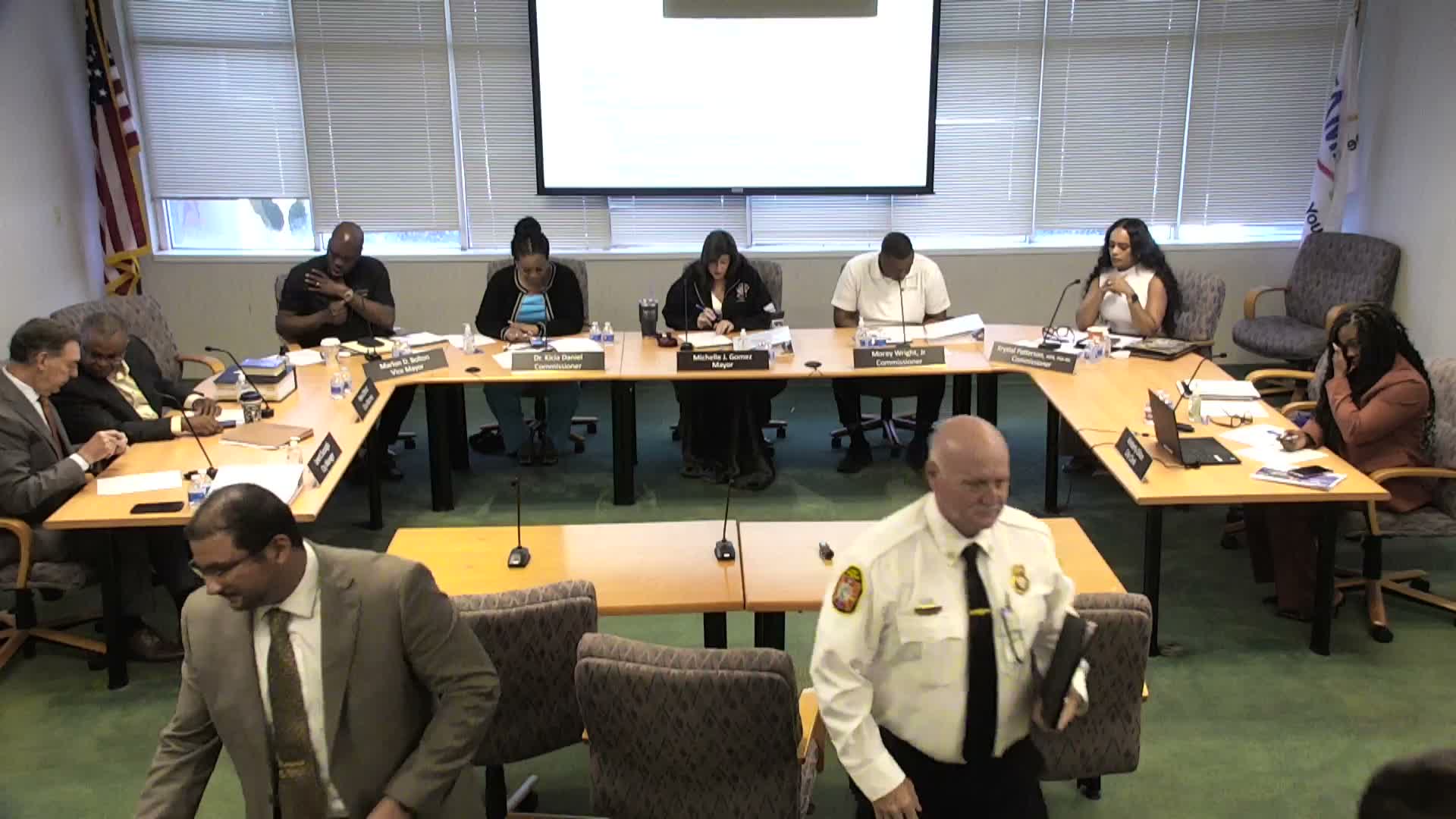
Ken Belia, Tamarac’s community development director, and Simone Flores, housing division manager, briefed the commission on May 11 about the housing division’s funding sources, program activity and compliance constraints.
Flores told the commission the city partners with HUD, Broward County (HOME consortium) and the state SHIP program. She reported typical annual amounts of roughly $490,000 from CDBG, $154,000 from HOME via the consortium, and about $550,000 from SHIP. Flores said program work in 2024–25 accounted for approximately $760,000 in first‑time homebuyer assistance, $460,000 in residential assistance, $160,000 in minor home repair, and smaller amounts for public services and fair housing outreach, totaling an estimated $1.5 million in housing division activity that year.
Commissioners pressed Flores on program rules and constraints. Commissioner Patterson asked whether the $85,000 ceiling on minor‑repair or buyer subsidies is federally required; Flores said the $85,000 is an internal cap tied to local market conditions but that subsidies are contingent on program guidance and eligibility. Commissioners confirmed a 15‑year recapture (clawback) period on some first‑time homebuyer subsidies; staff said that period is required by the program rules that govern the recovered funds and related federal or state grant terms.
The discussion turned to residential assistance — a program born from ARPA funds that staff said is not currently funded — and to whether dollars recovered from past programs (for example, prior NSP repayments) can be repurposed under CDBG rules. Staff explained that funds transferred into CDBG carry CDBG constraints, including activity caps and the city’s five‑year consolidated plan and Local Housing Assistance Plan (LHAP) priorities, and that public‑service activities are capped at 15% of total CDBG allocations.
Commissioners debated whether the city should use existing local resources or partner with nonprofits to provide faster emergency assistance for seniors and other vulnerable residents. Commissioner Patterson proposed researching creation of a Tamarac nonprofit foundation to raise and manage funds for seniors and emergency aid; staff agreed to research the legal framework and return with options and necessary public‑notice steps for any consolidated‑plan change.
Several commissioners also urged streamlining application procedures (paper and in‑person access) and improving outreach so low‑income residents, seniors and applicants without internet access can apply. Flores acknowledged environmental review and income‑verification steps can delay awards (environmental review can take 30 days) and said staff would return with clearer posting of program opening dates and application pathways.
Commissioners asked staff to bring back options on how recovered funds could be redeployed and whether the consolidated plan should be amended to allow broader emergency assistance while maintaining federal compliance requirements.
Flores told the commission the city partners with HUD, Broward County (HOME consortium) and the state SHIP program. She reported typical annual amounts of roughly $490,000 from CDBG, $154,000 from HOME via the consortium, and about $550,000 from SHIP. Flores said program work in 2024–25 accounted for approximately $760,000 in first‑time homebuyer assistance, $460,000 in residential assistance, $160,000 in minor home repair, and smaller amounts for public services and fair housing outreach, totaling an estimated $1.5 million in housing division activity that year.
Commissioners pressed Flores on program rules and constraints. Commissioner Patterson asked whether the $85,000 ceiling on minor‑repair or buyer subsidies is federally required; Flores said the $85,000 is an internal cap tied to local market conditions but that subsidies are contingent on program guidance and eligibility. Commissioners confirmed a 15‑year recapture (clawback) period on some first‑time homebuyer subsidies; staff said that period is required by the program rules that govern the recovered funds and related federal or state grant terms.
The discussion turned to residential assistance — a program born from ARPA funds that staff said is not currently funded — and to whether dollars recovered from past programs (for example, prior NSP repayments) can be repurposed under CDBG rules. Staff explained that funds transferred into CDBG carry CDBG constraints, including activity caps and the city’s five‑year consolidated plan and Local Housing Assistance Plan (LHAP) priorities, and that public‑service activities are capped at 15% of total CDBG allocations.
Commissioners debated whether the city should use existing local resources or partner with nonprofits to provide faster emergency assistance for seniors and other vulnerable residents. Commissioner Patterson proposed researching creation of a Tamarac nonprofit foundation to raise and manage funds for seniors and emergency aid; staff agreed to research the legal framework and return with options and necessary public‑notice steps for any consolidated‑plan change.
Several commissioners also urged streamlining application procedures (paper and in‑person access) and improving outreach so low‑income residents, seniors and applicants without internet access can apply. Flores acknowledged environmental review and income‑verification steps can delay awards (environmental review can take 30 days) and said staff would return with clearer posting of program opening dates and application pathways.
Commissioners asked staff to bring back options on how recovered funds could be redeployed and whether the consolidated plan should be amended to allow broader emergency assistance while maintaining federal compliance requirements.
Don't Miss a Word: See the Full Meeting!
Go beyond summaries. Unlock every video, transcript, and key insight with a Founder Membership.
✓
Get instant access to full meeting videos
✓
Search and clip any phrase from complete transcripts
✓
Receive AI-powered summaries & custom alerts
✓
Enjoy lifetime, unrestricted access to government data
30-day money-back guarantee
