Nominee Frank P. Areola wins broad support in Guam hearing but faces questions on clearances, time and port security
May 11, 2026 | General Government Operations and Appropriations , Legislative, Guam, International
This article was created by AI summarizing key points discussed. AI makes mistakes, so for full details and context, please refer to the video of the full meeting. Please report any errors so we can fix them. Report an error »
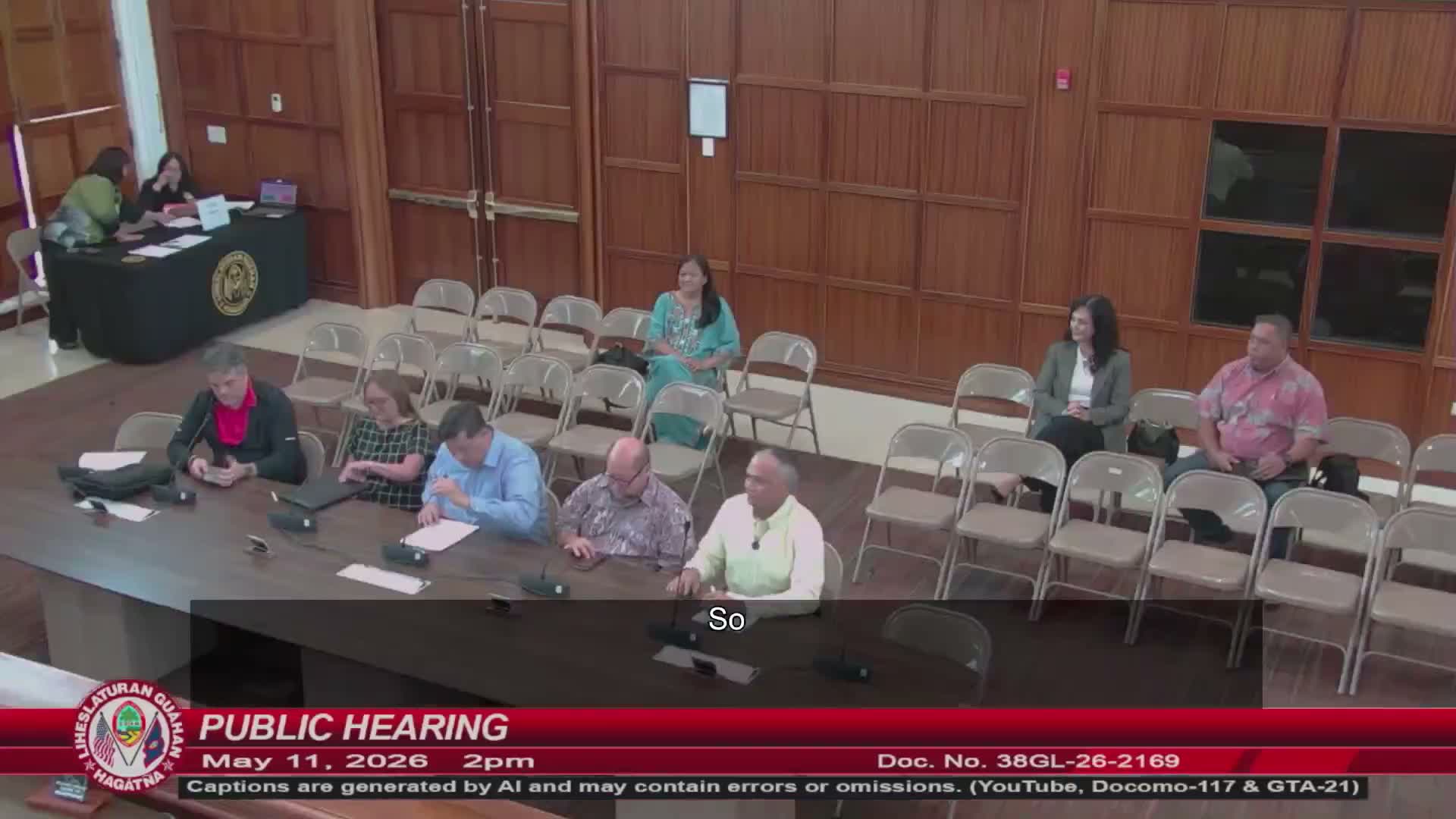
Frank P. Areola, the governor’s nominee to the Port Authority of Guam Board of Directors, testified on May 11 before the Legislature’s Committee on Transportation, Tourism, Customs, Utilities, and Federal and Foreign Affairs, outlining decades of experience in logistics, real estate and public service and promising to prioritize modernization, efficiency and environmental protections at the port.
"The Port Authority is a lifeline for the island of Guam," Areola said, describing his private‑sector logistics and project management background and recent work as vice president of the Guam Visitors Bureau. He told senators he intends to work with management to advance the port’s master plan and to bring disciplined oversight to major capital projects.
Why it matters: Port leaders said the authority is moving from reform into execution and faces multi‑million‑dollar infrastructure decisions that affect Guam’s supply chain and national security role. Rory Respichaud, general manager of the Port Authority of Guam, described recent institutional reforms to leasing and finance and cited an "approximately $60,000,000" award from the U.S. Maritime Administration’s Port Infrastructure Development Program to support acquisition of three ship‑to‑shore gantry cranes.
Respichaud said those federal investments increase the need for board members who understand capital delivery, financial safeguards and long‑term planning. "These are not future considerations. They are active responsibilities before the board today," he said.
Port Authority Board Chair Dodd Harris also testified in favor of Areola, saying the nominee’s business and governance experience would complement the board’s work on oversight and the port master plan.
Committee concerns and clarifications: Senators raised three recurring themes during the hearing. First, the committee sought original background‑clearance documents after noting apparent discrepancies between application and appointment dates; the chair gave Areola 24 hours to provide current original clearances to the clerk.
Second, lawmakers pressed Areola about balancing time commitments between his role at the Guam Visitors Bureau and service as a port board member. Areola said prior long‑term board service had required careful planning and that recent personal changes would free up time for board responsibilities.
Third, members questioned port security and fuel‑storage planning. Areola and port leaders said controlled access and security planning are constrained by jurisdictional limits on public roadways and by safety and environmental compliance concerns; they recommended multiagency coordination to identify secure locations for fuel or storage outside congested port operating areas.
Commercial and program details discussed: Testimony covered several specific projects and arrangements the port is managing or planning. Respichaud described the port’s dollar‑for‑dollar lease credit arrangement with a private developer that generated roughly $10.5 million in lease revenue over four years while funding wharf and site improvements; the port said board authorizations and written agreements document how lease credits are applied to capital improvements. Respichaud also noted a $2,000,000 federal grant referenced for architectural and engineering work tied to customs inspection facility planning.
Law enforcement and operational roles: Committee members questioned whether port police should conduct traffic speed enforcement operations — some of which are grant‑funded — when other assignments focus on facility security, customs coordination and container inspections. Port officials said port police have participated in grant programs for traffic enforcement but emphasized that port police remain a key part of interdiction and security at the marinas and terminal. Respichaud noted a court decision had affirmed the port’s authority to issue citations.
Supporters’ testimony: Several witnesses spoke on Areola’s behalf. Attorney Joaquin C. Areola Jr. (Jay Areola) and a construction‑industry recommender praised Areola’s operational experience and character. Senators and port leaders repeatedly called for careful board oversight as the port executes large infrastructure investments.
Next steps: The committee did not record a confirmation vote at the hearing. Chairman Jesse Anderson Lujan said the committee will accept written testimony for seven calendar days following the hearing and adjourned the session at 3:23 p.m.
Notes: All quotes and attributions are taken from the public hearing transcript. The committee requested that the nominee provide original clearance documents within 24 hours and opened the record to seven more days of written comment; no final confirmation action was reported on the record at the hearing.
"The Port Authority is a lifeline for the island of Guam," Areola said, describing his private‑sector logistics and project management background and recent work as vice president of the Guam Visitors Bureau. He told senators he intends to work with management to advance the port’s master plan and to bring disciplined oversight to major capital projects.
Why it matters: Port leaders said the authority is moving from reform into execution and faces multi‑million‑dollar infrastructure decisions that affect Guam’s supply chain and national security role. Rory Respichaud, general manager of the Port Authority of Guam, described recent institutional reforms to leasing and finance and cited an "approximately $60,000,000" award from the U.S. Maritime Administration’s Port Infrastructure Development Program to support acquisition of three ship‑to‑shore gantry cranes.
Respichaud said those federal investments increase the need for board members who understand capital delivery, financial safeguards and long‑term planning. "These are not future considerations. They are active responsibilities before the board today," he said.
Port Authority Board Chair Dodd Harris also testified in favor of Areola, saying the nominee’s business and governance experience would complement the board’s work on oversight and the port master plan.
Committee concerns and clarifications: Senators raised three recurring themes during the hearing. First, the committee sought original background‑clearance documents after noting apparent discrepancies between application and appointment dates; the chair gave Areola 24 hours to provide current original clearances to the clerk.
Second, lawmakers pressed Areola about balancing time commitments between his role at the Guam Visitors Bureau and service as a port board member. Areola said prior long‑term board service had required careful planning and that recent personal changes would free up time for board responsibilities.
Third, members questioned port security and fuel‑storage planning. Areola and port leaders said controlled access and security planning are constrained by jurisdictional limits on public roadways and by safety and environmental compliance concerns; they recommended multiagency coordination to identify secure locations for fuel or storage outside congested port operating areas.
Commercial and program details discussed: Testimony covered several specific projects and arrangements the port is managing or planning. Respichaud described the port’s dollar‑for‑dollar lease credit arrangement with a private developer that generated roughly $10.5 million in lease revenue over four years while funding wharf and site improvements; the port said board authorizations and written agreements document how lease credits are applied to capital improvements. Respichaud also noted a $2,000,000 federal grant referenced for architectural and engineering work tied to customs inspection facility planning.
Law enforcement and operational roles: Committee members questioned whether port police should conduct traffic speed enforcement operations — some of which are grant‑funded — when other assignments focus on facility security, customs coordination and container inspections. Port officials said port police have participated in grant programs for traffic enforcement but emphasized that port police remain a key part of interdiction and security at the marinas and terminal. Respichaud noted a court decision had affirmed the port’s authority to issue citations.
Supporters’ testimony: Several witnesses spoke on Areola’s behalf. Attorney Joaquin C. Areola Jr. (Jay Areola) and a construction‑industry recommender praised Areola’s operational experience and character. Senators and port leaders repeatedly called for careful board oversight as the port executes large infrastructure investments.
Next steps: The committee did not record a confirmation vote at the hearing. Chairman Jesse Anderson Lujan said the committee will accept written testimony for seven calendar days following the hearing and adjourned the session at 3:23 p.m.
Notes: All quotes and attributions are taken from the public hearing transcript. The committee requested that the nominee provide original clearance documents within 24 hours and opened the record to seven more days of written comment; no final confirmation action was reported on the record at the hearing.
View the Full Meeting & All Its Details
This article offers just a summary. Unlock complete video, transcripts, and insights as a Founder Member.
✓
Watch full, unedited meeting videos
✓
Search every word spoken in unlimited transcripts
✓
AI summaries & real-time alerts (all government levels)
✓
Permanent access to expanding government content
30-day money-back guarantee
