Oak Hill board hears analysis of SEA 1’s steep tax impacts as staff seek auditor estimates for possible referendum
May 11, 2026 | Oak Hill United School Corp, School Boards, Indiana
This article was created by AI summarizing key points discussed. AI makes mistakes, so for full details and context, please refer to the video of the full meeting. Please report any errors so we can fix them. Report an error »
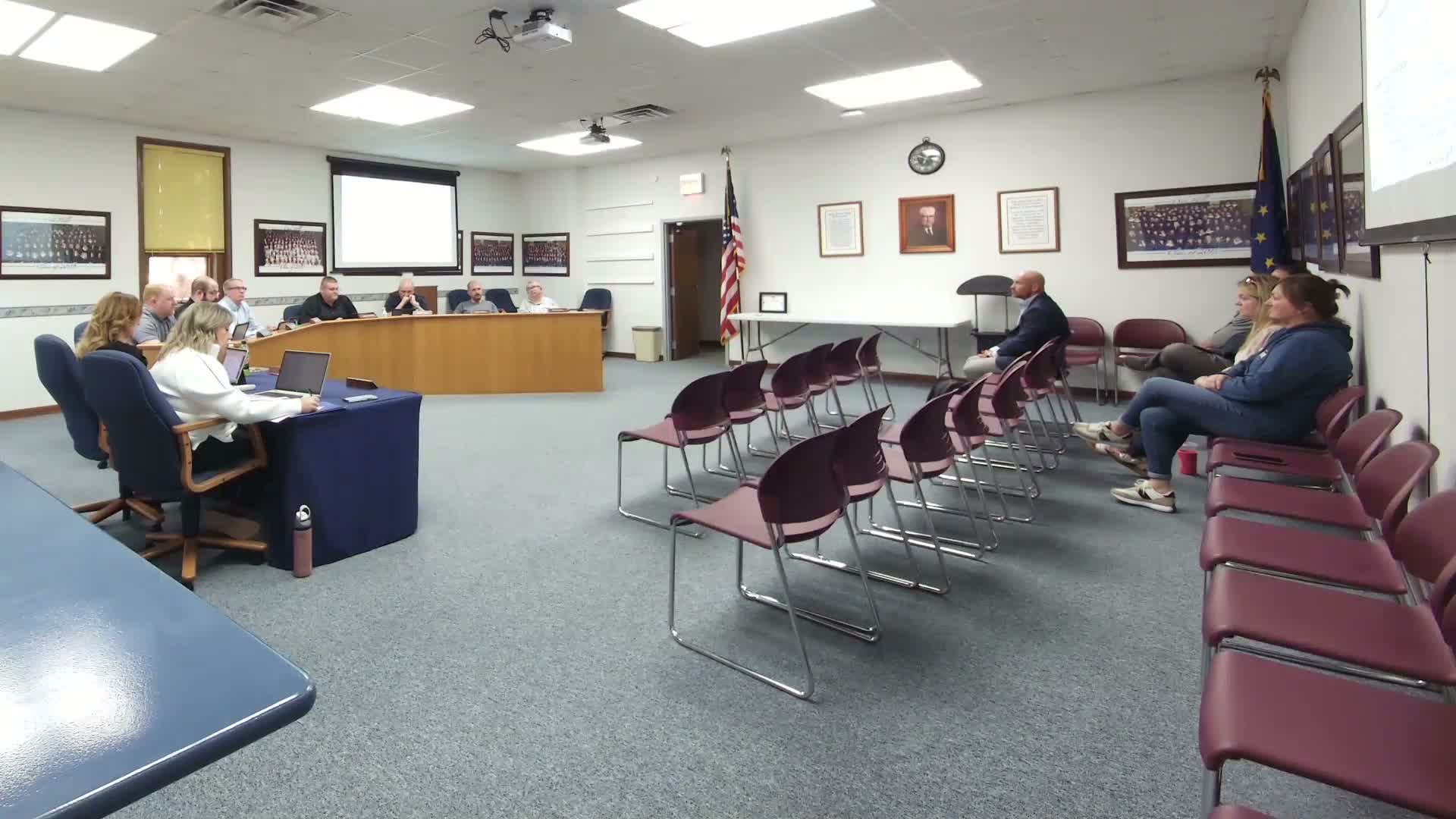
Oak Hill United School Corp. trustees heard a detailed briefing on the financial effects of Indiana’s recent SEA 1 property-tax changes and agreed to authorize administrators to work with county auditors and outside advisers to model local impacts.
Barry Gardner of Policy Analytics told the board the district’s assessed value per student is below the state peer average and that several provisions of SEA 1 will reduce net assessed value and operations-fund revenue for many districts. Gardner said the district will likely lose a large chunk of assessed value in 2027 because the business-personal-property exemption threshold changes, and he estimated the district’s net assessed value could fall by roughly $40,000,000 in 2027. “At the end of the day, we’re pulling out about $40,000,000 of AV in 2027,” Gardner said.
Gardner outlined additional mechanics in SEA 1 that reduce revenues to local units, including increased homeowner deductions, a new 10% homestead credit and other credits that together could push the district toward a multi-year operations-fund shortfall. He said cumulative revenue loss over several years could approach the high hundreds of thousands of dollars, and walked trustees through referendum and levy scenarios the district might consider, including an illustrative $1.5 million-levy option that would generate steadier revenue but carry an average homeowner impact Gardner estimated at about $220 a year.
Superintendent Dr. Harvin framed the resolution before the board as an authorization to consult auditors and legal and financial partners, not as a commitment to place a referendum on the ballot. The resolution would allow administration to obtain the median-home-value and other auditor-produced figures that are required for drafting a referendum question and maximum levy, a procedural step Gardner and legal counsel recommended many districts take while they weigh options.
Board members asked about timing and the limits the new law places on when a district may run an operating referendum. Gardner said SEA 1 restricts referenda to even-numbered general elections (next available window: November 2026) and that, if a district declines to run in 2026, it could not run again until November 2028. Trustees discussed cost-reduction levers and revenue scenarios the administration and consultants had modeled but did not make a final funding decision during the meeting. The transcript records a second on the motion to begin auditor coordination; a final roll-call vote was not recorded in the provided transcript.
If the board proceeds to pursue an operating referendum, Gardner and the administration said the county auditors will need to calculate the median-home value and related figures used to set the ballot’s maximum rate and levy. The board will receive updated, auditor-verified figures at a later meeting before any ballot question is finalized.
Barry Gardner of Policy Analytics told the board the district’s assessed value per student is below the state peer average and that several provisions of SEA 1 will reduce net assessed value and operations-fund revenue for many districts. Gardner said the district will likely lose a large chunk of assessed value in 2027 because the business-personal-property exemption threshold changes, and he estimated the district’s net assessed value could fall by roughly $40,000,000 in 2027. “At the end of the day, we’re pulling out about $40,000,000 of AV in 2027,” Gardner said.
Gardner outlined additional mechanics in SEA 1 that reduce revenues to local units, including increased homeowner deductions, a new 10% homestead credit and other credits that together could push the district toward a multi-year operations-fund shortfall. He said cumulative revenue loss over several years could approach the high hundreds of thousands of dollars, and walked trustees through referendum and levy scenarios the district might consider, including an illustrative $1.5 million-levy option that would generate steadier revenue but carry an average homeowner impact Gardner estimated at about $220 a year.
Superintendent Dr. Harvin framed the resolution before the board as an authorization to consult auditors and legal and financial partners, not as a commitment to place a referendum on the ballot. The resolution would allow administration to obtain the median-home-value and other auditor-produced figures that are required for drafting a referendum question and maximum levy, a procedural step Gardner and legal counsel recommended many districts take while they weigh options.
Board members asked about timing and the limits the new law places on when a district may run an operating referendum. Gardner said SEA 1 restricts referenda to even-numbered general elections (next available window: November 2026) and that, if a district declines to run in 2026, it could not run again until November 2028. Trustees discussed cost-reduction levers and revenue scenarios the administration and consultants had modeled but did not make a final funding decision during the meeting. The transcript records a second on the motion to begin auditor coordination; a final roll-call vote was not recorded in the provided transcript.
If the board proceeds to pursue an operating referendum, Gardner and the administration said the county auditors will need to calculate the median-home value and related figures used to set the ballot’s maximum rate and levy. The board will receive updated, auditor-verified figures at a later meeting before any ballot question is finalized.
View the Full Meeting & All Its Details
This article offers just a summary. Unlock complete video, transcripts, and insights as a Founder Member.
✓
Watch full, unedited meeting videos
✓
Search every word spoken in unlimited transcripts
✓
AI summaries & real-time alerts (all government levels)
✓
Permanent access to expanding government content
30-day money-back guarantee
