Appropriations Committee moves dozens of bills to suspense file; witnesses flag fiscal, consumer and disaster concerns
May 11, 2026 | California State Senate, Senate, Legislative, California
This article was created by AI summarizing key points discussed. AI makes mistakes, so for full details and context, please refer to the video of the full meeting. Please report any errors so we can fix them. Report an error »
The Senate Committee on Appropriations advanced a large slate of legislation to the committees suspense file and heard testimony on several measures that raised fiscal and consumer-protection concerns.
Chris Wysocki, who identified himself as "with WMA," testified in opposition to SB 10 92 and SB 10 93, arguing the consultant fiscal analyses did not fully account for likely litigation costs if the measures prompt constitutional challenges and that property-tax revenues could decline if nonprofit buyers replace private buyers. Wysocki also said the Department of Housing and Community Development (HCD) would face increased monitoring and review workloads given recent park-sales activity (he cited "121 park sales" as a recent figure) and warned that inspection staffing levels set under SB 925 (1990) limit inspector availability.
Consumer-finance witnesses addressed SB 10 41. Chris Schultz of the California Bankers Association said PACE liens could require homeowners to bring cash to refinancing closings to satisfy existing liens, complicating refinancing. Karen Lang (California Association of County Treasurers and Tax Collectors) opposed the bill and cited a class-action settlement involving the bill's sponsor, warning that expanded liens could be abusive to seniors and under-resourced communities.
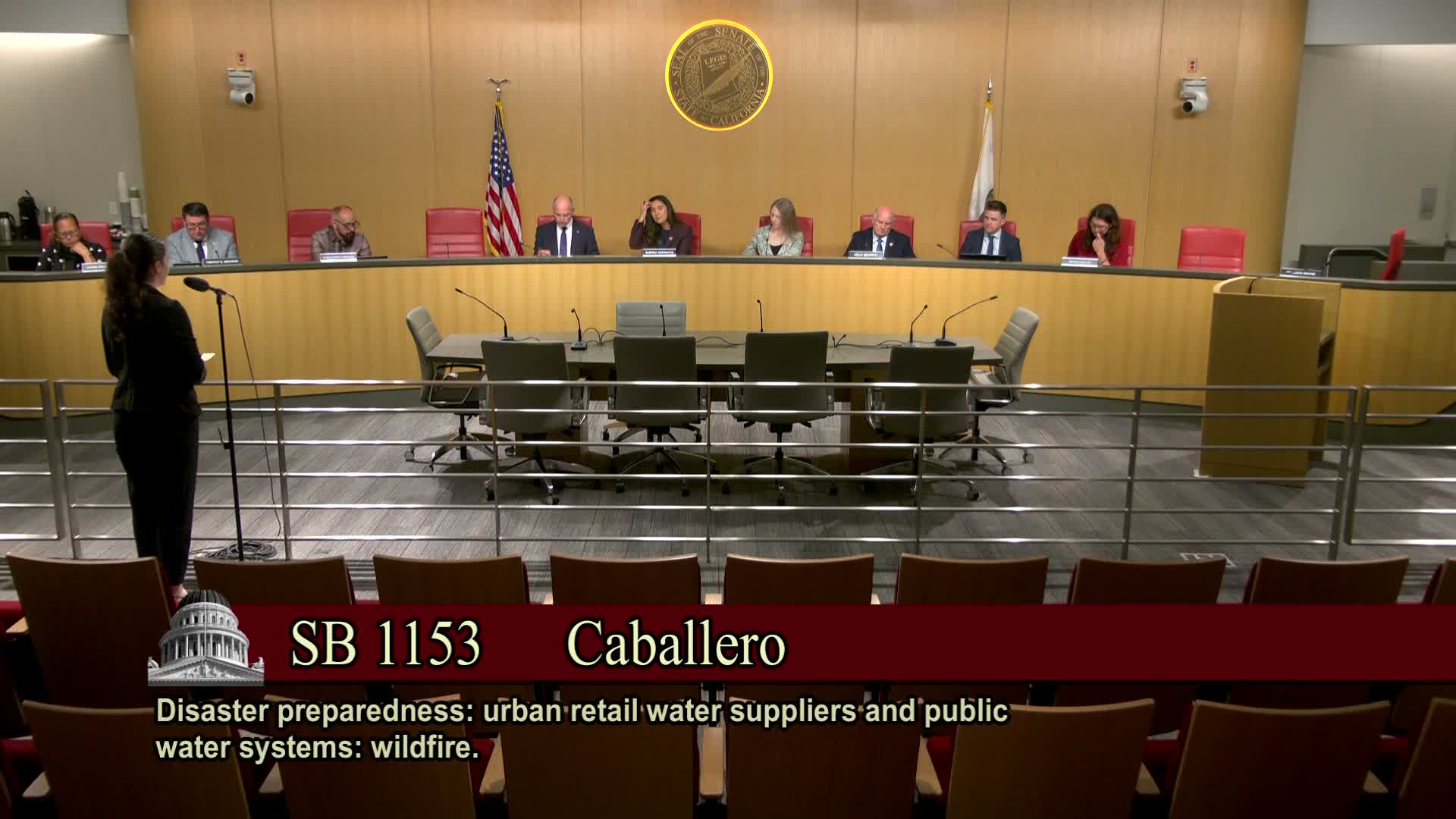
Other items heard or sponsored included SB 11 53, which Kylie Wright of the Association of California Water Agencies described as requiring urban retail water suppliers to include incident-specific wildfire response procedures in their existing disaster preparedness plans. Wright said the measure leverages existing planning structures and would not impose additional state costs.
Several health-professions bills (SB 13 02, SB 13 03) drew sponsor support from Monica Miller of the California Association of Nurse Anesthesiology, who said stakeholders are still working on language. Multiple other measures were read and moved to the suspense file without testimony or after witnesses brief remarks.
The hearing followed the committees usual process: authors or committee chairs waived presentations on many items, witnesses were invited to testify only on fiscal impacts, and most bills were placed on the suspense file without objection. The committee adjourned after considering the agenda.
Chris Wysocki, who identified himself as "with WMA," testified in opposition to SB 10 92 and SB 10 93, arguing the consultant fiscal analyses did not fully account for likely litigation costs if the measures prompt constitutional challenges and that property-tax revenues could decline if nonprofit buyers replace private buyers. Wysocki also said the Department of Housing and Community Development (HCD) would face increased monitoring and review workloads given recent park-sales activity (he cited "121 park sales" as a recent figure) and warned that inspection staffing levels set under SB 925 (1990) limit inspector availability.
Consumer-finance witnesses addressed SB 10 41. Chris Schultz of the California Bankers Association said PACE liens could require homeowners to bring cash to refinancing closings to satisfy existing liens, complicating refinancing. Karen Lang (California Association of County Treasurers and Tax Collectors) opposed the bill and cited a class-action settlement involving the bill's sponsor, warning that expanded liens could be abusive to seniors and under-resourced communities.
Other items heard or sponsored included SB 11 53, which Kylie Wright of the Association of California Water Agencies described as requiring urban retail water suppliers to include incident-specific wildfire response procedures in their existing disaster preparedness plans. Wright said the measure leverages existing planning structures and would not impose additional state costs.
Several health-professions bills (SB 13 02, SB 13 03) drew sponsor support from Monica Miller of the California Association of Nurse Anesthesiology, who said stakeholders are still working on language. Multiple other measures were read and moved to the suspense file without testimony or after witnesses brief remarks.
The hearing followed the committees usual process: authors or committee chairs waived presentations on many items, witnesses were invited to testify only on fiscal impacts, and most bills were placed on the suspense file without objection. The committee adjourned after considering the agenda.
Don't Miss a Word: See the Full Meeting!
Go beyond summaries. Unlock every video, transcript, and key insight with a Founder Membership.
✓
Get instant access to full meeting videos
✓
Search and clip any phrase from complete transcripts
✓
Receive AI-powered summaries & custom alerts
✓
Enjoy lifetime, unrestricted access to government data
30-day money-back guarantee
