Judiciary committee adopts amendments to SF 4895 adding outside ALJ review, 180‑day checks and notice for DHS payment withholds
May 10, 2026 | 2026 Legislature MN, Minnesota
This article was created by AI summarizing key points discussed. AI makes mistakes, so for full details and context, please refer to the video of the full meeting. Please report any errors so we can fix them. Report an error »
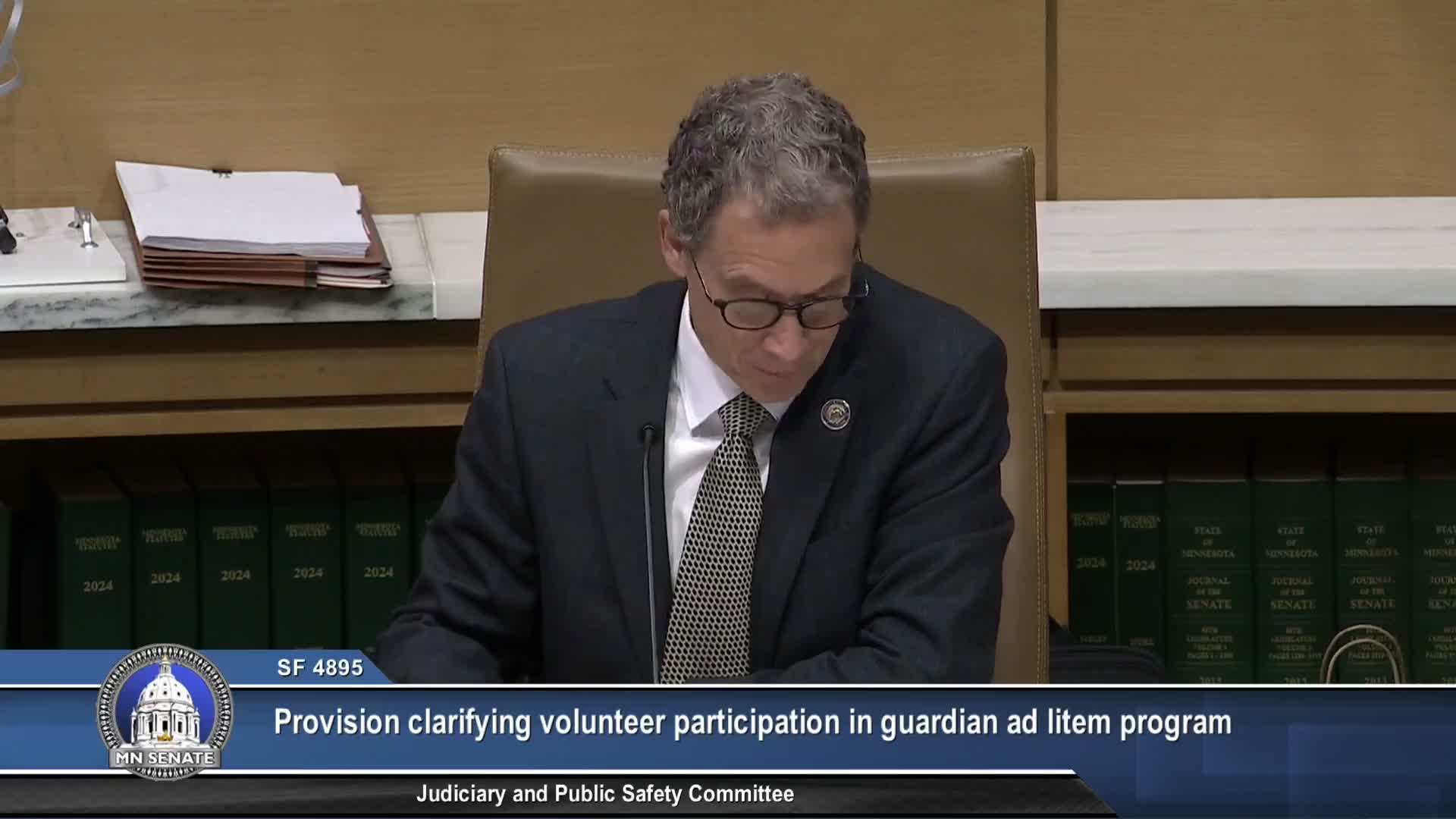
The Minnesota Senate Judiciary Committee on May 11 adopted a package of amendments to Senate File 4895 intended to add independent administrative review and procedural safeguards for providers whose Medicaid payments are withheld while the Department of Human Services (DHS) investigates suspected fraud.
Senators adopted a "delete everything" authors' amendment and then approved a series of technical and substantive changes that together create (1) a new ALJ review process tied to payment‑withhold decisions, (2) a sealed, in‑camera 180‑day review requirement that the ALJ perform while a withhold remains in effect, (3) a requirement that the commissioner notify the provider within 10 business days of each ALJ review and include the ALJ's recommendation, (4) a surety‑bond option allowing a provider to post a bond equal to the amount withheld (or the commissioner’s assessed risk) to secure release of funds, and (5) statutory language stating that the ALJ's findings, conclusions and recommendations "are not subject to judicial review." Counsel read the judicial‑review provision into the record as an insertion to Minnesota Statutes 256B.064.
The amendments were described to the committee by Senate counsel Ali Hoffman Litchi, who said the A2 change would split review costs between the commissioner and the provider instead of assigning all costs to the provider and that the A3 amendment would require the commissioner to submit evidence to an administrative law judge every 180 days while a payment withhold or reduction is in place. "The amendment ... would make those costs be born equally by both parties," counsel said during the committee hearing.
Christy Graham, representing DHS, and James Clark, the department's inspector general, told the committee that the new review steps would require additional departmental resources. Clark warned the committee that "the department is not structured to absorb an additional 500 administrative actions," noting DHS issued about 500 payment suspensions in 2025 and that the proposed periodic ALJ status reviews could substantially increase administrative workload.
Committee members sought and received clarifications on the scope and effect of ALJ involvement. Counsel and DHS explained the ALJ role in the draft is advisory: the ALJ would review sealed evidence and provide recommendations to the commissioner, but under federal Medicaid law the commissioner retains authority to determine whether a "credible allegation of fraud" exists and whether to continue withholding payments. Counsel also pointed to federal regulations (Title 42 of the Code of Federal Regulations) as the source of the credible‑allegation standard and the duration rules for suspensions.
Several senators advocated adding explicit notice language so providers would not be left in the dark after an ALJ review; counsel Primo read oral language requiring the commissioner to "provide a notice to the individual or entity within 10 business days of each review under this subdivision. The notice must include the administrative law judge's recommendation." The committee adopted A3 with that oral notice amendment by voice vote.
The committee also debated whether to permit judicial review of ALJ findings. Committee counsel proposed—and members adopted—new statutory language (a new subdivision) stating that the ALJ's findings, conclusions of law and recommendations under this section "are not subject to judicial review." Supporters said the change preserves an outside check while avoiding a second, full judicial exhaustion requirement that could create new procedural and fiscal burdens.
Members additionally discussed data privacy and the department's authority to access vendor premises and records. Counsel said the draft grants the commissioner broad authority to obtain vendor records and that immunity language in the bill would protect vendors who release records under the Medical Health Records Act and related statutes; DHS agreed to follow up with committee staff on any needed clarifications to ensure privacy protections and implementability.
Action and next steps: the committee adopted the package of amendments by voice votes (motions recorded as "aye" and "motion prevails" in the transcript) and laid Senate File 4895 as amended over for further consideration. Committee members asked for a fiscal note and follow‑up on expected investigative timelines and resource needs; DHS agreed to provide that information.
What the bill would do: taken together, the committee changes add a sealed ALJ review and a standing 180‑day check to confirm the agency is actively pursuing fraud investigations when payments are withheld, require provider notice of ALJ recommendations, provide a surety‑bond option to release funds, and insert a statutory bar on judicial review of ALJ findings. Supporters said this creates due‑process safeguards and outside review; DHS warned it would increase resource needs and implementation complexity.
The measure was laid over as amended; the file will continue through the legislative process where fiscal and implementation details will be addressed.
Senators adopted a "delete everything" authors' amendment and then approved a series of technical and substantive changes that together create (1) a new ALJ review process tied to payment‑withhold decisions, (2) a sealed, in‑camera 180‑day review requirement that the ALJ perform while a withhold remains in effect, (3) a requirement that the commissioner notify the provider within 10 business days of each ALJ review and include the ALJ's recommendation, (4) a surety‑bond option allowing a provider to post a bond equal to the amount withheld (or the commissioner’s assessed risk) to secure release of funds, and (5) statutory language stating that the ALJ's findings, conclusions and recommendations "are not subject to judicial review." Counsel read the judicial‑review provision into the record as an insertion to Minnesota Statutes 256B.064.
The amendments were described to the committee by Senate counsel Ali Hoffman Litchi, who said the A2 change would split review costs between the commissioner and the provider instead of assigning all costs to the provider and that the A3 amendment would require the commissioner to submit evidence to an administrative law judge every 180 days while a payment withhold or reduction is in place. "The amendment ... would make those costs be born equally by both parties," counsel said during the committee hearing.
Christy Graham, representing DHS, and James Clark, the department's inspector general, told the committee that the new review steps would require additional departmental resources. Clark warned the committee that "the department is not structured to absorb an additional 500 administrative actions," noting DHS issued about 500 payment suspensions in 2025 and that the proposed periodic ALJ status reviews could substantially increase administrative workload.
Committee members sought and received clarifications on the scope and effect of ALJ involvement. Counsel and DHS explained the ALJ role in the draft is advisory: the ALJ would review sealed evidence and provide recommendations to the commissioner, but under federal Medicaid law the commissioner retains authority to determine whether a "credible allegation of fraud" exists and whether to continue withholding payments. Counsel also pointed to federal regulations (Title 42 of the Code of Federal Regulations) as the source of the credible‑allegation standard and the duration rules for suspensions.
Several senators advocated adding explicit notice language so providers would not be left in the dark after an ALJ review; counsel Primo read oral language requiring the commissioner to "provide a notice to the individual or entity within 10 business days of each review under this subdivision. The notice must include the administrative law judge's recommendation." The committee adopted A3 with that oral notice amendment by voice vote.
The committee also debated whether to permit judicial review of ALJ findings. Committee counsel proposed—and members adopted—new statutory language (a new subdivision) stating that the ALJ's findings, conclusions of law and recommendations under this section "are not subject to judicial review." Supporters said the change preserves an outside check while avoiding a second, full judicial exhaustion requirement that could create new procedural and fiscal burdens.
Members additionally discussed data privacy and the department's authority to access vendor premises and records. Counsel said the draft grants the commissioner broad authority to obtain vendor records and that immunity language in the bill would protect vendors who release records under the Medical Health Records Act and related statutes; DHS agreed to follow up with committee staff on any needed clarifications to ensure privacy protections and implementability.
Action and next steps: the committee adopted the package of amendments by voice votes (motions recorded as "aye" and "motion prevails" in the transcript) and laid Senate File 4895 as amended over for further consideration. Committee members asked for a fiscal note and follow‑up on expected investigative timelines and resource needs; DHS agreed to provide that information.
What the bill would do: taken together, the committee changes add a sealed ALJ review and a standing 180‑day check to confirm the agency is actively pursuing fraud investigations when payments are withheld, require provider notice of ALJ recommendations, provide a surety‑bond option to release funds, and insert a statutory bar on judicial review of ALJ findings. Supporters said this creates due‑process safeguards and outside review; DHS warned it would increase resource needs and implementation complexity.
The measure was laid over as amended; the file will continue through the legislative process where fiscal and implementation details will be addressed.
View the Full Meeting & All Its Details
This article offers just a summary. Unlock complete video, transcripts, and insights as a Founder Member.
✓
Watch full, unedited meeting videos
✓
Search every word spoken in unlimited transcripts
✓
AI summaries & real-time alerts (all government levels)
✓
Permanent access to expanding government content
30-day money-back guarantee
