Commission refers small‑lot housing pilot to planning and zoning for public hearing
May 11, 2026 | Franklin, Simpson County, Kentucky
This article was created by AI summarizing key points discussed. AI makes mistakes, so for full details and context, please refer to the video of the full meeting. Please report any errors so we can fix them. Report an error »
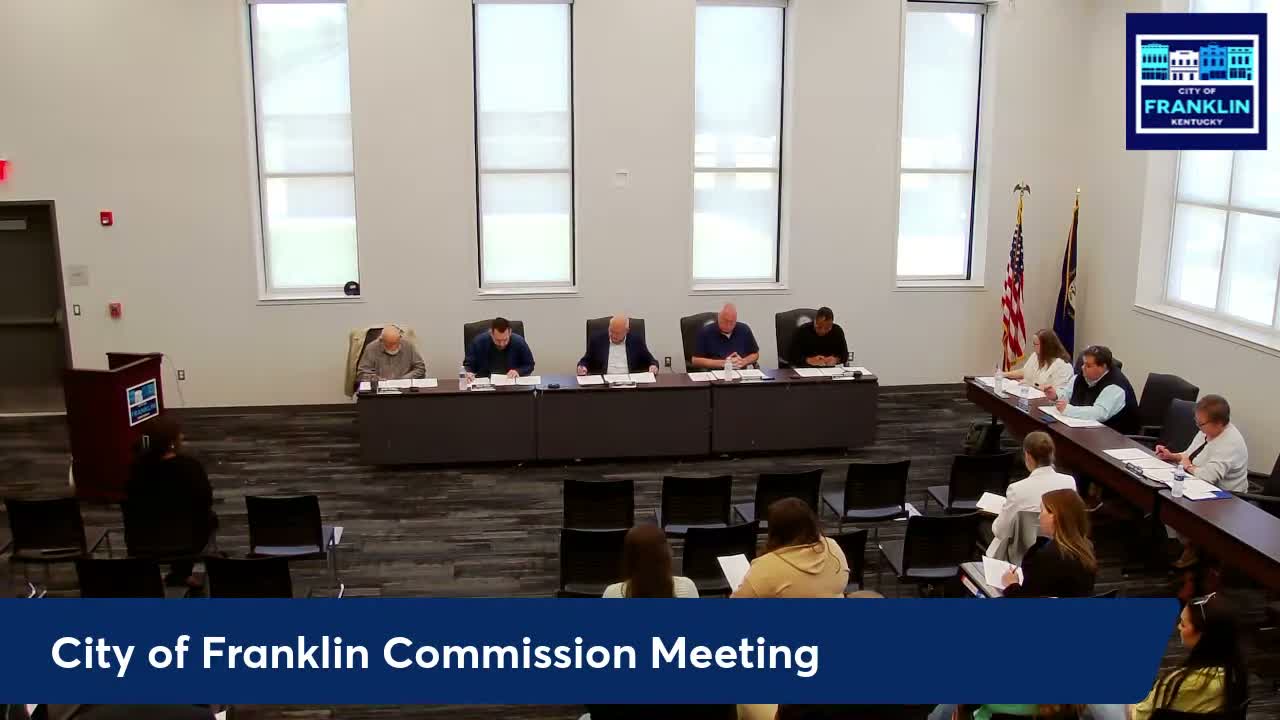
The Franklin City Commission on April 27 referred a proposed two‑year pilot program to planning and zoning that would allow a planned residential development with smaller lots to test whether smaller‑lot starter homes can increase affordability.
Scott Crabtree and members of the city's housing advisory group said the pilot is intended as a single, time‑limited test: developers would have two years to start the project and, if the pilot proves viable, the city could permit more such developments. Scott Crabtree told the commission, "We've never done this before, gentlemen, and we don't know for sure if it'll work," and asked the commission to send the proposed text amendments on for a public hearing.
Advisory members emphasized local need and community partnerships. Dana Hester, executive director of Habitat for Humanity, said the group researched state and regional options and that zoning reform and smaller lot sizes emerged repeatedly as a potential tool to address the county's housing gap: "We dug deep ... the number one solution was to reform zoning and have some smaller lot sizes as part of it." Adrian McNew, assistant director of the local housing authority, told the commission the community faces a significant affordable‑housing shortfall and described the pilot as an opportunity to provide options for workforce households.
Developer and advisory member Josh Jones said the amendment includes checks and stipulations to limit unintended uses of the pilot and that the developers would retain design controls to try to ensure long‑term quality. The group asked the commission only to refer the text amendments to planning and zoning for a public hearing; planning and zoning would hold a public hearing, recommend changes, and return the matter to the commission for any ordinance vote.
The commission voted to send the proposed amendments to planning and zoning for public hearing and review. No final ordinance was adopted at the meeting; any change in zoning or text would come back to the commission after the planning and zoning process.
Scott Crabtree and members of the city's housing advisory group said the pilot is intended as a single, time‑limited test: developers would have two years to start the project and, if the pilot proves viable, the city could permit more such developments. Scott Crabtree told the commission, "We've never done this before, gentlemen, and we don't know for sure if it'll work," and asked the commission to send the proposed text amendments on for a public hearing.
Advisory members emphasized local need and community partnerships. Dana Hester, executive director of Habitat for Humanity, said the group researched state and regional options and that zoning reform and smaller lot sizes emerged repeatedly as a potential tool to address the county's housing gap: "We dug deep ... the number one solution was to reform zoning and have some smaller lot sizes as part of it." Adrian McNew, assistant director of the local housing authority, told the commission the community faces a significant affordable‑housing shortfall and described the pilot as an opportunity to provide options for workforce households.
Developer and advisory member Josh Jones said the amendment includes checks and stipulations to limit unintended uses of the pilot and that the developers would retain design controls to try to ensure long‑term quality. The group asked the commission only to refer the text amendments to planning and zoning for a public hearing; planning and zoning would hold a public hearing, recommend changes, and return the matter to the commission for any ordinance vote.
The commission voted to send the proposed amendments to planning and zoning for public hearing and review. No final ordinance was adopted at the meeting; any change in zoning or text would come back to the commission after the planning and zoning process.
View the Full Meeting & All Its Details
This article offers just a summary. Unlock complete video, transcripts, and insights as a Founder Member.
✓
Watch full, unedited meeting videos
✓
Search every word spoken in unlimited transcripts
✓
AI summaries & real-time alerts (all government levels)
✓
Permanent access to expanding government content
30-day money-back guarantee
