Human services policy bill including continuity-of-care provisions passes Minnesota House after amendments
May 11, 2026 | 2026 Legislature MN, Minnesota
This article was created by AI summarizing key points discussed. AI makes mistakes, so for full details and context, please refer to the video of the full meeting. Please report any errors so we can fix them. Report an error »
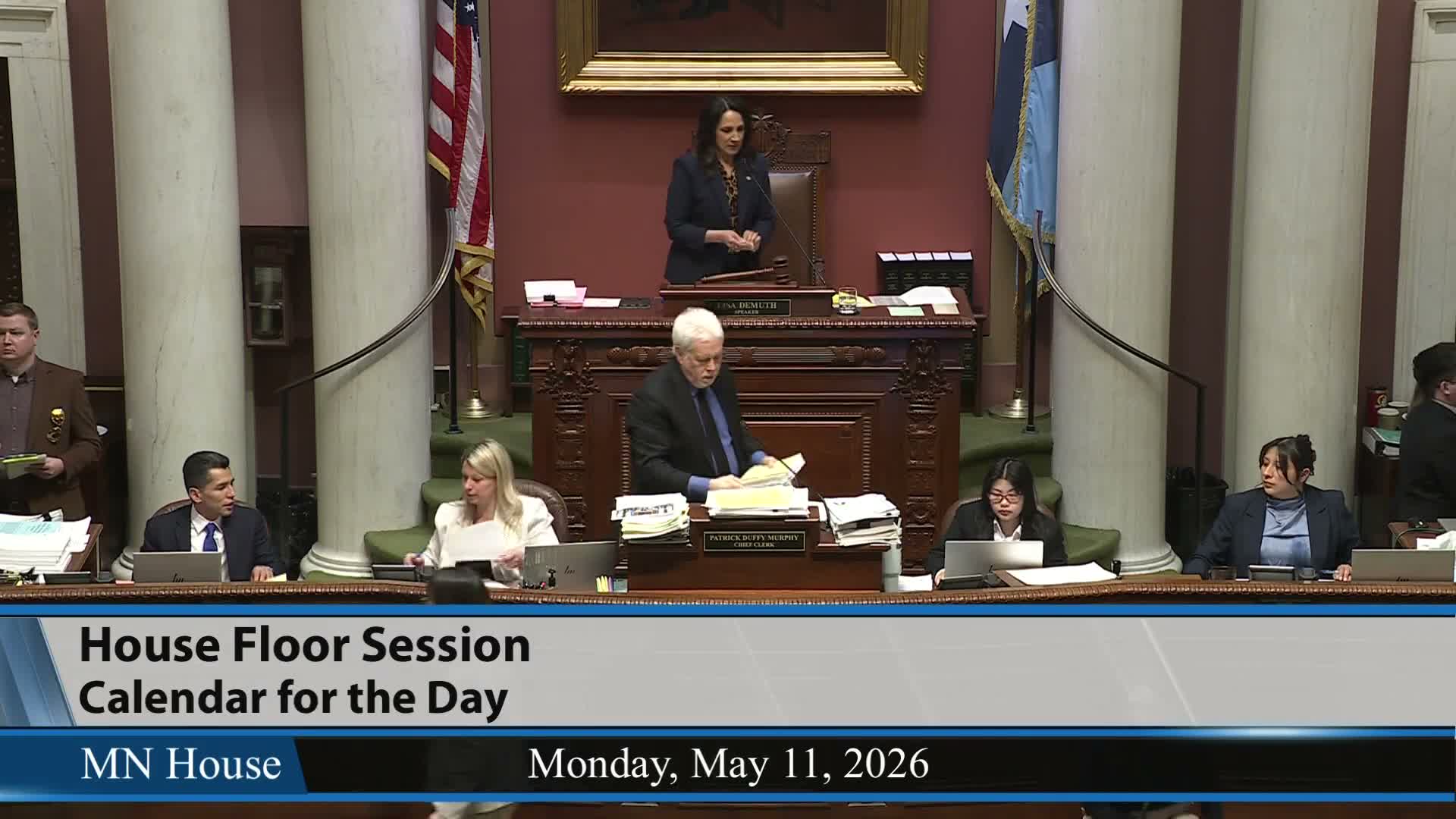
The Minnesota House passed Senate File 476 after debate and a series of floor amendments. The bill, described by sponsor Representative Noor as a human services policy package, contains multiple articles addressing direct treatment policy, protections for vulnerable adults, behavioral-health policy, continuity of care, and other technical and program-integrity changes.
Sponsor and proponents stressed bipartisan stakeholder work and targeted policy changes. Representative Knorr outlined articles covering employee protections from harassment by patients, budget continuation items for corrections/detention settings, health-related policy sections, aging and disability services, behavioral health, and provisions addressing maltreatment of vulnerable adults. Representative Schumacher and other co-chairs highlighted collaboration with the Senate and stakeholder groups.
Floor amendment activity included the adoption of the DE3 amendment (technical and policy adjustments), a withdrawn A8 amendment that would have created a legislative working group for community input, and the adoption of an agency-technical amendment coded A13. Representative Kern discussed A11, a proposed change to billing limits on individualized home supports (monthly cap up to 182.5 hours), but she withdrew that amendment. After debate highlighting tightened data protections for staff in civil-commitment programs and incremental policy changes, the clerk recorded 93 yays and 39 nays; the bill passed as amended and its title was agreed to.
Supporters said the bill closes data-access loopholes, adds modest extensions for some civil-commitment re-entry windows, and addresses staffing classifications and program-integrity tools. Opponents voiced procedural or fiscal concerns on particular provisions during floor exchanges but no single point prevented passage.
The measure contains policy and technical modifications rather than a single new large appropriation on the floor; budgetary effects were discussed in relation to separate forecast-adjustment bills heard later in the session. Sponsors said additional program-integrity proposals would be forthcoming to address fraud and improper payments.
Sponsor and proponents stressed bipartisan stakeholder work and targeted policy changes. Representative Knorr outlined articles covering employee protections from harassment by patients, budget continuation items for corrections/detention settings, health-related policy sections, aging and disability services, behavioral health, and provisions addressing maltreatment of vulnerable adults. Representative Schumacher and other co-chairs highlighted collaboration with the Senate and stakeholder groups.
Floor amendment activity included the adoption of the DE3 amendment (technical and policy adjustments), a withdrawn A8 amendment that would have created a legislative working group for community input, and the adoption of an agency-technical amendment coded A13. Representative Kern discussed A11, a proposed change to billing limits on individualized home supports (monthly cap up to 182.5 hours), but she withdrew that amendment. After debate highlighting tightened data protections for staff in civil-commitment programs and incremental policy changes, the clerk recorded 93 yays and 39 nays; the bill passed as amended and its title was agreed to.
Supporters said the bill closes data-access loopholes, adds modest extensions for some civil-commitment re-entry windows, and addresses staffing classifications and program-integrity tools. Opponents voiced procedural or fiscal concerns on particular provisions during floor exchanges but no single point prevented passage.
The measure contains policy and technical modifications rather than a single new large appropriation on the floor; budgetary effects were discussed in relation to separate forecast-adjustment bills heard later in the session. Sponsors said additional program-integrity proposals would be forthcoming to address fraud and improper payments.
Don't Miss a Word: See the Full Meeting!
Go beyond summaries. Unlock every video, transcript, and key insight with a Founder Membership.
✓
Get instant access to full meeting videos
✓
Search and clip any phrase from complete transcripts
✓
Receive AI-powered summaries & custom alerts
✓
Enjoy lifetime, unrestricted access to government data
30-day money-back guarantee
