Forecast-adjustment bill draws sharp questions on Medicaid and housing-support costs
May 11, 2026 | 2026 Legislature MN, Minnesota
This article was created by AI summarizing key points discussed. AI makes mistakes, so for full details and context, please refer to the video of the full meeting. Please report any errors so we can fix them. Report an error »
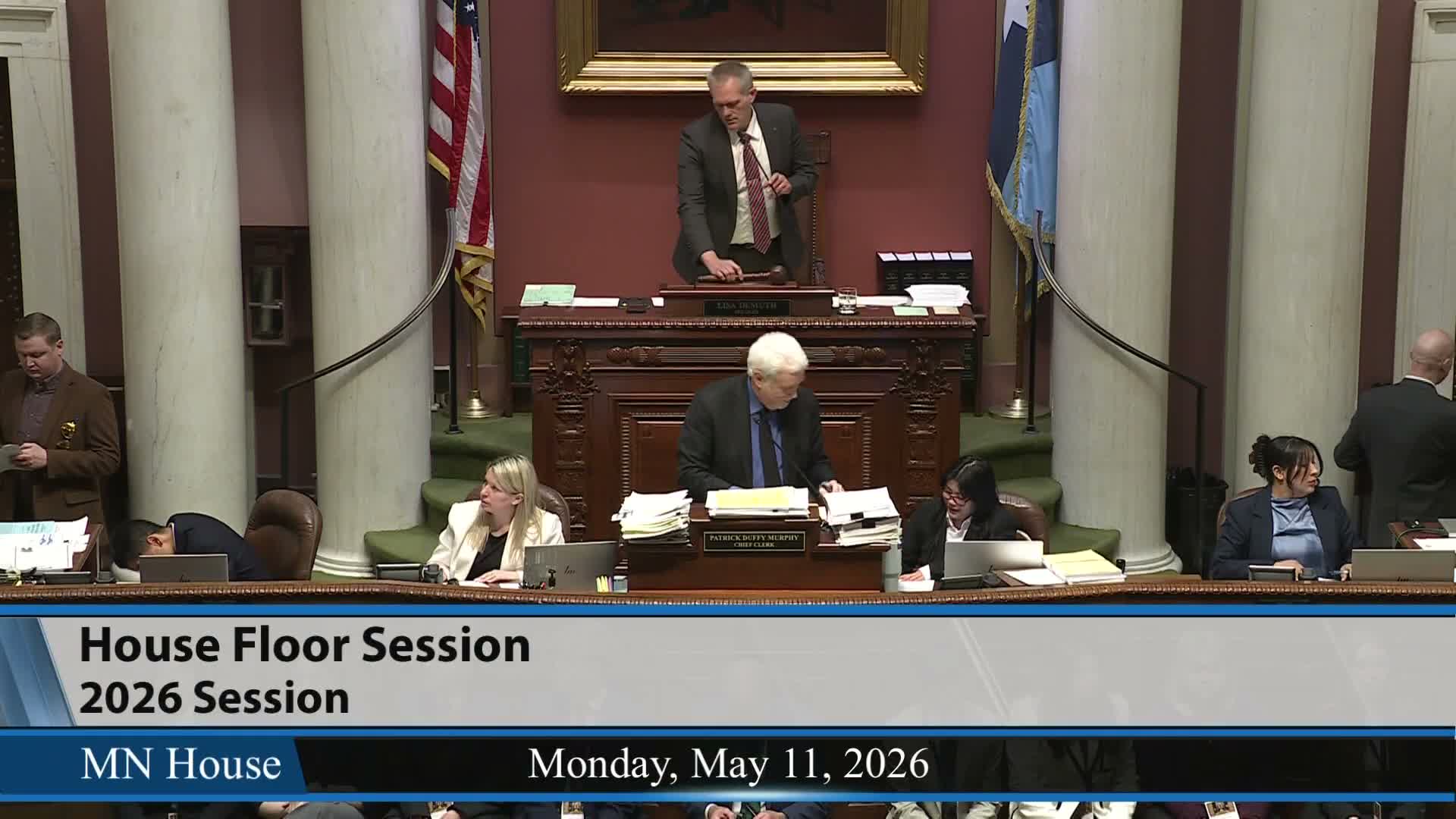
House File 4546, a biennial forecast-adjustment bill for the Department of Human Services and the Department of Children, Youth, and Families, drew extended floor debate on the size and drivers of projected increases.
Representative Noor explained that the bill reflects the February budget focus and adjustments to utilization, program eligibility and rate changes; he cited roughly 1.5 million individuals in Medicaid and said a 16% adjustment by managed-care organizations contributed to the spending increases shown in the focus. Representative Schultz pressed for specifics and said the bill seeks roughly $739 million in fiscal 2026 and $775 million in fiscal 2027 from the general fund (a combined total of about $1.268 billion) as reflected in the forecast documents.
Members questioned whether the increases stem from more people being served or higher per-person costs. Noor said drivers include greater enrollment, rate changes enacted in prior legislation and increased utilization in particular program areas, including long-term-care and housing-support services. Members also focused on housing-support spending: representatives noted increases of roughly $29.5 million in fiscal 2026 and $44.7 million in fiscal 2027 cited in the overhead and asked whether that reflects the discontinued housing-stabilization program or other program changes; Noor clarified that housing stabilization had been eliminated and the amounts reflect the state-funded Housing Support program and changes in how service needs for people with substance-use disorder are paid.
Several members emphasized fraud-recovery efforts and program-integrity measures after prior large fraud findings. Representative McDonald and others urged accountability and recovering funds; Noor and supporters said program-integrity tools (prepayment review, data analytics, and other enforcement measures) were being developed and would produce savings over time.
The debate captured several points of friction: whether forecast adjustments should be accepted as routine bookkeeping to keep the state’s books in line with February projections, or whether the floor should press DHS and MMB for more detail before authorizing additional spending. Supporters described the bill as necessary to “stand up” existing programs in the books as forecasted; critics warned of unchecked program growth and urged recovery of funds lost to fraud.
Floor action proceeded after extended discussion; the clerk recorded the roll call reported in the transcript (86 yays and 45 nays) as the bill was taken up on the floor.
Representative Noor explained that the bill reflects the February budget focus and adjustments to utilization, program eligibility and rate changes; he cited roughly 1.5 million individuals in Medicaid and said a 16% adjustment by managed-care organizations contributed to the spending increases shown in the focus. Representative Schultz pressed for specifics and said the bill seeks roughly $739 million in fiscal 2026 and $775 million in fiscal 2027 from the general fund (a combined total of about $1.268 billion) as reflected in the forecast documents.
Members questioned whether the increases stem from more people being served or higher per-person costs. Noor said drivers include greater enrollment, rate changes enacted in prior legislation and increased utilization in particular program areas, including long-term-care and housing-support services. Members also focused on housing-support spending: representatives noted increases of roughly $29.5 million in fiscal 2026 and $44.7 million in fiscal 2027 cited in the overhead and asked whether that reflects the discontinued housing-stabilization program or other program changes; Noor clarified that housing stabilization had been eliminated and the amounts reflect the state-funded Housing Support program and changes in how service needs for people with substance-use disorder are paid.
Several members emphasized fraud-recovery efforts and program-integrity measures after prior large fraud findings. Representative McDonald and others urged accountability and recovering funds; Noor and supporters said program-integrity tools (prepayment review, data analytics, and other enforcement measures) were being developed and would produce savings over time.
The debate captured several points of friction: whether forecast adjustments should be accepted as routine bookkeeping to keep the state’s books in line with February projections, or whether the floor should press DHS and MMB for more detail before authorizing additional spending. Supporters described the bill as necessary to “stand up” existing programs in the books as forecasted; critics warned of unchecked program growth and urged recovery of funds lost to fraud.
Floor action proceeded after extended discussion; the clerk recorded the roll call reported in the transcript (86 yays and 45 nays) as the bill was taken up on the floor.
View the Full Meeting & All Its Details
This article offers just a summary. Unlock complete video, transcripts, and insights as a Founder Member.
✓
Watch full, unedited meeting videos
✓
Search every word spoken in unlimited transcripts
✓
AI summaries & real-time alerts (all government levels)
✓
Permanent access to expanding government content
30-day money-back guarantee
