Howard County Council hears wide range of testimony on emergency tenant protections bill
May 11, 2026 | Howard County, Maryland
This article was created by AI summarizing key points discussed. AI makes mistakes, so for full details and context, please refer to the video of the full meeting. Please report any errors so we can fix them. Report an error »
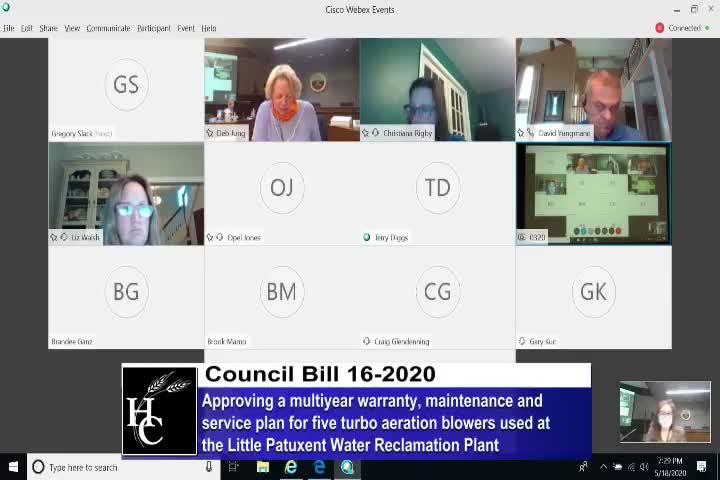
The Howard County Council heard hours of testimony on Council Bill 33 on May 21, a proposed emergency ordinance that would bar rent increases, certain fees and material lease changes for the duration of a proclaimed emergency and for a short period thereafter.
Sponsor Councilmember Liz Walsh introduced the Rental Protection and Stability Act as an emergency measure intended to "hold the economic line for the tenants among us," saying the bill would prevent increases in rent, cuts in services such as utilities, and material lease changes while the state of emergency continues and for a short period after it ends.
Trade and landlord groups urged changes. Aaron Greenfield, testifying for the Maryland Multi‑Housing Association, asked for three amendments, including a prospective‑only application so previously agreed lease increases would not be undone and an exception allowing termination of a lease for demonstrated health or safety risks. "We ask for the same courtesy as indicated in Anne Arundel County," Greenfield said of a modest tolerated rental increase used elsewhere.
Industry voices also sought exemptions for commercial leases. Tom Ballantine of NAOMP argued the bill should not apply to commercial tenants and building owners, saying commercial leases often include long‑term escalators and portfolio management that would be harmed by a broad pause on increases. "Commercial tenants and building owners should have the flexibility to negotiate lease increases," Ballantine said.
Some council members raised constitutional and operational questions about whether the bill could operate retroactively. Councilmember David Youngman asked whether notices already issued before the emergency would have to be rescinded, and members discussed asking the Office of Law for a formal opinion on prospective versus retrospective application.
Other witnesses from the building industry, property owners and real‑estate trade groups urged tailored changes, suggested caps, and proposed narrowing protections to tenants who can demonstrate financial hardship. Several speakers said that while they support tenant stability during the pandemic, the language must preserve remedies for violence, drug trafficking or other clear health and safety threats.
Council members indicated they would discuss amendments and the legal sufficiency of the bill before a planned vote later the same evening. The public hearing closed with the council taking the testimony for further consideration and reserving the final vote for the emergency legislative session scheduled by the council.
Sponsor Councilmember Liz Walsh introduced the Rental Protection and Stability Act as an emergency measure intended to "hold the economic line for the tenants among us," saying the bill would prevent increases in rent, cuts in services such as utilities, and material lease changes while the state of emergency continues and for a short period after it ends.
Trade and landlord groups urged changes. Aaron Greenfield, testifying for the Maryland Multi‑Housing Association, asked for three amendments, including a prospective‑only application so previously agreed lease increases would not be undone and an exception allowing termination of a lease for demonstrated health or safety risks. "We ask for the same courtesy as indicated in Anne Arundel County," Greenfield said of a modest tolerated rental increase used elsewhere.
Industry voices also sought exemptions for commercial leases. Tom Ballantine of NAOMP argued the bill should not apply to commercial tenants and building owners, saying commercial leases often include long‑term escalators and portfolio management that would be harmed by a broad pause on increases. "Commercial tenants and building owners should have the flexibility to negotiate lease increases," Ballantine said.
Some council members raised constitutional and operational questions about whether the bill could operate retroactively. Councilmember David Youngman asked whether notices already issued before the emergency would have to be rescinded, and members discussed asking the Office of Law for a formal opinion on prospective versus retrospective application.
Other witnesses from the building industry, property owners and real‑estate trade groups urged tailored changes, suggested caps, and proposed narrowing protections to tenants who can demonstrate financial hardship. Several speakers said that while they support tenant stability during the pandemic, the language must preserve remedies for violence, drug trafficking or other clear health and safety threats.
Council members indicated they would discuss amendments and the legal sufficiency of the bill before a planned vote later the same evening. The public hearing closed with the council taking the testimony for further consideration and reserving the final vote for the emergency legislative session scheduled by the council.
Don't Miss a Word: See the Full Meeting!
Go beyond summaries. Unlock every video, transcript, and key insight with a Founder Membership.
✓
Get instant access to full meeting videos
✓
Search and clip any phrase from complete transcripts
✓
Receive AI-powered summaries & custom alerts
✓
Enjoy lifetime, unrestricted access to government data
30-day money-back guarantee
