Consultant recommends tiered dispatch pilot, guaranteed‑income test and expanded community responders in Berkeley
May 11, 2026 | Berkeley , Alameda County, California
This article was created by AI summarizing key points discussed. AI makes mistakes, so for full details and context, please refer to the video of the full meeting. Please report any errors so we can fix them. Report an error »
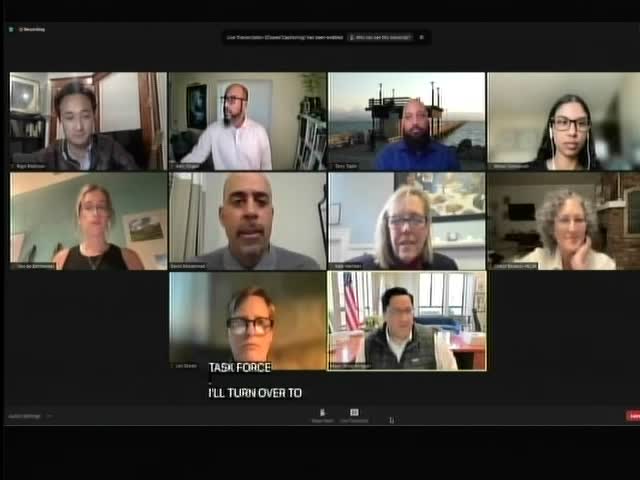
The Berkeley City Council on March 10 heard a final report from the National Institute for Criminal Justice Reform recommending a stepwise redesign of how the city responds to many 911 and non‑emergency calls.
David Mohammed, director of the NICJR team, told the council the firm’s 300‑page final report and implementation plan recommends a tiered dispatch pilot that would route a small subset of low‑risk calls to trained, non‑sworn community responders rather than armed officers. "We recommend starting with a pilot," Mohammed said, calling the approach a way to ‘‘reduce, improve and reinvest’’ city public‑safety resources.
NICJR policy analysts described the evidence behind the proposal. A presentation by Nahali highlighted alternative response examples nationwide — such as CAHOOTS in Eugene and the Crisis Response Unit model in Olympia — and urged peer accountability and early‑intervention systems for officers. Amir Chapel, NICJR’s calls‑for‑service analyst, said NICJR’s classification shows a large share of Berkeley calls are low‑level incidents: using NICJR’s methodology, just over 80% of calls are categorized as lower‑priority or non‑criminal types that could be candidates for alternate responses.
Amir told the council the city could redirect certain calls and achieve operational savings that could be reinvested; NICJR cited a rough fiscal estimate (about $6,800,000 in potential savings, described in staff slides as near 26 full‑time equivalents) if a subset of calls were handled differently, while noting pilots are needed to validate those numbers. NICJR recommended a pilot limited to roughly 10 Tier‑1 call types to test safety, responsiveness and dispatch integrations before any broader rollout.
The report also urged changes to policing practice: more robust early‑warning and quality‑assurance units inside the department, routine public reporting on stops/arrests/uses of force by race and geography (NICJR proposed semiannual reports), and consideration of a regional progressive police academy for long‑term training changes.
On reinvestment, NICJR recommended several community programs, including a guaranteed‑income pilot as one safety‑net intervention. Mohammed presented a sample design: $750 per month for a targeted cohort (the report used an illustrative example of about 200 families prioritized by race and income) and also proposed expanded funding for community‑based organizations or a new department to coordinate grants and capacity building.
The consultant repeatedly cautioned the council that the recommendations are a starting point: "We recommend a pilot. We'll learn from it," Mohammed said, urging careful data collection and iterative design.
What happens next: Council members thanked the NICJR team and asked staff to return with an implementation analysis. The mayor and city manager said staff will prepare a report for a follow‑up meeting in April to outline budget, staffing and operational implications.
Quotes used in this article are sourced from the NICJR presentation and the council meeting transcript; attributions map to presenters David Mohammed, Nahali (NICJR), and Amir Chapel.
David Mohammed, director of the NICJR team, told the council the firm’s 300‑page final report and implementation plan recommends a tiered dispatch pilot that would route a small subset of low‑risk calls to trained, non‑sworn community responders rather than armed officers. "We recommend starting with a pilot," Mohammed said, calling the approach a way to ‘‘reduce, improve and reinvest’’ city public‑safety resources.
NICJR policy analysts described the evidence behind the proposal. A presentation by Nahali highlighted alternative response examples nationwide — such as CAHOOTS in Eugene and the Crisis Response Unit model in Olympia — and urged peer accountability and early‑intervention systems for officers. Amir Chapel, NICJR’s calls‑for‑service analyst, said NICJR’s classification shows a large share of Berkeley calls are low‑level incidents: using NICJR’s methodology, just over 80% of calls are categorized as lower‑priority or non‑criminal types that could be candidates for alternate responses.
Amir told the council the city could redirect certain calls and achieve operational savings that could be reinvested; NICJR cited a rough fiscal estimate (about $6,800,000 in potential savings, described in staff slides as near 26 full‑time equivalents) if a subset of calls were handled differently, while noting pilots are needed to validate those numbers. NICJR recommended a pilot limited to roughly 10 Tier‑1 call types to test safety, responsiveness and dispatch integrations before any broader rollout.
The report also urged changes to policing practice: more robust early‑warning and quality‑assurance units inside the department, routine public reporting on stops/arrests/uses of force by race and geography (NICJR proposed semiannual reports), and consideration of a regional progressive police academy for long‑term training changes.
On reinvestment, NICJR recommended several community programs, including a guaranteed‑income pilot as one safety‑net intervention. Mohammed presented a sample design: $750 per month for a targeted cohort (the report used an illustrative example of about 200 families prioritized by race and income) and also proposed expanded funding for community‑based organizations or a new department to coordinate grants and capacity building.
The consultant repeatedly cautioned the council that the recommendations are a starting point: "We recommend a pilot. We'll learn from it," Mohammed said, urging careful data collection and iterative design.
What happens next: Council members thanked the NICJR team and asked staff to return with an implementation analysis. The mayor and city manager said staff will prepare a report for a follow‑up meeting in April to outline budget, staffing and operational implications.
Quotes used in this article are sourced from the NICJR presentation and the council meeting transcript; attributions map to presenters David Mohammed, Nahali (NICJR), and Amir Chapel.
Don't Miss a Word: See the Full Meeting!
Go beyond summaries. Unlock every video, transcript, and key insight with a Founder Membership.
✓
Get instant access to full meeting videos
✓
Search and clip any phrase from complete transcripts
✓
Receive AI-powered summaries & custom alerts
✓
Enjoy lifetime, unrestricted access to government data
30-day money-back guarantee
