Berkeley task force backs SCU, urges further analysis of proposed CERN dispatch model
May 11, 2026 | Berkeley , Alameda County, California
This article was created by AI summarizing key points discussed. AI makes mistakes, so for full details and context, please refer to the video of the full meeting. Please report any errors so we can fix them. Report an error »
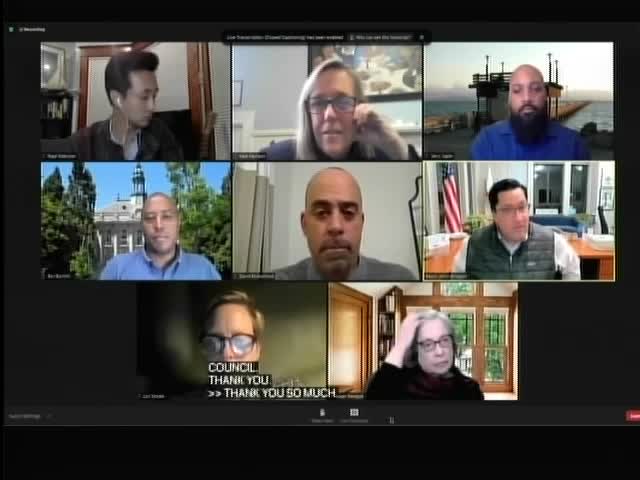
The Reimagining Public Safety Task Force presented its response March 10 to NICJR’s consultant recommendations, endorsing several community‑centered investments while flagging operational gaps in the consultant’s tiered dispatch proposal (CERN).
Task force chair Nathan Meisel said the group’s report seeks a new, holistic public‑safety paradigm and listed substantive questions that must be answered to implement change now, not in some distant future. "This response represents our best good faith attempt to make this new paradigm a reality in the city," Meisel said.
Alicia Harger, the task force’s ASUC representative, summarized formal votes: the task force marked CERN as "more analysis needed," citing concerns that a co‑responder model without a separate non‑police line could appear indistinguishable from police and that staffing, contracting with community organizations and overlap with the Specialized Care Unit (SCU) and BirkDOT were not sufficiently defined. Harger said claims that implementing CERN would reduce the Berkeley Police Department footprint or budget by 50% lack robust quantitative backing in the consultant’s materials.
Other task force members reiterated operational concerns. Dan Lindheim raised dispatch realities: dispatchers told the task force they were reluctant to send non‑police responders when officer backup was not available, and the task force found limited vetting of the proposal with dispatch staff. Margaret Fine emphasized the need for standardized call scripts, clearer CAD/narrative classifications and better call‑taking data before a broad dispatch redesign.
On areas of agreement, the task force strongly supported piloting the Specialized Care Unit (SCU) that would deliver non‑police responses for behavioral‑health and homelessness calls, recommended increased funding and capacity building for community‑based organizations, backed ending pretextual traffic stops and urged greater transparency including real‑time or more frequent data access than semiannual reports.
Public commenters reflected the city’s divide: merchants and some residents urged caution about rapid staff reductions, others called for rapid implementation of alternative responders and expanded investments in violence prevention and guaranteed income pilots. Speakers repeatedly asked for a date‑certain staff plan and budget guidance so items can be considered in the next fiscal cycle.
Council members largely embraced starting small — many singled out the SCU as a near‑term pilot candidate — and directed the city manager to return with an implementation analysis and cost estimates. No council vote was taken on formal adoption of NICJR or task force recommendations during the meeting.
Key quotes and attributions in this article come directly from the task force presentation and public comment transcript; attributions use the speakers as listed by the meeting.
Task force chair Nathan Meisel said the group’s report seeks a new, holistic public‑safety paradigm and listed substantive questions that must be answered to implement change now, not in some distant future. "This response represents our best good faith attempt to make this new paradigm a reality in the city," Meisel said.
Alicia Harger, the task force’s ASUC representative, summarized formal votes: the task force marked CERN as "more analysis needed," citing concerns that a co‑responder model without a separate non‑police line could appear indistinguishable from police and that staffing, contracting with community organizations and overlap with the Specialized Care Unit (SCU) and BirkDOT were not sufficiently defined. Harger said claims that implementing CERN would reduce the Berkeley Police Department footprint or budget by 50% lack robust quantitative backing in the consultant’s materials.
Other task force members reiterated operational concerns. Dan Lindheim raised dispatch realities: dispatchers told the task force they were reluctant to send non‑police responders when officer backup was not available, and the task force found limited vetting of the proposal with dispatch staff. Margaret Fine emphasized the need for standardized call scripts, clearer CAD/narrative classifications and better call‑taking data before a broad dispatch redesign.
On areas of agreement, the task force strongly supported piloting the Specialized Care Unit (SCU) that would deliver non‑police responses for behavioral‑health and homelessness calls, recommended increased funding and capacity building for community‑based organizations, backed ending pretextual traffic stops and urged greater transparency including real‑time or more frequent data access than semiannual reports.
Public commenters reflected the city’s divide: merchants and some residents urged caution about rapid staff reductions, others called for rapid implementation of alternative responders and expanded investments in violence prevention and guaranteed income pilots. Speakers repeatedly asked for a date‑certain staff plan and budget guidance so items can be considered in the next fiscal cycle.
Council members largely embraced starting small — many singled out the SCU as a near‑term pilot candidate — and directed the city manager to return with an implementation analysis and cost estimates. No council vote was taken on formal adoption of NICJR or task force recommendations during the meeting.
Key quotes and attributions in this article come directly from the task force presentation and public comment transcript; attributions use the speakers as listed by the meeting.
View the Full Meeting & All Its Details
This article offers just a summary. Unlock complete video, transcripts, and insights as a Founder Member.
✓
Watch full, unedited meeting videos
✓
Search every word spoken in unlimited transcripts
✓
AI summaries & real-time alerts (all government levels)
✓
Permanent access to expanding government content
30-day money-back guarantee
