Howard County Council hears hours of testimony on proposed plastic-reduction ordinance
May 11, 2026 | Howard County, Maryland
This article was created by AI summarizing key points discussed. AI makes mistakes, so for full details and context, please refer to the video of the full meeting. Please report any errors so we can fix them. Report an error »
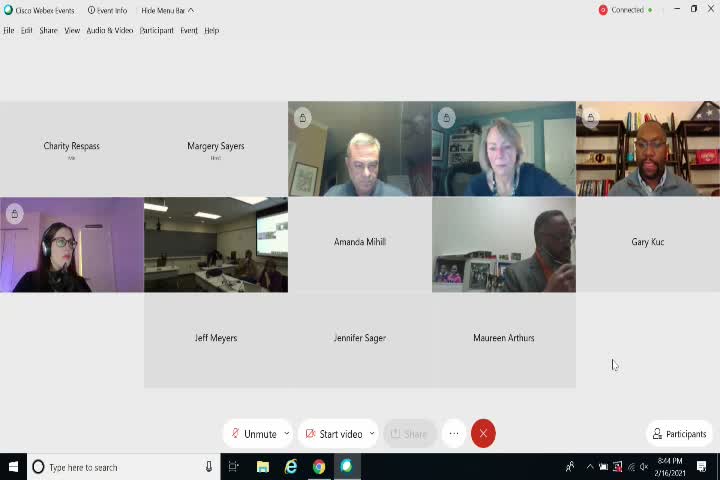
Howard County Council (remote) held a lengthy public hearing on Council Bill 13, the Plastic Reduction Act, which would limit routine distribution of single‑use plastic straws, stirrers, condiment packets and certain plastic foodware by restaurants and retail food service operations.
Councilmember Christiana Rigby, a sponsor, told the council the measure “is not a wholesale ban” but aims to “reduce disposable plastic consumption and waste in our environment and landfills” by requiring items be provided only when requested while permitting restaurants to keep a small stock for customers who need them. She framed the bill as a small, localized step to reduce litter in county waterways and neighborhood storm drains.
More than a dozen residents and organization representatives testified. Several student speakers urged passage on environmental and public‑health grounds. Jamie Gammel, a Centennial High School junior, warned that straws break down into microplastics and cited national estimates about straw use: “The US uses 500,000,000 straws per day,” she said, urging the county to act. Other youth witnesses described plastic cutlery appearing in local cleanups and argued that making utensils and condiments available on request would reduce waste going into landfills and waterways.
Environmental and advocacy groups — including HOCO Climate Action, the Howard County Conservancy, the Sierra Club and Last Plastic Please — supported the bill. Meg Boyd, executive director of the Howard County Conservancy, highlighted recycling limits and said the “upon request” approach has reduced waste by roughly 40 percent in other implementations. Pat Hersey, who leads local outreach on single‑use plastics, told the council many restaurants already provide utensils and straws only on request and shared survey results indicating substantial business compliance with similar practices.
Restaurant owners and industry representatives raised implementation concerns and asked for clarity in the ordinance language. Joe Barbera, who owns a local bistro, said his business had shifted heavily toward carryout during the pandemic and warned that some existing, recyclable plastic containers and hinged ‘clamshells’ are necessary for many to‑go dishes and for preventing spills. He described experiments with compostable and paper alternatives that leaked when they contained sauces and urged the council to ensure the law would not force businesses into options that undermine food safety or cause wasteful outcomes.
Speakers exchanged questions and clarifications at length. Several council members pressed for language that would allow businesses to offer necessary packaging for certain foods while still advancing the bill’s waste‑reduction goals. Council members asked staff to coordinate with the county’s Office of Community Sustainability and the restaurant association to tighten definitions (for example, when a prepackaged condiment constitutes an automatic ‘request’ and how to treat reusable or dishwasher‑safe containers that are nonetheless marketed as disposables).
The hearing record shows strong advocacy on both sides: environmental groups and youth activists urged the council to adopt a measure they said would reduce pollution, while restaurant operators asked for carve‑outs and implementation guidance. Councilmembers indicated they may not send the bill to a work session but will continue discussions with stakeholders before any final vote. The council did not take a final vote during the hearing.
Councilmember Christiana Rigby, a sponsor, told the council the measure “is not a wholesale ban” but aims to “reduce disposable plastic consumption and waste in our environment and landfills” by requiring items be provided only when requested while permitting restaurants to keep a small stock for customers who need them. She framed the bill as a small, localized step to reduce litter in county waterways and neighborhood storm drains.
More than a dozen residents and organization representatives testified. Several student speakers urged passage on environmental and public‑health grounds. Jamie Gammel, a Centennial High School junior, warned that straws break down into microplastics and cited national estimates about straw use: “The US uses 500,000,000 straws per day,” she said, urging the county to act. Other youth witnesses described plastic cutlery appearing in local cleanups and argued that making utensils and condiments available on request would reduce waste going into landfills and waterways.
Environmental and advocacy groups — including HOCO Climate Action, the Howard County Conservancy, the Sierra Club and Last Plastic Please — supported the bill. Meg Boyd, executive director of the Howard County Conservancy, highlighted recycling limits and said the “upon request” approach has reduced waste by roughly 40 percent in other implementations. Pat Hersey, who leads local outreach on single‑use plastics, told the council many restaurants already provide utensils and straws only on request and shared survey results indicating substantial business compliance with similar practices.
Restaurant owners and industry representatives raised implementation concerns and asked for clarity in the ordinance language. Joe Barbera, who owns a local bistro, said his business had shifted heavily toward carryout during the pandemic and warned that some existing, recyclable plastic containers and hinged ‘clamshells’ are necessary for many to‑go dishes and for preventing spills. He described experiments with compostable and paper alternatives that leaked when they contained sauces and urged the council to ensure the law would not force businesses into options that undermine food safety or cause wasteful outcomes.
Speakers exchanged questions and clarifications at length. Several council members pressed for language that would allow businesses to offer necessary packaging for certain foods while still advancing the bill’s waste‑reduction goals. Council members asked staff to coordinate with the county’s Office of Community Sustainability and the restaurant association to tighten definitions (for example, when a prepackaged condiment constitutes an automatic ‘request’ and how to treat reusable or dishwasher‑safe containers that are nonetheless marketed as disposables).
The hearing record shows strong advocacy on both sides: environmental groups and youth activists urged the council to adopt a measure they said would reduce pollution, while restaurant operators asked for carve‑outs and implementation guidance. Councilmembers indicated they may not send the bill to a work session but will continue discussions with stakeholders before any final vote. The council did not take a final vote during the hearing.
Don't Miss a Word: See the Full Meeting!
Go beyond summaries. Unlock every video, transcript, and key insight with a Founder Membership.
✓
Get instant access to full meeting videos
✓
Search and clip any phrase from complete transcripts
✓
Receive AI-powered summaries & custom alerts
✓
Enjoy lifetime, unrestricted access to government data
30-day money-back guarantee
