Orange County supervisors adopt housing-resolution amid CEQA debate
May 11, 2026 | Orange County, California
This article was created by AI summarizing key points discussed. AI makes mistakes, so for full details and context, please refer to the video of the full meeting. Please report any errors so we can fix them. Report an error »
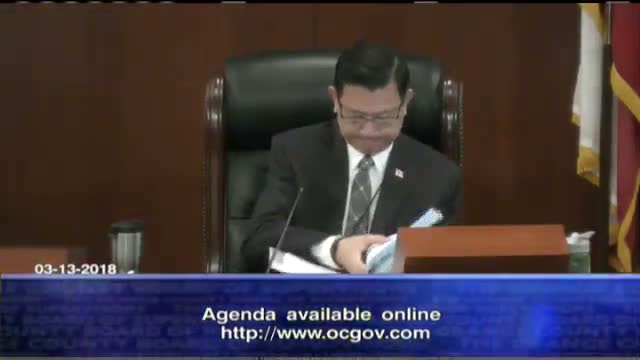
The Orange County Board of Supervisors voted 3–2 on March 13 to adopt a nonbinding resolution declaring the county recognizes a need for more housing and encouraging the development of housing options, "including options at or below" a $500,000 price point.
Chairman Doe moved to adopt the amended resolution, which the board debated for more than an hour. The measure drew public support from housing advocates and industry groups and criticism from supervisors and speakers who said the county cannot achieve the stated price goals without state-level changes.
Why it matters: Supporters said the county faces a supply shortage that is pricing families out of the region, while opponents warned that litigation under the California Environmental Quality Act (CEQA), local fee schedules and settlement costs make low-priced housing infeasible unless those external barriers change.
Public speakers framed the debate. "We are experiencing nothing short of a housing crisis in Orange County," said Ken Stall of People for Housing, urging zoning reform and warning against ballot-box initiatives that curb development. Elizabeth Hansberg, reading a letter from a millennial renter, said high rents and childcare costs make starting a family in the county unaffordable for many.
Industry perspective came from Adam Wood of the Building Industry Association, who said the county’s challenge is a lack of supply and that market-based solutions should be emphasized.
Countering those views, Supervisor Nelson said the county cannot ignore litigation and fee structures. "If CEQA is not reformed, this is a waste of time," Nelson said during the debate, arguing lawsuits and fee schedules impose unpredictable costs that make affordable projects untenable.
The vote and next steps: The board recorded three votes in favor and two opposed; the chair announced the motion carried. A later attempt to reconsider the vote was raised but did not secure the procedural support needed to force a new roll call, and the original adoption stood.
The resolution is a statement of intent rather than a new regulatory requirement. Supporters and several supervisors said it is intended to signal county priorities and encourage city partners and developers to consider a broader range of housing options. The board did not adopt any immediate regulatory changes or funding commitments as part of the resolution.
The board moved on to other agenda items after the vote; staff did not present a timetable for formal follow-up to this resolution at the meeting.
Chairman Doe moved to adopt the amended resolution, which the board debated for more than an hour. The measure drew public support from housing advocates and industry groups and criticism from supervisors and speakers who said the county cannot achieve the stated price goals without state-level changes.
Why it matters: Supporters said the county faces a supply shortage that is pricing families out of the region, while opponents warned that litigation under the California Environmental Quality Act (CEQA), local fee schedules and settlement costs make low-priced housing infeasible unless those external barriers change.
Public speakers framed the debate. "We are experiencing nothing short of a housing crisis in Orange County," said Ken Stall of People for Housing, urging zoning reform and warning against ballot-box initiatives that curb development. Elizabeth Hansberg, reading a letter from a millennial renter, said high rents and childcare costs make starting a family in the county unaffordable for many.
Industry perspective came from Adam Wood of the Building Industry Association, who said the county’s challenge is a lack of supply and that market-based solutions should be emphasized.
Countering those views, Supervisor Nelson said the county cannot ignore litigation and fee structures. "If CEQA is not reformed, this is a waste of time," Nelson said during the debate, arguing lawsuits and fee schedules impose unpredictable costs that make affordable projects untenable.
The vote and next steps: The board recorded three votes in favor and two opposed; the chair announced the motion carried. A later attempt to reconsider the vote was raised but did not secure the procedural support needed to force a new roll call, and the original adoption stood.
The resolution is a statement of intent rather than a new regulatory requirement. Supporters and several supervisors said it is intended to signal county priorities and encourage city partners and developers to consider a broader range of housing options. The board did not adopt any immediate regulatory changes or funding commitments as part of the resolution.
The board moved on to other agenda items after the vote; staff did not present a timetable for formal follow-up to this resolution at the meeting.
Don't Miss a Word: See the Full Meeting!
Go beyond summaries. Unlock every video, transcript, and key insight with a Founder Membership.
✓
Get instant access to full meeting videos
✓
Search and clip any phrase from complete transcripts
✓
Receive AI-powered summaries & custom alerts
✓
Enjoy lifetime, unrestricted access to government data
30-day money-back guarantee
