Consultant presents Weatherford housing analysis, flags capacity, affordability and growth choices
May 11, 2026 | Weatherford, Parker County, Texas
This article was created by AI summarizing key points discussed. AI makes mistakes, so for full details and context, please refer to the video of the full meeting. Please report any errors so we can fix them. Report an error »
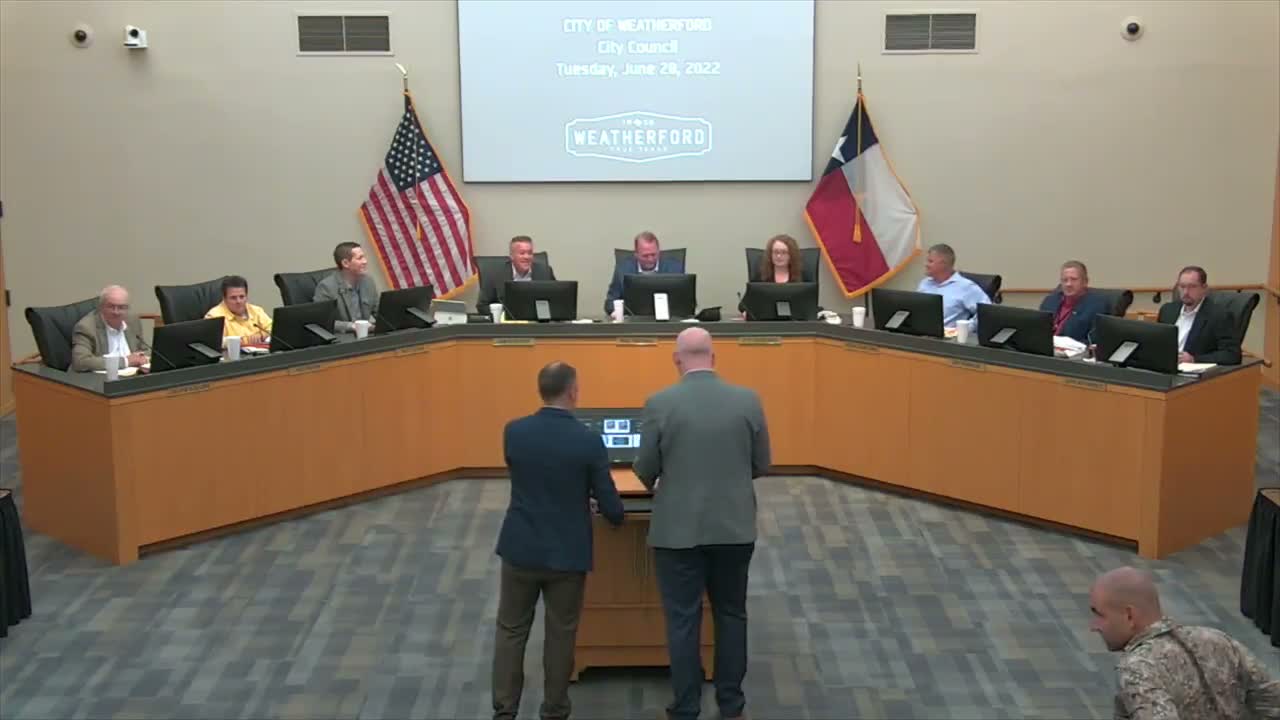
Jason Claunch, a consultant with Catalyst, presented a comprehensive housing analysis to the Weatherford City Council, summarizing market trends, neighborhood assessments, and development recommendations intended to guide the city’s housing policy.
Claunch told council the study examined neighborhood units, demographics, developer interviews, and a SWOT analysis. He said nationally single-family production has dipped while multifamily increased, and locally the market can absorb roughly 321 market-rate multifamily units per year (about 1,600 over five years). "You could easily double in size over the next 20 years," Claunch said when describing a scenario that assumed unconstrained market-driven growth; he framed that outcome as a choice the city can influence through policy.
The presentation highlighted that Weatherford’s median household income (around $68,000 in 2020) trails some peer communities and that developers building larger planned communities often seek public incentives for infrastructure. Claunch recommended strategies including targeted outreach to developers who build high-quality planned developments, exploring infill and connectivity to leverage existing infrastructure, and considering regulatory tools such as planned-unit developments and upgraded design and engineering standards to preserve character.
Council members raised infrastructure and utility-capacity questions. Mayor Pro Tem noted Weatherford’s city-owned electric system and asked how growth would affect service and rates; Claunch said competitive utility rates are an asset and that higher-value housing can provide fiscal benefits to the city. Several council members emphasized patience and continued data monitoring; the mayor proposed a joint session with the Planning and Zoning Commission in the fall to translate the study’s findings into policy options.
The council did not take formal action on policy changes at the meeting but agreed to receive the full report and schedule a joint session to continue the discussion.
Claunch told council the study examined neighborhood units, demographics, developer interviews, and a SWOT analysis. He said nationally single-family production has dipped while multifamily increased, and locally the market can absorb roughly 321 market-rate multifamily units per year (about 1,600 over five years). "You could easily double in size over the next 20 years," Claunch said when describing a scenario that assumed unconstrained market-driven growth; he framed that outcome as a choice the city can influence through policy.
The presentation highlighted that Weatherford’s median household income (around $68,000 in 2020) trails some peer communities and that developers building larger planned communities often seek public incentives for infrastructure. Claunch recommended strategies including targeted outreach to developers who build high-quality planned developments, exploring infill and connectivity to leverage existing infrastructure, and considering regulatory tools such as planned-unit developments and upgraded design and engineering standards to preserve character.
Council members raised infrastructure and utility-capacity questions. Mayor Pro Tem noted Weatherford’s city-owned electric system and asked how growth would affect service and rates; Claunch said competitive utility rates are an asset and that higher-value housing can provide fiscal benefits to the city. Several council members emphasized patience and continued data monitoring; the mayor proposed a joint session with the Planning and Zoning Commission in the fall to translate the study’s findings into policy options.
The council did not take formal action on policy changes at the meeting but agreed to receive the full report and schedule a joint session to continue the discussion.
Don't Miss a Word: See the Full Meeting!
Go beyond summaries. Unlock every video, transcript, and key insight with a Founder Membership.
✓
Get instant access to full meeting videos
✓
Search and clip any phrase from complete transcripts
✓
Receive AI-powered summaries & custom alerts
✓
Enjoy lifetime, unrestricted access to government data
30-day money-back guarantee
