Assembly advances bill redefining 20 'sensitive locations' for concealed carry after Supreme Court ruling
May 10, 2026 | 2026 Legislature NY, New York
This article was created by AI summarizing key points discussed. AI makes mistakes, so for full details and context, please refer to the video of the full meeting. Please report any errors so we can fix them. Report an error »
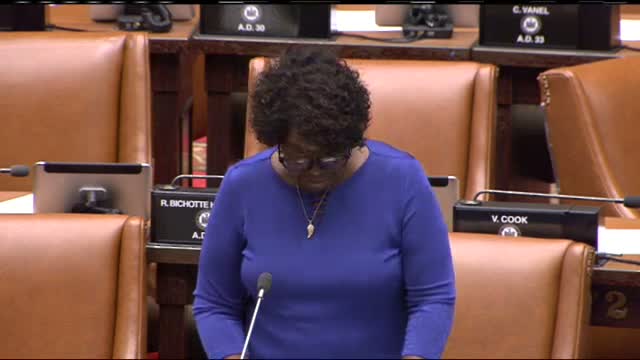
The New York State Assembly met in an extraordinary session to consider Assembly Calendar No. 1, a penal-law omnibus that defines 20 "sensitive locations" where possession of a firearm could be prohibited and adds new licensing, training, safe-storage and ammunition-check provisions.
Sponsor and supporters framed the measure as the Legislature's response to the U.S. Supreme Court ruling in New York State Rifle & Pistol Association v. Bruen, which struck down New York's prior concealed-carry licensing scheme. Sponsor (referred to in debate as Mr. Denovitz) said the bill "produces a list of sensitive locations" intended to comply with the Court's guidance while protecting public safety; he repeatedly said the package aims to balance constitutional requirements with commonsense limits on where firearms may be carried.
Opponents said the bill is broader than the Court's historical-analogy test and would create statewide prohibitions that did not historically exist. One member argued the measure would make nearly everywhere in the state a gun-free zone — naming subways, libraries, parks (including the Adirondack Park), polling places when in use, places of worship, homeless shelters and bars — and urged colleagues to vote no, calling the effort "virtually everywhere in New York state." Another member described the approach as an "egregious" and unconstitutional reaction to the Court.
Key elements of the bill discussed on the floor
- Sensitive-location list: The bill enumerates categories that include places of worship, summer camps and scout activities, public parks and parklands, polling places while in use, public transit and transit facilities, bars and alcohol-licensed premises, educational institutions, shelters and many indoor and outdoor spaces often used for assembly. The sponsor said municipal authorities would identify and conspicuously sign certain geographically defined areas (for example, an area commonly known as Times Square).
- Criminal penalties: The sponsor confirmed the bill creates two new offenses — criminal possession of a firearm, rifle or shotgun in a sensitive location and criminal possession in a restricted location — with class E felony exposure (1–4 years) where a person possesses a firearm in such a location and knew or should have known it was a sensitive location. The sponsor said those offenses can be charged in addition to other, existing crimes as appropriate.
- Licensing, training and fitness: The measure includes new licensing standards, including mandatory classroom training (statutory drafting referenced 16 hours of instruction and two hours of live-fire qualification in committee discussion), a proficiency score minimum (sponsor indicated a minimum scoring threshold of 80% on the written test as a regulatory baseline), an in-person interview by a licensing officer, and periodic recertification (every three years was discussed). Long-time permit-holders were told they would be "grandfathered" in the sense of retaining current permits but would be subject to periodic requirements going forward.
- Social-media screening and 'good moral character': Applicants would submit a list of current and former social-media accounts covering the prior three years; licensing officers would review those accounts as one factor in an evaluation of "good moral character," which the sponsor described as the temperament and judgment necessary to be entrusted with a weapon. The bill includes an appeals process for applicants denied licensure.
- Ammunition checks and database: The floor exchange described a seller-based background-check process for ammunition purchases with records entered into a new state database; the speaker addressing the program said the statutory maximum delay for background checks is 30 days (an existing statutory maximum discussed during Q&A), and that the new legislation would not change that timeline.
- Exemptions: The bill provides exemptions for certain categories (the sponsor cited exemptions for persons lawfully engaged in hunting activity and for certain law-enforcement categories). Questions about retired law-enforcement officers under the Law Enforcement Officers Safety Act (LEOSA) and active-duty military were raised; the sponsor clarified retired and certain exempted officers would be covered by carve-outs, while personal firearms of active-duty service members would generally not be exempt from the licensing regime.
- Effective date and implementation: The sponsor said the bill — if enacted — would not take effect until Sept. 1, giving agencies time to set up processes. Members pressed for details on who would pay for new administration and whether the state police and Department of Criminal Justice Services (DCJS) had capacity; the sponsor said fees and existing budget lines could be used and additional funding could be sought in the next budget.
Exchanges and points of contention
Floor debate featured repeated exchanges in which members highlighted practical and constitutional concerns: whether municipal definitions (for places such as Times Square) could be abused; whether tenants in multiunit housing would effectively be barred from carrying absent landlord consent; whether political rallies and other lawful assemblies would be swept into the sensitive-location list; the criminal-exposure overlap with existing offenses; and whether training, testing, fees and social-media screening would create access barriers for low-income communities.
Several members repeatedly noted the bill's breadth and the short time for public review, criticizing the use of the governor's message of necessity to accelerate consideration. The sponsor defended the expedited schedule as the governor's prerogative and repeatedly framed the package as the Legislature's attempt to comply with the Court while preserving public safety.
Procedural outcome and next steps
The extraordinary-session calendar was advanced for immediate consideration and the clerk read the bill and the governor's message; no final floor vote on passage appears in the transcript excerpt provided. The sponsor and other members discussed implementation timelines and agency responsibilities; the sponsor stated an anticipated effective date of Sept. 1 for the statute if enacted.
Ending
Proceedings were paused after a technical interruption to the broadcast and the Speaker asked the House to stand at ease while staff rebooted the feed.
Sponsor and supporters framed the measure as the Legislature's response to the U.S. Supreme Court ruling in New York State Rifle & Pistol Association v. Bruen, which struck down New York's prior concealed-carry licensing scheme. Sponsor (referred to in debate as Mr. Denovitz) said the bill "produces a list of sensitive locations" intended to comply with the Court's guidance while protecting public safety; he repeatedly said the package aims to balance constitutional requirements with commonsense limits on where firearms may be carried.
Opponents said the bill is broader than the Court's historical-analogy test and would create statewide prohibitions that did not historically exist. One member argued the measure would make nearly everywhere in the state a gun-free zone — naming subways, libraries, parks (including the Adirondack Park), polling places when in use, places of worship, homeless shelters and bars — and urged colleagues to vote no, calling the effort "virtually everywhere in New York state." Another member described the approach as an "egregious" and unconstitutional reaction to the Court.
Key elements of the bill discussed on the floor
- Sensitive-location list: The bill enumerates categories that include places of worship, summer camps and scout activities, public parks and parklands, polling places while in use, public transit and transit facilities, bars and alcohol-licensed premises, educational institutions, shelters and many indoor and outdoor spaces often used for assembly. The sponsor said municipal authorities would identify and conspicuously sign certain geographically defined areas (for example, an area commonly known as Times Square).
- Criminal penalties: The sponsor confirmed the bill creates two new offenses — criminal possession of a firearm, rifle or shotgun in a sensitive location and criminal possession in a restricted location — with class E felony exposure (1–4 years) where a person possesses a firearm in such a location and knew or should have known it was a sensitive location. The sponsor said those offenses can be charged in addition to other, existing crimes as appropriate.
- Licensing, training and fitness: The measure includes new licensing standards, including mandatory classroom training (statutory drafting referenced 16 hours of instruction and two hours of live-fire qualification in committee discussion), a proficiency score minimum (sponsor indicated a minimum scoring threshold of 80% on the written test as a regulatory baseline), an in-person interview by a licensing officer, and periodic recertification (every three years was discussed). Long-time permit-holders were told they would be "grandfathered" in the sense of retaining current permits but would be subject to periodic requirements going forward.
- Social-media screening and 'good moral character': Applicants would submit a list of current and former social-media accounts covering the prior three years; licensing officers would review those accounts as one factor in an evaluation of "good moral character," which the sponsor described as the temperament and judgment necessary to be entrusted with a weapon. The bill includes an appeals process for applicants denied licensure.
- Ammunition checks and database: The floor exchange described a seller-based background-check process for ammunition purchases with records entered into a new state database; the speaker addressing the program said the statutory maximum delay for background checks is 30 days (an existing statutory maximum discussed during Q&A), and that the new legislation would not change that timeline.
- Exemptions: The bill provides exemptions for certain categories (the sponsor cited exemptions for persons lawfully engaged in hunting activity and for certain law-enforcement categories). Questions about retired law-enforcement officers under the Law Enforcement Officers Safety Act (LEOSA) and active-duty military were raised; the sponsor clarified retired and certain exempted officers would be covered by carve-outs, while personal firearms of active-duty service members would generally not be exempt from the licensing regime.
- Effective date and implementation: The sponsor said the bill — if enacted — would not take effect until Sept. 1, giving agencies time to set up processes. Members pressed for details on who would pay for new administration and whether the state police and Department of Criminal Justice Services (DCJS) had capacity; the sponsor said fees and existing budget lines could be used and additional funding could be sought in the next budget.
Exchanges and points of contention
Floor debate featured repeated exchanges in which members highlighted practical and constitutional concerns: whether municipal definitions (for places such as Times Square) could be abused; whether tenants in multiunit housing would effectively be barred from carrying absent landlord consent; whether political rallies and other lawful assemblies would be swept into the sensitive-location list; the criminal-exposure overlap with existing offenses; and whether training, testing, fees and social-media screening would create access barriers for low-income communities.
Several members repeatedly noted the bill's breadth and the short time for public review, criticizing the use of the governor's message of necessity to accelerate consideration. The sponsor defended the expedited schedule as the governor's prerogative and repeatedly framed the package as the Legislature's attempt to comply with the Court while preserving public safety.
Procedural outcome and next steps
The extraordinary-session calendar was advanced for immediate consideration and the clerk read the bill and the governor's message; no final floor vote on passage appears in the transcript excerpt provided. The sponsor and other members discussed implementation timelines and agency responsibilities; the sponsor stated an anticipated effective date of Sept. 1 for the statute if enacted.
Ending
Proceedings were paused after a technical interruption to the broadcast and the Speaker asked the House to stand at ease while staff rebooted the feed.
Don't Miss a Word: See the Full Meeting!
Go beyond summaries. Unlock every video, transcript, and key insight with a Founder Membership.
✓
Get instant access to full meeting videos
✓
Search and clip any phrase from complete transcripts
✓
Receive AI-powered summaries & custom alerts
✓
Enjoy lifetime, unrestricted access to government data
30-day money-back guarantee
