Howard County approves local minimum-wage ordinance after marathon debate
May 10, 2026 | Howard County, Maryland
This article was created by AI summarizing key points discussed. AI makes mistakes, so for full details and context, please refer to the video of the full meeting. Please report any errors so we can fix them. Report an error »
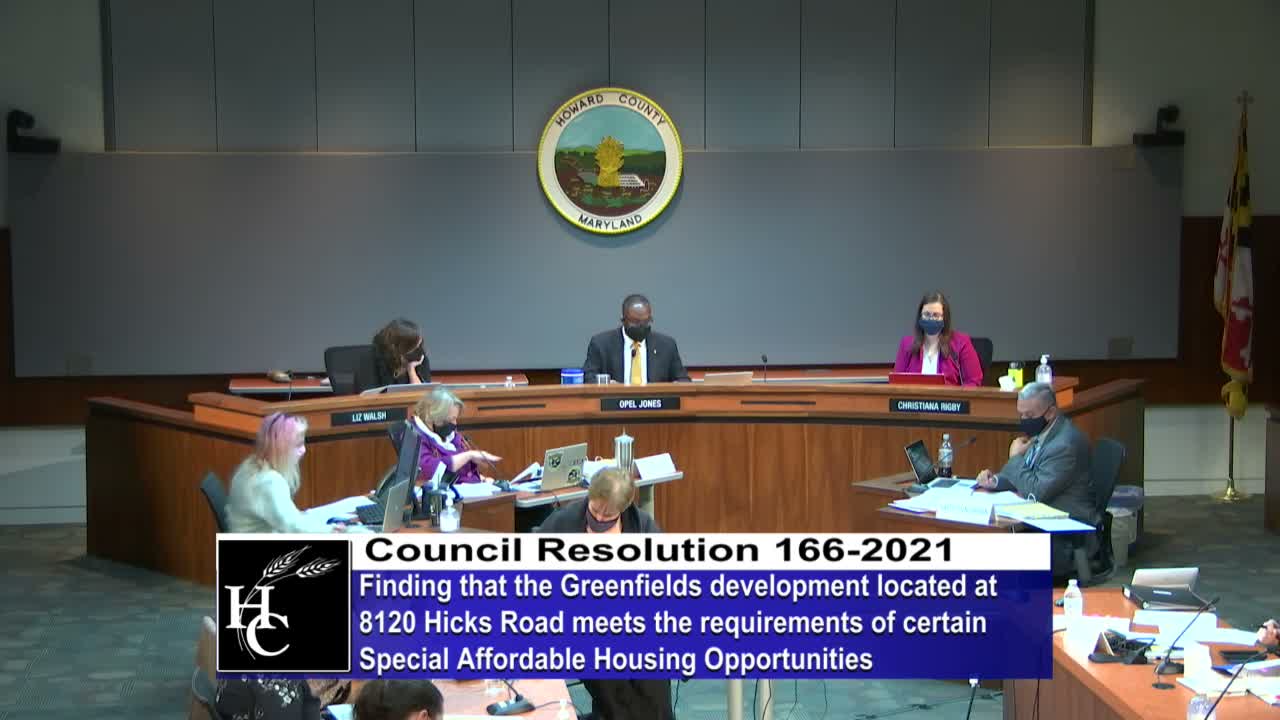
Council Chair Opal Jones and Councilwoman Christiana Rigby led a lengthy floor debate that ended late Monday night with passage of council bill 82, a local minimum-wage ordinance that phases the county’s wage floor upward and adds an annual consumer-price-index adjustment.
The bill, introduced by Opal Jones and Christiana Rigby, drew hours of discussion on pacing the increases, exemptions for small employers and seasonal workers, a capped CPI adjustment and changes to the county’s tipped-wage credit. “If we pass this legislation, employees in Howard County will see tangible benefits in as few as four months,” Councilwoman Christiana Rigby said during the debate in urging passage.
Why it matters: Sponsors said the measure sets a statutory floor aimed at reducing poverty and increasing pay for tens of thousands of residents who earn low wages in the county. Opponents—led in floor remarks by Councilmember David Youngman and others—argued the patchwork of local changes risks higher operating costs for small businesses still recovering from the pandemic and could disadvantage employers compared with neighboring jurisdictions.
What the council adopted: The council passed CB 82 as amended. The final package included a phased schedule for different employer classes that reaches a $16 target, a CPI mechanism with a one-year cap to smooth sharp swings, an adjusted schedule for the tipped wage (moved toward a $4 employer component phased in over several years), and a set of exemptions and clarifications for youth workers, certain food-service and agricultural employees and entities that mirror or adapt state exemptions. Several amendments that would have changed the exemptions list were debated and either failed or were incorporated in revised form.
Exchanges and votes: The debate included multiple exchanges: proponents pressed urgency for workers coping with rising prices and basic expenses, while opponents pressed for additional time to consult with the state delegation and the Maryland Department of Labor. The bill was carried through a series of roll-call votes on amendments and passed in final vote by the council (final tally recorded by the clerk and entered into the record).
Next steps: The ordinance passed the council and will be implemented according to the schedule in the adopted text. Implementation responsibilities and administrative details (including county payroll impacts and enforcement steps) will be managed by county staff and the chief administrative officer as the phase-in proceeds.
The council adjourned after completing the vote and moved on to other agenda items; several related amendments and companion measures were considered but did not survive the floor votes.
The bill, introduced by Opal Jones and Christiana Rigby, drew hours of discussion on pacing the increases, exemptions for small employers and seasonal workers, a capped CPI adjustment and changes to the county’s tipped-wage credit. “If we pass this legislation, employees in Howard County will see tangible benefits in as few as four months,” Councilwoman Christiana Rigby said during the debate in urging passage.
Why it matters: Sponsors said the measure sets a statutory floor aimed at reducing poverty and increasing pay for tens of thousands of residents who earn low wages in the county. Opponents—led in floor remarks by Councilmember David Youngman and others—argued the patchwork of local changes risks higher operating costs for small businesses still recovering from the pandemic and could disadvantage employers compared with neighboring jurisdictions.
What the council adopted: The council passed CB 82 as amended. The final package included a phased schedule for different employer classes that reaches a $16 target, a CPI mechanism with a one-year cap to smooth sharp swings, an adjusted schedule for the tipped wage (moved toward a $4 employer component phased in over several years), and a set of exemptions and clarifications for youth workers, certain food-service and agricultural employees and entities that mirror or adapt state exemptions. Several amendments that would have changed the exemptions list were debated and either failed or were incorporated in revised form.
Exchanges and votes: The debate included multiple exchanges: proponents pressed urgency for workers coping with rising prices and basic expenses, while opponents pressed for additional time to consult with the state delegation and the Maryland Department of Labor. The bill was carried through a series of roll-call votes on amendments and passed in final vote by the council (final tally recorded by the clerk and entered into the record).
Next steps: The ordinance passed the council and will be implemented according to the schedule in the adopted text. Implementation responsibilities and administrative details (including county payroll impacts and enforcement steps) will be managed by county staff and the chief administrative officer as the phase-in proceeds.
The council adjourned after completing the vote and moved on to other agenda items; several related amendments and companion measures were considered but did not survive the floor votes.
View the Full Meeting & All Its Details
This article offers just a summary. Unlock complete video, transcripts, and insights as a Founder Member.
✓
Watch full, unedited meeting videos
✓
Search every word spoken in unlimited transcripts
✓
AI summaries & real-time alerts (all government levels)
✓
Permanent access to expanding government content
30-day money-back guarantee
