Reno County health director outlines COVID-19 preparedness plan, urges local coordination with hospitals
May 10, 2026 | Reno County, Kansas
This article was created by AI summarizing key points discussed. AI makes mistakes, so for full details and context, please refer to the video of the full meeting. Please report any errors so we can fix them. Report an error »
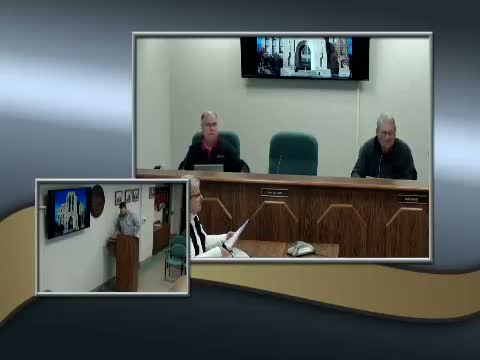
Nick Baldetti, director of the Reno County Health Department, briefed the county commission on March 3 on local preparedness for COVID-19, telling commissioners “it is a matter of when versus if it is gonna come to our local communities.” Baldetti described ongoing coordination with the Kansas Department of Health and Environment and with local medical partners, and said a Feb. 13 meeting convened hospitals and clinics to map roles for isolation, testing and disease investigation.
Baldetti said KDHE runs weekly calls for local public-health officials and that KDHE — working with the state emergency management division — encourages local stakeholders to plan now for how to respond and protect health-care capacity. He said the health department’s epidemiologist is distributing weekly updates to local partners and that KDHE recently gained in‑state laboratory testing capacity for SARS‑CoV‑2, the virus that causes COVID‑19.
On testing, Baldetti said the diagnostic assay for COVID‑19 is different from routine lab panels and typically uses respiratory samples that are sent to a lab with the capability to run the test. He estimated turnaround time at about two to three days and said testing should be handled through state public‑health channels rather than becoming an out‑of‑pocket cost for patients. “Most likely we would look for you to voluntarily isolate yourself if we suspect that there's a potential of having a positive coronavirus,” he said.
Baldetti clarified the difference between isolation and quarantine, saying isolation is a standard public‑health practice for people confirmed to be infected, while quarantine is a legal tool administered by the local health officer as an extension of the state secretary of health’s authority and could involve law‑enforcement for enforcement. He advised commissioners that most people comply voluntarily but warned officials to be prepared for legal and operational questions should quarantine ever be necessary.
In response to questions from commissioners, Baldetti said symptoms overlap with influenza and common colds, which complicates case identification; testing decisions will rely on exposure and travel risk factors and CDC guidance. He summarized available counts to provide context — noting international and U.S. figures current at the time of the briefing — and contrasted them with seasonal influenza burdens to explain the planning rationale.
Baldetti provided a two‑page FAQ to the board, said the health department’s web page links to KDHE resources, and offered to provide further information as it becomes available. The briefing closed with commissioners thanking him for the information and a plan to continue monitoring state guidance.
Baldetti said KDHE runs weekly calls for local public-health officials and that KDHE — working with the state emergency management division — encourages local stakeholders to plan now for how to respond and protect health-care capacity. He said the health department’s epidemiologist is distributing weekly updates to local partners and that KDHE recently gained in‑state laboratory testing capacity for SARS‑CoV‑2, the virus that causes COVID‑19.
On testing, Baldetti said the diagnostic assay for COVID‑19 is different from routine lab panels and typically uses respiratory samples that are sent to a lab with the capability to run the test. He estimated turnaround time at about two to three days and said testing should be handled through state public‑health channels rather than becoming an out‑of‑pocket cost for patients. “Most likely we would look for you to voluntarily isolate yourself if we suspect that there's a potential of having a positive coronavirus,” he said.
Baldetti clarified the difference between isolation and quarantine, saying isolation is a standard public‑health practice for people confirmed to be infected, while quarantine is a legal tool administered by the local health officer as an extension of the state secretary of health’s authority and could involve law‑enforcement for enforcement. He advised commissioners that most people comply voluntarily but warned officials to be prepared for legal and operational questions should quarantine ever be necessary.
In response to questions from commissioners, Baldetti said symptoms overlap with influenza and common colds, which complicates case identification; testing decisions will rely on exposure and travel risk factors and CDC guidance. He summarized available counts to provide context — noting international and U.S. figures current at the time of the briefing — and contrasted them with seasonal influenza burdens to explain the planning rationale.
Baldetti provided a two‑page FAQ to the board, said the health department’s web page links to KDHE resources, and offered to provide further information as it becomes available. The briefing closed with commissioners thanking him for the information and a plan to continue monitoring state guidance.
Don't Miss a Word: See the Full Meeting!
Go beyond summaries. Unlock every video, transcript, and key insight with a Founder Membership.
✓
Get instant access to full meeting videos
✓
Search and clip any phrase from complete transcripts
✓
Receive AI-powered summaries & custom alerts
✓
Enjoy lifetime, unrestricted access to government data
30-day money-back guarantee
