Salinas presents AB 2561 vacancy report: 11.21% citywide vacancy rate as of 2025
May 09, 2026 | Salinas, Monterey County, California
This article was created by AI summarizing key points discussed. AI makes mistakes, so for full details and context, please refer to the video of the full meeting. Please report any errors so we can fix them. Report an error »
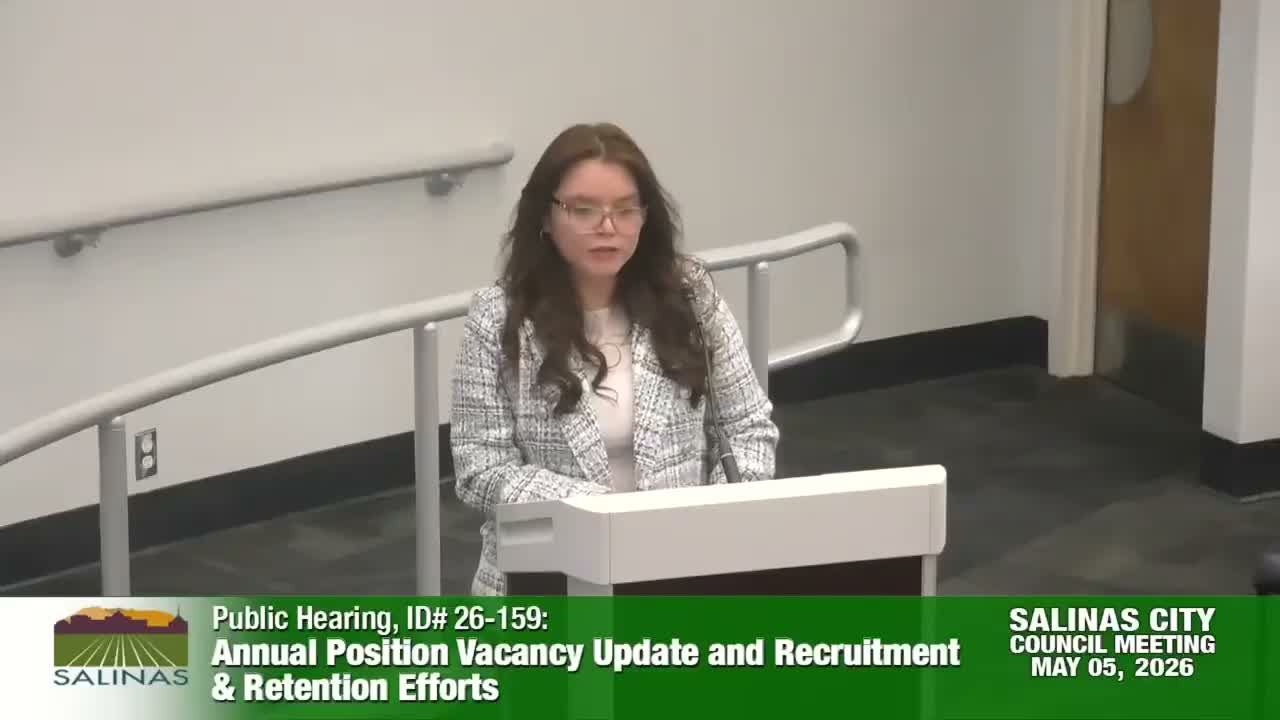
City human-resources staff presented the annual AB 2561 hearing on May 5, reporting workforce, recruitment and retention metrics for calendar-year 2025 and outlining steps to reduce hiring barriers.
Senior human resources analyst Maria Avila said the city had 668 authorized positions at year-end and 75 vacancies (an 11.21% vacancy rate), and that the city filled 122 vacancies during 2025. Avila described recruitment channels (eligibility lists, internal promotions and new recruitments) and cited hiring challenges for specialized roles such as engineering, finance and legal. "The average days to fill vacancies is high," she said, and noted background checks, medical exams and delayed start dates as contributors.
Arlene Barota reviewed bargaining-group vacancy rates and said specific groups exceeded the 20% threshold required for deeper reporting under AB 2561 (for example, SEIU crew supervisors and confidential management groups were noted in the presentation). HR staff said they are finalizing a remote-work policy, expanding a referral program, conducting outreach at Hartnell and CSUMB, and reducing applicant barriers by not requiring all supporting documents at initial application.
Council members asked for local-hire numbers; HR said 59% of employees reside in Salinas and 68.44% of public-safety employees live in Monterey County. Council members also pressed on remote-work eligibility and asked about the assistant city attorney vacancy, which staff said has been open for more than four years and for which the city has used contracts and proposed a salary increase to attract candidates.
Why it matters: Staffing levels affect service delivery and public-safety capacity. The report documents steps aimed at shortening hiring timelines and widening applicant pools while flagging continuing gaps in some classifications.
What happens next: HR will continue to route the remote-work policy for approval, expand referral incentives, and return with recruitment updates; some positions remain actively recruited.
Senior human resources analyst Maria Avila said the city had 668 authorized positions at year-end and 75 vacancies (an 11.21% vacancy rate), and that the city filled 122 vacancies during 2025. Avila described recruitment channels (eligibility lists, internal promotions and new recruitments) and cited hiring challenges for specialized roles such as engineering, finance and legal. "The average days to fill vacancies is high," she said, and noted background checks, medical exams and delayed start dates as contributors.
Arlene Barota reviewed bargaining-group vacancy rates and said specific groups exceeded the 20% threshold required for deeper reporting under AB 2561 (for example, SEIU crew supervisors and confidential management groups were noted in the presentation). HR staff said they are finalizing a remote-work policy, expanding a referral program, conducting outreach at Hartnell and CSUMB, and reducing applicant barriers by not requiring all supporting documents at initial application.
Council members asked for local-hire numbers; HR said 59% of employees reside in Salinas and 68.44% of public-safety employees live in Monterey County. Council members also pressed on remote-work eligibility and asked about the assistant city attorney vacancy, which staff said has been open for more than four years and for which the city has used contracts and proposed a salary increase to attract candidates.
Why it matters: Staffing levels affect service delivery and public-safety capacity. The report documents steps aimed at shortening hiring timelines and widening applicant pools while flagging continuing gaps in some classifications.
What happens next: HR will continue to route the remote-work policy for approval, expand referral incentives, and return with recruitment updates; some positions remain actively recruited.
Don't Miss a Word: See the Full Meeting!
Go beyond summaries. Unlock every video, transcript, and key insight with a Founder Membership.
✓
Get instant access to full meeting videos
✓
Search and clip any phrase from complete transcripts
✓
Receive AI-powered summaries & custom alerts
✓
Enjoy lifetime, unrestricted access to government data
30-day money-back guarantee
