Berkeley council adopts formal street‑funding policy, raising annual contribution target
May 10, 2026 | Berkeley , Alameda County, California
This article was created by AI summarizing key points discussed. AI makes mistakes, so for full details and context, please refer to the video of the full meeting. Please report any errors so we can fix them. Report an error »
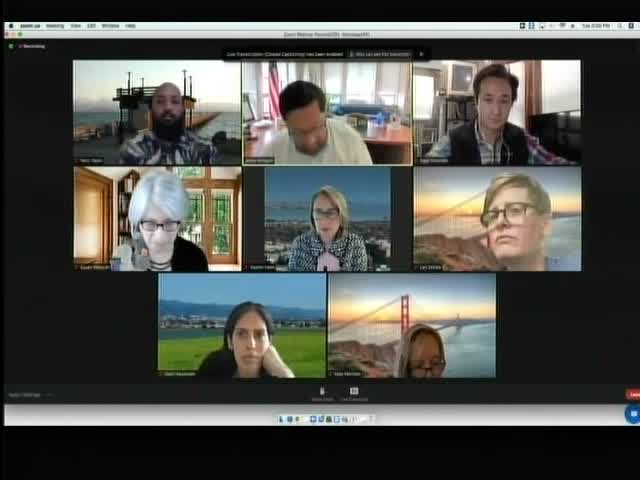
The Berkeley City Council unanimously approved a new street‑fiscal policy designed to increase the city’s annual general‑fund contribution for street maintenance and help prevent further deterioration of pavement condition.
Council Member Weingraff, who brought the item, said the policy is meant to close a long‑standing maintenance shortfall. “15,300,000 annually will be taken from the general fund,” Weingraff said, describing the jump from the current $7.3 million allocation. Vice Mayor Harrison and other members said the measure pairs a long‑term commitment with built‑in flexibility for emergencies.
City staff and the auditor have repeatedly flagged a widening gap between funds available and the amount public‑works consultants say is necessary to stabilize pavement condition. Supporters said the policy not only funds resurfacing but makes room for “complete‑street” upgrades — added sidewalks, bicycle facilities and safety features — when streets are rebuilt.
Several council members pressed for clearer language on how the annual amount would adjust for construction cost escalation rather than only a general inflation metric. Public Works Director Liam Garland told the council that staff can recommend a construction‑cost index if materials and labor outpace CPI.
The policy also contains two explicit triggers to allow the council to suspend the contributions: a draw on the stabilization reserve reaching $1 million or more, and a two‑thirds council vote to suspend in exceptional situations. Proponents said the dual triggers balance fiscal discipline and flexibility in the face of disasters or large, unforeseen liabilities.
The council voted to adopt the policy after a roll‑call vote that recorded all present members voting in favor. The adopted policy will accompany planned revenue proposals the council is preparing for the November ballot and is intended to work in tandem with those measures to improve the city’s pavement condition over time.
The council directed staff to return with final implementation steps and to incorporate the new policy into budget guidance and future bond/parcel‑tax planning.
Council Member Weingraff, who brought the item, said the policy is meant to close a long‑standing maintenance shortfall. “15,300,000 annually will be taken from the general fund,” Weingraff said, describing the jump from the current $7.3 million allocation. Vice Mayor Harrison and other members said the measure pairs a long‑term commitment with built‑in flexibility for emergencies.
City staff and the auditor have repeatedly flagged a widening gap between funds available and the amount public‑works consultants say is necessary to stabilize pavement condition. Supporters said the policy not only funds resurfacing but makes room for “complete‑street” upgrades — added sidewalks, bicycle facilities and safety features — when streets are rebuilt.
Several council members pressed for clearer language on how the annual amount would adjust for construction cost escalation rather than only a general inflation metric. Public Works Director Liam Garland told the council that staff can recommend a construction‑cost index if materials and labor outpace CPI.
The policy also contains two explicit triggers to allow the council to suspend the contributions: a draw on the stabilization reserve reaching $1 million or more, and a two‑thirds council vote to suspend in exceptional situations. Proponents said the dual triggers balance fiscal discipline and flexibility in the face of disasters or large, unforeseen liabilities.
The council voted to adopt the policy after a roll‑call vote that recorded all present members voting in favor. The adopted policy will accompany planned revenue proposals the council is preparing for the November ballot and is intended to work in tandem with those measures to improve the city’s pavement condition over time.
The council directed staff to return with final implementation steps and to incorporate the new policy into budget guidance and future bond/parcel‑tax planning.
Don't Miss a Word: See the Full Meeting!
Go beyond summaries. Unlock every video, transcript, and key insight with a Founder Membership.
✓
Get instant access to full meeting videos
✓
Search and clip any phrase from complete transcripts
✓
Receive AI-powered summaries & custom alerts
✓
Enjoy lifetime, unrestricted access to government data
30-day money-back guarantee
