Public commenters ask Alameda County to dedicate half of AB109 funds to community reentry programs
May 10, 2026 | Alameda County, California
This article was created by AI summarizing key points discussed. AI makes mistakes, so for full details and context, please refer to the video of the full meeting. Please report any errors so we can fix them. Report an error »
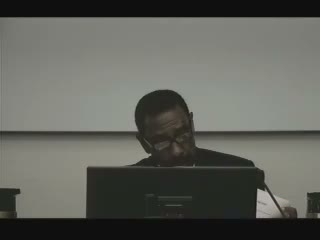
At a public comment period that stretched through much of the meeting, more than two dozen residents, nonprofit leaders and formerly incarcerated people urged the Alameda County Board of Supervisors to adopt a policy dedicating 50% of AB109 public-safety realignment funds to noncustodial, community-based programs.
Paul Sheldon, who identified himself as a trustee with Planting Justice, asked the board to "set aside at least 50% of your realignment funds for non custodial community based corrections programs," arguing those programs better support reentry than incarceration. Bufi Hutchinson of Root & Rebound urged the board to "adopt a board policy that sets aside 50% of the public safety realignment funds" and described workforce, education and health services as priorities.
Several speakers cited local examples of services they said work when funded. Gavin Raiders, executive director of Planting Justice, described hiring 14 men directly from San Quentin and said the organization "created living-wage job opportunities for formerly incarcerated people" and asked the board to set aside funds to expand such efforts. Jane Schroeder of Justice Now described a fellowship that provides job training, stipends and references for people exiting prison and urged funding for programs like it.
Speakers also included victims’ voices and program practitioners. Tatiana Chatterjee, who said she is a victim of violent crime and a teacher, told the board that public-safety funding should "go to keep me safe and keep the public safe" and that victim services, prevention programs and reentry supports are all part of public safety. Several formerly incarcerated speakers and program leaders — including Andre Wiley and others — described operating reentry organizations in Alameda County and said they currently receive little or no stable county funding.
Not all comments endorsed an arbitrary split. Karen Meredith, who identified herself as an assistant district attorney and the county's realignment coordinator, said she supported both in-custody and out-of-custody programming and warned that "the idea that we're going to put an arbitrary number of 50% to a community or outside of custody doesn't make sense to me," urging decisions consistent with the county's comprehensive plan.
In reply, supervisors thanked speakers and outlined the process for moving budget questions forward. Board members and staff identified the Community Corrections Partnership (CCP) process, the CCPEC (Process and Evaluation Committee) and the new Community Advisory Board (CAB) as the venues to vet allocations and said CCPEC would present budget recommendations before the Public Protection Committee. A county representative reported recent work reviewing three years of expenditures and noted that "last year the allocation was $34,600,000 and 30% was spent on community based services," and that statewide AB109 allocations may decline in coming years.
The board did not adopt a formal 50% allocation at the meeting; supervisors encouraged advocates to participate in upcoming CCPEC and Public Protection Committee meetings and to present recommendations there. The county scheduled additional presentations and follow-up discussions to clarify prior-year expenditures and the CCPEC’s proposed Year 4 allocations.
The public comment period included multiple named organizations and programs: Planting Justice, Ella Baker Center for Human Rights, Justice Now, Welcome Home Project, Root & Rebound, Timeless Group and others.
Paul Sheldon, who identified himself as a trustee with Planting Justice, asked the board to "set aside at least 50% of your realignment funds for non custodial community based corrections programs," arguing those programs better support reentry than incarceration. Bufi Hutchinson of Root & Rebound urged the board to "adopt a board policy that sets aside 50% of the public safety realignment funds" and described workforce, education and health services as priorities.
Several speakers cited local examples of services they said work when funded. Gavin Raiders, executive director of Planting Justice, described hiring 14 men directly from San Quentin and said the organization "created living-wage job opportunities for formerly incarcerated people" and asked the board to set aside funds to expand such efforts. Jane Schroeder of Justice Now described a fellowship that provides job training, stipends and references for people exiting prison and urged funding for programs like it.
Speakers also included victims’ voices and program practitioners. Tatiana Chatterjee, who said she is a victim of violent crime and a teacher, told the board that public-safety funding should "go to keep me safe and keep the public safe" and that victim services, prevention programs and reentry supports are all part of public safety. Several formerly incarcerated speakers and program leaders — including Andre Wiley and others — described operating reentry organizations in Alameda County and said they currently receive little or no stable county funding.
Not all comments endorsed an arbitrary split. Karen Meredith, who identified herself as an assistant district attorney and the county's realignment coordinator, said she supported both in-custody and out-of-custody programming and warned that "the idea that we're going to put an arbitrary number of 50% to a community or outside of custody doesn't make sense to me," urging decisions consistent with the county's comprehensive plan.
In reply, supervisors thanked speakers and outlined the process for moving budget questions forward. Board members and staff identified the Community Corrections Partnership (CCP) process, the CCPEC (Process and Evaluation Committee) and the new Community Advisory Board (CAB) as the venues to vet allocations and said CCPEC would present budget recommendations before the Public Protection Committee. A county representative reported recent work reviewing three years of expenditures and noted that "last year the allocation was $34,600,000 and 30% was spent on community based services," and that statewide AB109 allocations may decline in coming years.
The board did not adopt a formal 50% allocation at the meeting; supervisors encouraged advocates to participate in upcoming CCPEC and Public Protection Committee meetings and to present recommendations there. The county scheduled additional presentations and follow-up discussions to clarify prior-year expenditures and the CCPEC’s proposed Year 4 allocations.
The public comment period included multiple named organizations and programs: Planting Justice, Ella Baker Center for Human Rights, Justice Now, Welcome Home Project, Root & Rebound, Timeless Group and others.
View the Full Meeting & All Its Details
This article offers just a summary. Unlock complete video, transcripts, and insights as a Founder Member.
✓
Watch full, unedited meeting videos
✓
Search every word spoken in unlimited transcripts
✓
AI summaries & real-time alerts (all government levels)
✓
Permanent access to expanding government content
30-day money-back guarantee
