Hospital leaders tell council state reimbursement caps, aging population squeeze Howard County General
May 09, 2026 | Howard County, Maryland
This article was created by AI summarizing key points discussed. AI makes mistakes, so for full details and context, please refer to the video of the full meeting. Please report any errors so we can fix them. Report an error »
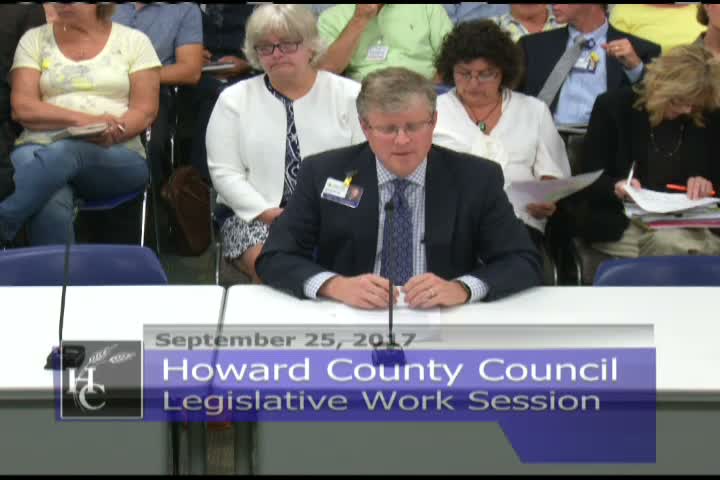
Howard County General Hospital told the County Council it is operating below its licensed bed count and constrained by a state reimbursement system that limits its ability to expand services. Hospital representatives said the facility is licensed for 267 beds but currently has 244 physically available, and described a $45 million planned expansion to add a psychiatric unit and a new observation unit to address local demand.
The hospital’s spokesperson said Maryland’s Health Services Cost Review Commission (HSCRC) sets a global revenue cap based on a historic snapshot of the hospital’s business, which means the hospital receives little or no additional reimbursement even when its patient volume grows. The representative said an emergency-department volume surge after the closure of a neighboring hospital produced a 16% increase in ER visits; a recent rate appeal produced “36 cents on the dollar,” insufficient to cover variable costs.
“The global revenue cap constrains our opportunity to grow and develop, to create a margin, to invest in new construction and new programs to serve the needs of this growing and aging community,” the hospital representative said. Hospital staff described investments already underway — an emergency-department fast‑track space and discrete behavioral-health observation suites — and asked the council to consider operational and capital support.
Council members pressed hospital staff on which policies or partners could address the constraints. Hospital leaders said the HSCRC and the state legislature ultimately set reimbursement policy and that the county could petition the state legislature and HSCRC to re-examine rate-setting approaches for rapidly growing communities. County officials also asked whether local policy tools — such as the adequate public facilities ordinance (APFO) — could be used to measure or mitigate new development’s impact on health facilities; the county attorney said APFO traditionally applies to public facilities and that any locally enforceable test would require clear, measurable triggers and remedies.
Hospital officials said they are pursuing grants, philanthropy, debt and operational savings to fund expansions but urged the county to consider both capital and operating support for programs that target geriatrics, behavioral health and other gaps. The council made no commitment to a specific funding amount; attorneys and staff flagged legal and budgetary limits on obligating future county funding without a formal budget process.
What’s next: Hospital leaders said they will continue to provide more detailed cost and needs data to the council and to the county’s state delegation, and council members asked staff to explore whether APFO policy or state advocacy could be used to signal and address capacity shortfalls.
Sources: County work session transcript (hospital briefing and Q&A)
The hospital’s spokesperson said Maryland’s Health Services Cost Review Commission (HSCRC) sets a global revenue cap based on a historic snapshot of the hospital’s business, which means the hospital receives little or no additional reimbursement even when its patient volume grows. The representative said an emergency-department volume surge after the closure of a neighboring hospital produced a 16% increase in ER visits; a recent rate appeal produced “36 cents on the dollar,” insufficient to cover variable costs.
“The global revenue cap constrains our opportunity to grow and develop, to create a margin, to invest in new construction and new programs to serve the needs of this growing and aging community,” the hospital representative said. Hospital staff described investments already underway — an emergency-department fast‑track space and discrete behavioral-health observation suites — and asked the council to consider operational and capital support.
Council members pressed hospital staff on which policies or partners could address the constraints. Hospital leaders said the HSCRC and the state legislature ultimately set reimbursement policy and that the county could petition the state legislature and HSCRC to re-examine rate-setting approaches for rapidly growing communities. County officials also asked whether local policy tools — such as the adequate public facilities ordinance (APFO) — could be used to measure or mitigate new development’s impact on health facilities; the county attorney said APFO traditionally applies to public facilities and that any locally enforceable test would require clear, measurable triggers and remedies.
Hospital officials said they are pursuing grants, philanthropy, debt and operational savings to fund expansions but urged the county to consider both capital and operating support for programs that target geriatrics, behavioral health and other gaps. The council made no commitment to a specific funding amount; attorneys and staff flagged legal and budgetary limits on obligating future county funding without a formal budget process.
What’s next: Hospital leaders said they will continue to provide more detailed cost and needs data to the council and to the county’s state delegation, and council members asked staff to explore whether APFO policy or state advocacy could be used to signal and address capacity shortfalls.
Sources: County work session transcript (hospital briefing and Q&A)
View the Full Meeting & All Its Details
This article offers just a summary. Unlock complete video, transcripts, and insights as a Founder Member.
✓
Watch full, unedited meeting videos
✓
Search every word spoken in unlimited transcripts
✓
AI summaries & real-time alerts (all government levels)
✓
Permanent access to expanding government content
30-day money-back guarantee
