County planning staff tell council school crowding is driven by resales and household-size changes as well as new construction
May 09, 2026 | Howard County, Maryland
This article was created by AI summarizing key points discussed. AI makes mistakes, so for full details and context, please refer to the video of the full meeting. Please report any errors so we can fix them. Report an error »
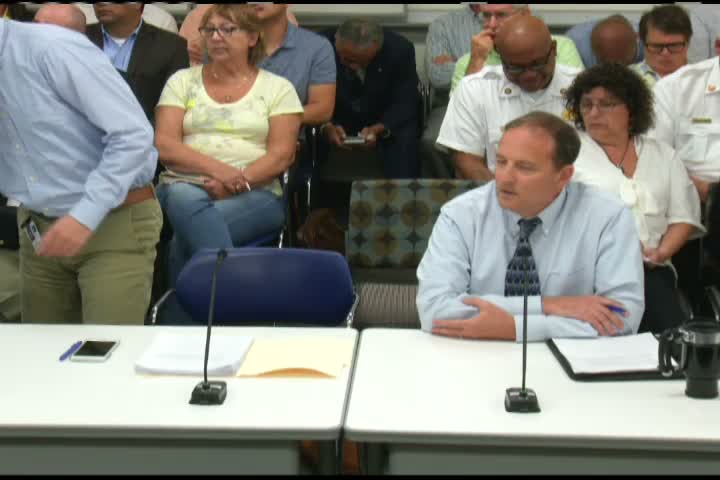
The Department of Planning and Zoning told the County Council that school crowding in Howard County is not driven solely by new residential construction but also by resales and changes in household composition.
Jeff Brownell of DPZ’s Research Division showed capacity-utilization charts for elementary, middle and high schools using the Howard County rated capacity and 09/30/2016 enrollment snapshots. He and school system staff said 42% of net new students in recent years came from new construction and the rest from resales and apartment turnover; they also noted changes such as regional pre‑K allocations that remove K–5 capacity and raise measured utilization at affected schools.
DPZ and Board of Education staff walked council members through how historical redistricting, program placements (regional classrooms and pre‑K rooms), and exemptions (Turf Valley) can make schools appear over- or under-capacity depending on counting rules. School system representatives said their enrollment database tags students entering the system (new, moved within county, apartment turnover) and can produce yields by development. Council members asked DPZ and the school system for historic 2013–2016 capacity comparisons, raw Gilbert study teaching-station counts, and waterfall charts showing how changes (pre‑K, regional programs, redistricting) altered each school’s capacity.
The exchange focused on two policy questions: whether APFO should be tied to school capacity using local versus state-rated capacity, and what trigger should prompt capital planning. Board members recommended a two-step approach: initiate planning once a school reaches 95% utilization and consider an APFO pause at 100% where projections show growth toward 110% within five years. County attorneys cautioned that the county cannot unilaterally bind Board of Education CIP choices or future council budgets; council members said they wanted clearer triggers that prompt planning without pre-committing funds.
Next steps: Councilmembers asked DPZ and the school system for the requested historical and yields data and for a clear explanation of the capacity math (state-rated vs. Howard County-rated) so council staff can model trigger options and fiscal implications before drafting amendments to APFO.
Jeff Brownell of DPZ’s Research Division showed capacity-utilization charts for elementary, middle and high schools using the Howard County rated capacity and 09/30/2016 enrollment snapshots. He and school system staff said 42% of net new students in recent years came from new construction and the rest from resales and apartment turnover; they also noted changes such as regional pre‑K allocations that remove K–5 capacity and raise measured utilization at affected schools.
DPZ and Board of Education staff walked council members through how historical redistricting, program placements (regional classrooms and pre‑K rooms), and exemptions (Turf Valley) can make schools appear over- or under-capacity depending on counting rules. School system representatives said their enrollment database tags students entering the system (new, moved within county, apartment turnover) and can produce yields by development. Council members asked DPZ and the school system for historic 2013–2016 capacity comparisons, raw Gilbert study teaching-station counts, and waterfall charts showing how changes (pre‑K, regional programs, redistricting) altered each school’s capacity.
The exchange focused on two policy questions: whether APFO should be tied to school capacity using local versus state-rated capacity, and what trigger should prompt capital planning. Board members recommended a two-step approach: initiate planning once a school reaches 95% utilization and consider an APFO pause at 100% where projections show growth toward 110% within five years. County attorneys cautioned that the county cannot unilaterally bind Board of Education CIP choices or future council budgets; council members said they wanted clearer triggers that prompt planning without pre-committing funds.
Next steps: Councilmembers asked DPZ and the school system for the requested historical and yields data and for a clear explanation of the capacity math (state-rated vs. Howard County-rated) so council staff can model trigger options and fiscal implications before drafting amendments to APFO.
View the Full Meeting & All Its Details
This article offers just a summary. Unlock complete video, transcripts, and insights as a Founder Member.
✓
Watch full, unedited meeting videos
✓
Search every word spoken in unlimited transcripts
✓
AI summaries & real-time alerts (all government levels)
✓
Permanent access to expanding government content
30-day money-back guarantee
