Residents, advocates urge Alameda County supervisors to reject DHS‑linked surveillance and militarized trainings
May 09, 2026 | Alameda County, California
This article was created by AI summarizing key points discussed. AI makes mistakes, so for full details and context, please refer to the video of the full meeting. Please report any errors so we can fix them. Report an error »
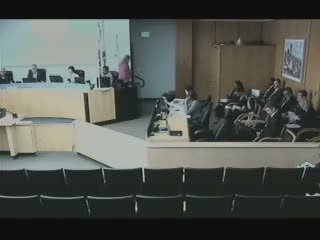
Residents, privacy advocates and community organizations urged the Alameda County Board of Supervisors on a public‑comment agenda item to block Department of Homeland Security funds they said target local communities for increased militarized training and surveillance.
The most sustained remarks came from Brian Geyser of the Oakland Privacy Working Group, who argued the Urban Area Security Initiative (WASI) money “helps to get their funding” and warned purchases and trainings funded by the program can be repurposed to surveil and suppress demonstrations. Geyser asked the board to meet with community groups and deny the expenditures.
Devonte Jackson, Bay Area organizer for the Black Alliance for Just Immigration, said the public was denied a meaningful opportunity to testify after item 24 passed through a mass motion; he said trainings funded this way risk teaching first responders to operate in a “militarized fashion” and argued that law enforcement and emergency responders do not need “war weapons or surveillance technology in our communities.”
Mohammed of Critical Resistance and the Stop Urban Shield Coalition said Urban Shield–style training events and related procurements — including surveillance tools such as the “stingray” device (item 25) — are funded through WASI grants. He asked the board to reject that funding stream and stop taking Department of Homeland Security money for such purposes.
Tash Winn of the Ella Baker Center said recent training activity made parts of the county feel like “a war zone” and urged supervisors to prioritize housing, health care and community resources over militarized preparedness spending.
Eleanor Levine of Code Pink urged the county to find non‑militarized sources for disaster preparedness, saying federal homeland security dollars often carry “strings attached.”
After public comment the board moved on item 24; the presiding officer called for a second and announced, “Motion passes 5 ayes.” Item 25, which commenters referenced frequently as the agenda item for a planned stingray purchase, was continued for two weeks and will return for further discussion.
The meeting record documents community concern that WASI‑linked purchases and trainings can expand law enforcement capabilities beyond traditional disaster response; speakers requested meetings with county staff and asserted that civil‑liberties impacts should be weighed before accepting federal homeland security funds. The board approved item 24 at the meeting but left item 25 pending further review.
The most sustained remarks came from Brian Geyser of the Oakland Privacy Working Group, who argued the Urban Area Security Initiative (WASI) money “helps to get their funding” and warned purchases and trainings funded by the program can be repurposed to surveil and suppress demonstrations. Geyser asked the board to meet with community groups and deny the expenditures.
Devonte Jackson, Bay Area organizer for the Black Alliance for Just Immigration, said the public was denied a meaningful opportunity to testify after item 24 passed through a mass motion; he said trainings funded this way risk teaching first responders to operate in a “militarized fashion” and argued that law enforcement and emergency responders do not need “war weapons or surveillance technology in our communities.”
Mohammed of Critical Resistance and the Stop Urban Shield Coalition said Urban Shield–style training events and related procurements — including surveillance tools such as the “stingray” device (item 25) — are funded through WASI grants. He asked the board to reject that funding stream and stop taking Department of Homeland Security money for such purposes.
Tash Winn of the Ella Baker Center said recent training activity made parts of the county feel like “a war zone” and urged supervisors to prioritize housing, health care and community resources over militarized preparedness spending.
Eleanor Levine of Code Pink urged the county to find non‑militarized sources for disaster preparedness, saying federal homeland security dollars often carry “strings attached.”
After public comment the board moved on item 24; the presiding officer called for a second and announced, “Motion passes 5 ayes.” Item 25, which commenters referenced frequently as the agenda item for a planned stingray purchase, was continued for two weeks and will return for further discussion.
The meeting record documents community concern that WASI‑linked purchases and trainings can expand law enforcement capabilities beyond traditional disaster response; speakers requested meetings with county staff and asserted that civil‑liberties impacts should be weighed before accepting federal homeland security funds. The board approved item 24 at the meeting but left item 25 pending further review.
Don't Miss a Word: See the Full Meeting!
Go beyond summaries. Unlock every video, transcript, and key insight with a Founder Membership.
✓
Get instant access to full meeting videos
✓
Search and clip any phrase from complete transcripts
✓
Receive AI-powered summaries & custom alerts
✓
Enjoy lifetime, unrestricted access to government data
30-day money-back guarantee
