Alameda County advances jail renovation grant after months of public outcry; board forms ad hoc police‑community committee
May 09, 2026 | Alameda County, California
This article was created by AI summarizing key points discussed. AI makes mistakes, so for full details and context, please refer to the video of the full meeting. Please report any errors so we can fix them. Report an error »
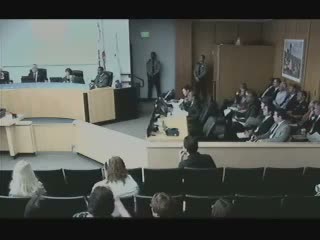
President Haggerty presided over a long Board of Supervisors meeting on Sept. 15 that centered on public demands for accountability after the death of Mario Martinez at Santa Rita Jail and a sheriff-requested amendment to a state grant application for jail mental‑health renovations.
Many speakers during public comment urged immediate investigation and transparency. "My son suffered a severe asthma attack, which cost him his life," said Tonti Martinez, who told the board her son had court-ordered medical care that she says was ignored. Reverend Damita Davis Howard called for an "independent investigation" and for staff involved to be suspended during that probe.
The item before the board (item 66) asked supervisors to amend a resolution tied to an application to the Board of State and Community Corrections for AB863 funding to renovate parts of Santa Rita Jail and improve on-site mental‑health and medical treatment. County staff and the undersheriff told the board the amendment narrows the property valuation reported to the state to the parcel being renovated and that the county behavioral health agency—not the jail’s contracted vendor—would provide mental‑health services under the plan.
Community groups and family members opposed moving forward without more public input. Speakers repeatedly warned the proposal adds square footage and institutionalizes mental‑health care inside a jail rather than expanding community‑based treatment; they also alleged problems with the jail’s medical contractor and with no‑bid contracting. One public speaker said the contractor was a “$237,000,000” vendor and accused the sheriff of receiving "$110,000" in payments; those allegations were raised in testimony and were disputed in public comment and not adjudicated at the meeting.
Board members pressed county health staff and the sheriff’s office for details about who would staff the renovated unit, bed counts and how the county would control operational decisions if the grant were awarded. Health staff said the county serves thousands of people a year through its jail behavioral‑health screening and that continuity of care from in‑custody treatment to community services has been poor; the staff framed the grant as one way to improve that continuity if funding is received.
Undersheriff Rich said the sheriff’s office would be willing to hold a public meeting to explain the grant application and what information could be released without compromising security. "We can make that happen for sure," the undersheriff said when asked whether a public forum would be possible.
Supervisor Vallejo moved to advance the grant resolution with an explicit addition: creation of an ad hoc Police–Community Relations committee to provide further public review and to work with the sheriff’s office on transparency. The motion was seconded and approved by a recorded vote of four ayes and one abstention. County staff noted the BSCC must still award the grant and the board could choose not to accept any award if conditions were unacceptable.
The board’s action advances the county’s application for state funding while responding to community demands for more public engagement and oversight. Supervisors said the ad hoc committee’s scope and membership will be returned to the board so the public understands its charge. The board also scheduled a public‑protection committee agenda item in October for additional review.
What happens next: if the BSCC awards the grant, the county will receive notice and the supervisors will have a subsequent public vote on acceptance and any construction or operational plans; community advocates have said they will continue pushing for a full independent investigation of Mario Martinez’s death and for alternatives to investing in jail infrastructure.
Many speakers during public comment urged immediate investigation and transparency. "My son suffered a severe asthma attack, which cost him his life," said Tonti Martinez, who told the board her son had court-ordered medical care that she says was ignored. Reverend Damita Davis Howard called for an "independent investigation" and for staff involved to be suspended during that probe.
The item before the board (item 66) asked supervisors to amend a resolution tied to an application to the Board of State and Community Corrections for AB863 funding to renovate parts of Santa Rita Jail and improve on-site mental‑health and medical treatment. County staff and the undersheriff told the board the amendment narrows the property valuation reported to the state to the parcel being renovated and that the county behavioral health agency—not the jail’s contracted vendor—would provide mental‑health services under the plan.
Community groups and family members opposed moving forward without more public input. Speakers repeatedly warned the proposal adds square footage and institutionalizes mental‑health care inside a jail rather than expanding community‑based treatment; they also alleged problems with the jail’s medical contractor and with no‑bid contracting. One public speaker said the contractor was a “$237,000,000” vendor and accused the sheriff of receiving "$110,000" in payments; those allegations were raised in testimony and were disputed in public comment and not adjudicated at the meeting.
Board members pressed county health staff and the sheriff’s office for details about who would staff the renovated unit, bed counts and how the county would control operational decisions if the grant were awarded. Health staff said the county serves thousands of people a year through its jail behavioral‑health screening and that continuity of care from in‑custody treatment to community services has been poor; the staff framed the grant as one way to improve that continuity if funding is received.
Undersheriff Rich said the sheriff’s office would be willing to hold a public meeting to explain the grant application and what information could be released without compromising security. "We can make that happen for sure," the undersheriff said when asked whether a public forum would be possible.
Supervisor Vallejo moved to advance the grant resolution with an explicit addition: creation of an ad hoc Police–Community Relations committee to provide further public review and to work with the sheriff’s office on transparency. The motion was seconded and approved by a recorded vote of four ayes and one abstention. County staff noted the BSCC must still award the grant and the board could choose not to accept any award if conditions were unacceptable.
The board’s action advances the county’s application for state funding while responding to community demands for more public engagement and oversight. Supervisors said the ad hoc committee’s scope and membership will be returned to the board so the public understands its charge. The board also scheduled a public‑protection committee agenda item in October for additional review.
What happens next: if the BSCC awards the grant, the county will receive notice and the supervisors will have a subsequent public vote on acceptance and any construction or operational plans; community advocates have said they will continue pushing for a full independent investigation of Mario Martinez’s death and for alternatives to investing in jail infrastructure.
View the Full Meeting & All Its Details
This article offers just a summary. Unlock complete video, transcripts, and insights as a Founder Member.
✓
Watch full, unedited meeting videos
✓
Search every word spoken in unlimited transcripts
✓
AI summaries & real-time alerts (all government levels)
✓
Permanent access to expanding government content
30-day money-back guarantee
