Lawmakers debate HB 1823, critics say bill would bypass coastal protections
May 09, 2026 | House Committee on Education, House of Representatives, Legislative , Hawaii
This article was created by AI summarizing key points discussed. AI makes mistakes, so for full details and context, please refer to the video of the full meeting. Please report any errors so we can fix them. Report an error »
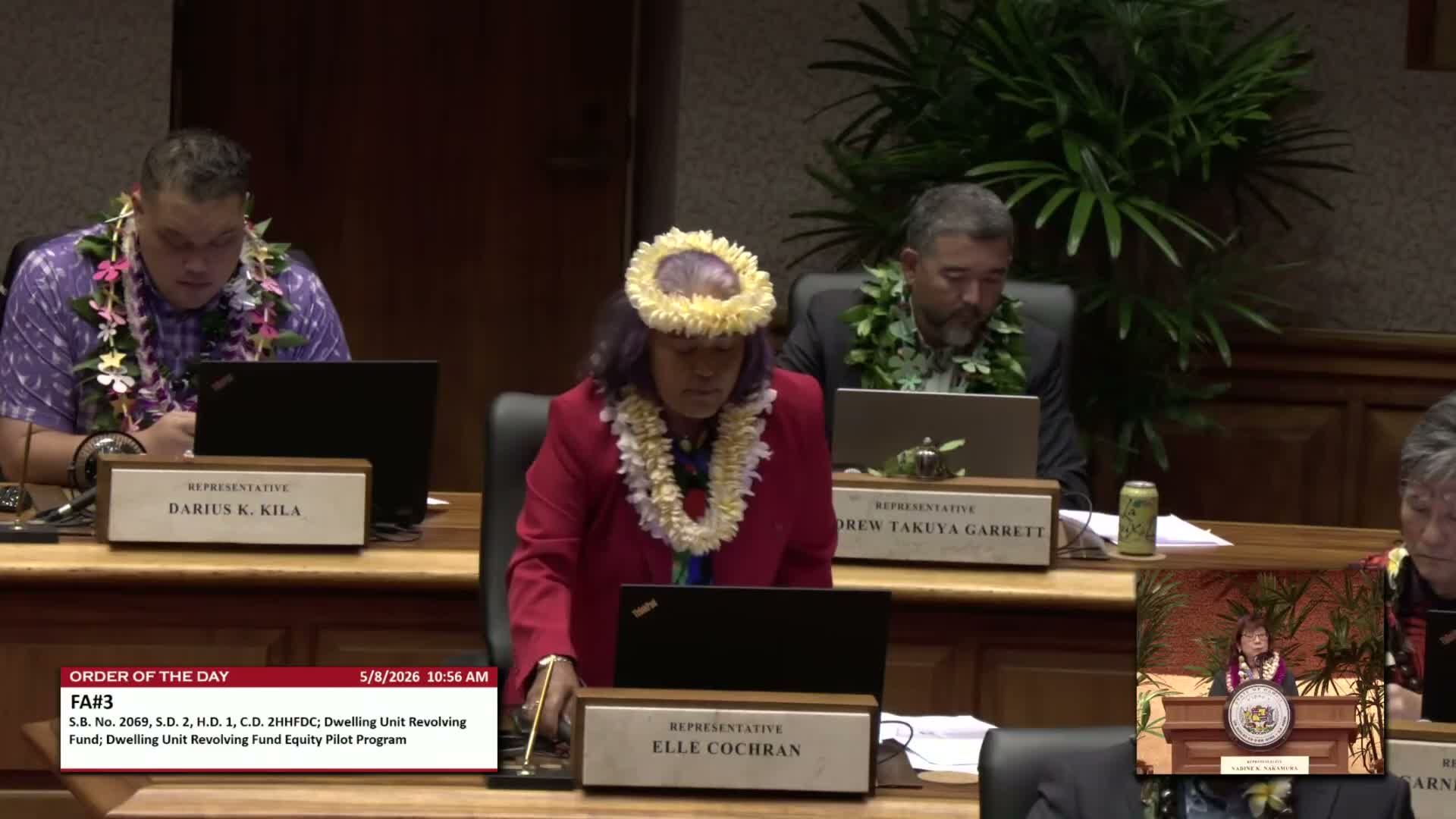
Lawmakers on the House floor spent more than an hour debating HB 1823 (HD2 SD2 CD2), a measure that would narrow the state's Special Management Area (SMA) permitting for specified projects in counties with certain populations. Representative Amato, speaking in opposition, framed the bill as a threat to Hawaii's shoreline protections and to federal funding that helps manage those resources.
"HB 18 23 undermines these core environmental values," Representative Amato said, arguing that the SMA process "protects our shoreline, natural resources, and ensure(s) public access to beaches." Amato warned that removing SMA review could risk hundreds of millions in federal coastal zone funding and said the bill would set a dangerous precedent for bypassing environmental review.
Other members from Maui and neighboring districts pressed related concerns. Representative Cochran described the measure as creating "massive loopholes" that would let many activities in SMAs proceed without public input or usual safeguards. Members said reducing SMA oversight could leave environmentally sensitive and flood-prone areas exposed to poorly scrutinized projects and would make it harder for communities to raise traditional and customary concerns in open forums.
Proponents and some conference negotiators said the conference draft narrowed previously broader language and was intended to help expedite rebuilding after disasters. Representative Hashem, who noted that the bill originated from Maui County, quoted a court judgment suggesting that counties could seek relief from the Legislature and argued the draft added safeguards and limitations compared with earlier versions.
The debate repeatedly returned to process and precedent: opponents urged deference to long-standing land-use law (HRS 205) and caution about passing law that could be viewed as an "end run" around pending litigation. Supporters said the measure was a targeted statutory fix and pointed to other entities that have specific authority to acquire or manage land.
The clerk read members who registered "no" votes on the measure during the consolidated reporting of floor actions; those named included Representatives Amato, Velati, Grandinetti, Hartsfield, Hussey, Iwamoto, Capella, Olds, Peruso, Poipoi and Tam (as reported on the floor). The measure proceeded through final-reading procedures later in the session list presented to the House.
HB 1823 illustrates a recurring legislative tension: accelerating reconstruction or infrastructure work after disaster while preserving public input, environmental review, and legal protections that communities and advocacy groups say guard shorelines and cultural practices.
"HB 18 23 undermines these core environmental values," Representative Amato said, arguing that the SMA process "protects our shoreline, natural resources, and ensure(s) public access to beaches." Amato warned that removing SMA review could risk hundreds of millions in federal coastal zone funding and said the bill would set a dangerous precedent for bypassing environmental review.
Other members from Maui and neighboring districts pressed related concerns. Representative Cochran described the measure as creating "massive loopholes" that would let many activities in SMAs proceed without public input or usual safeguards. Members said reducing SMA oversight could leave environmentally sensitive and flood-prone areas exposed to poorly scrutinized projects and would make it harder for communities to raise traditional and customary concerns in open forums.
Proponents and some conference negotiators said the conference draft narrowed previously broader language and was intended to help expedite rebuilding after disasters. Representative Hashem, who noted that the bill originated from Maui County, quoted a court judgment suggesting that counties could seek relief from the Legislature and argued the draft added safeguards and limitations compared with earlier versions.
The debate repeatedly returned to process and precedent: opponents urged deference to long-standing land-use law (HRS 205) and caution about passing law that could be viewed as an "end run" around pending litigation. Supporters said the measure was a targeted statutory fix and pointed to other entities that have specific authority to acquire or manage land.
The clerk read members who registered "no" votes on the measure during the consolidated reporting of floor actions; those named included Representatives Amato, Velati, Grandinetti, Hartsfield, Hussey, Iwamoto, Capella, Olds, Peruso, Poipoi and Tam (as reported on the floor). The measure proceeded through final-reading procedures later in the session list presented to the House.
HB 1823 illustrates a recurring legislative tension: accelerating reconstruction or infrastructure work after disaster while preserving public input, environmental review, and legal protections that communities and advocacy groups say guard shorelines and cultural practices.
View the Full Meeting & All Its Details
This article offers just a summary. Unlock complete video, transcripts, and insights as a Founder Member.
✓
Watch full, unedited meeting videos
✓
Search every word spoken in unlimited transcripts
✓
AI summaries & real-time alerts (all government levels)
✓
Permanent access to expanding government content
30-day money-back guarantee
