Automotive director: hybrids have reduced engine hours; commission asked for 5-year replacement analysis
May 09, 2026 | Reno County, Kansas
This article was created by AI summarizing key points discussed. AI makes mistakes, so for full details and context, please refer to the video of the full meeting. Please report any errors so we can fix them. Report an error »
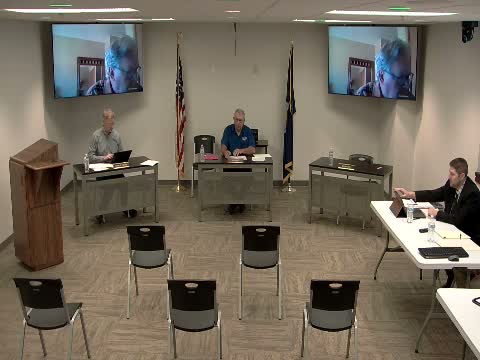
Kyle Burt, identified on the agenda as the county’s automotive director, told commissioners on June 22 that the sheriff’s office’s hybrid patrol vehicles have cut engine hours substantially and shown modest fuel savings under the county’s assumptions.
Burt said hybrids cost roughly $3,100 more per vehicle than non-hybrid equivalents but yield about $821 in annual fuel savings in the county's comparison. He told the commission that hybrids reduce engine hours (the metric used for wear and maintenance) by about 75% on similarly driven vehicles — a factor that could extend engine life and reduce major repairs.
Commissioners asked whether the county should move from a four-year to a five-year replacement cycle for patrol vehicles to capture those savings. Burt said the current warranty for a replacement machine covers 5,000 hours or three years, while the county commonly retains equipment to about 10,000 hours; commissioners asked staff to return with data showing repair and operating costs after 5,000 hours to better assess total cost of ownership.
Burt also noted supply-chain impacts: replacement SUVs and a pickup were delayed because of a microchip shortage at a Ford plant, but some vehicles were expected to arrive in July. Commissioners agreed to direct staff to work with the sheriff and return a recommendation on a five-year replacement cycle and the associated budget implications.
The commission did not adopt a formal replacement-cycle policy on June 22; staff said a policy change would require an explicit motion or directive.
Burt said hybrids cost roughly $3,100 more per vehicle than non-hybrid equivalents but yield about $821 in annual fuel savings in the county's comparison. He told the commission that hybrids reduce engine hours (the metric used for wear and maintenance) by about 75% on similarly driven vehicles — a factor that could extend engine life and reduce major repairs.
Commissioners asked whether the county should move from a four-year to a five-year replacement cycle for patrol vehicles to capture those savings. Burt said the current warranty for a replacement machine covers 5,000 hours or three years, while the county commonly retains equipment to about 10,000 hours; commissioners asked staff to return with data showing repair and operating costs after 5,000 hours to better assess total cost of ownership.
Burt also noted supply-chain impacts: replacement SUVs and a pickup were delayed because of a microchip shortage at a Ford plant, but some vehicles were expected to arrive in July. Commissioners agreed to direct staff to work with the sheriff and return a recommendation on a five-year replacement cycle and the associated budget implications.
The commission did not adopt a formal replacement-cycle policy on June 22; staff said a policy change would require an explicit motion or directive.
Don't Miss a Word: See the Full Meeting!
Go beyond summaries. Unlock every video, transcript, and key insight with a Founder Membership.
✓
Get instant access to full meeting videos
✓
Search and clip any phrase from complete transcripts
✓
Receive AI-powered summaries & custom alerts
✓
Enjoy lifetime, unrestricted access to government data
30-day money-back guarantee
