Committee debates broad landlord‑tenant bill, splits over security‑deposit cap and Good Samaritan protections
May 09, 2026 | Economic Development, Housing & General Affairs, SENATE, Committees, Legislative , Vermont
This article was created by AI summarizing key points discussed. AI makes mistakes, so for full details and context, please refer to the video of the full meeting. Please report any errors so we can fix them. Report an error »
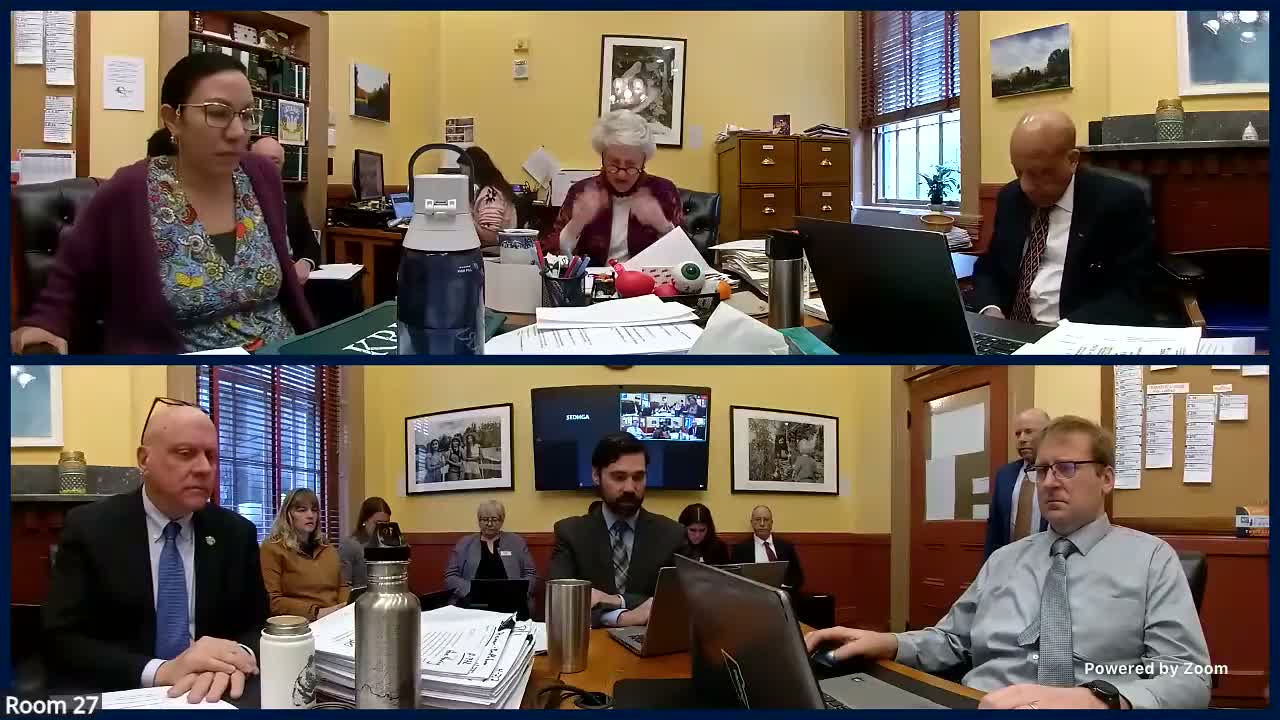
The Economic Development, Housing & General Affairs Committee spent much of its May 8 meeting scrutinizing a consolidated landlord‑tenant bill (draft 5.1) that came over from Senate Judiciary, with legislative counsel Cameron Wood walking members through the changes.
Wood told the committee that “the most substantive change they made was they took out the changes to the termination notice periods in Title 9,” and said the judiciary removed an expedited ejectment subchapter and placed related work in a proposed judiciary study. He outlined the remaining items for the committee: definitions of protected tenants, rent‑increase limits, residential application rules and security‑deposit provisions.
Members split sharply over several provisions. The bill would prevent landlords from increasing rent more than once in a 12‑month period unless a building was purchased; some members asked whether that limit would apply to senior‑housing providers. On application fees and credit checks, the draft allows landlords to recover actual costs for credit or background checks unless a tenant provides a current credit report (defined as within 90 days), and requires landlords who charge such fees to provide copies to applicants.
Legislative counsel advised removing one subsection that would make violations of the rental‑agreement chapter an automatic consumer‑protection violation. "My recommendation to you would be to remove that subsection at a minimum," Cameron said, warning the change could have unintended consequences in court.
The committee debated a proposed cap that would limit security deposits to two months' rent (in addition to first month's rent at move‑in). Landlord representative Peter Tucker of the Vermont Association of Realtors said many landlords typically ask for one month’s deposit and sometimes two in higher‑risk situations, while tenant advocates warned that a three‑month move‑in burden (first month plus two‑month deposit) could block access to housing and place greater demand on already‑funded assistance programs.
On eviction and tenant protections, members discussed expanded retaliatory‑conduct language that would bar landlords from changing terms or threatening actions when tenants report habitability issues or contact law enforcement. The bill also includes a Good Samaritan provision that would prohibit termination when a tenant calls for emergency assistance for an overdose or when a tenant is a victim of domestic abuse and seeks help. Supporters cited overdose‑prevention data; critics said repeated incidents or other evidence of risk should be carefully defined.
Committee leaders asked advocates and staff to propose revised language on several points (including security deposit limits, application‑fee definitions, and protections tied to disability or repeated harmful conduct) and scheduled additional work sessions next week. No final roll‑call votes on the landlord‑tenant package were recorded in the transcript.
What happens next: Committee members agreed to continue drafting and to reconvene with counsel and advocates to produce more targeted amendments before a future vote.
Wood told the committee that “the most substantive change they made was they took out the changes to the termination notice periods in Title 9,” and said the judiciary removed an expedited ejectment subchapter and placed related work in a proposed judiciary study. He outlined the remaining items for the committee: definitions of protected tenants, rent‑increase limits, residential application rules and security‑deposit provisions.
Members split sharply over several provisions. The bill would prevent landlords from increasing rent more than once in a 12‑month period unless a building was purchased; some members asked whether that limit would apply to senior‑housing providers. On application fees and credit checks, the draft allows landlords to recover actual costs for credit or background checks unless a tenant provides a current credit report (defined as within 90 days), and requires landlords who charge such fees to provide copies to applicants.
Legislative counsel advised removing one subsection that would make violations of the rental‑agreement chapter an automatic consumer‑protection violation. "My recommendation to you would be to remove that subsection at a minimum," Cameron said, warning the change could have unintended consequences in court.
The committee debated a proposed cap that would limit security deposits to two months' rent (in addition to first month's rent at move‑in). Landlord representative Peter Tucker of the Vermont Association of Realtors said many landlords typically ask for one month’s deposit and sometimes two in higher‑risk situations, while tenant advocates warned that a three‑month move‑in burden (first month plus two‑month deposit) could block access to housing and place greater demand on already‑funded assistance programs.
On eviction and tenant protections, members discussed expanded retaliatory‑conduct language that would bar landlords from changing terms or threatening actions when tenants report habitability issues or contact law enforcement. The bill also includes a Good Samaritan provision that would prohibit termination when a tenant calls for emergency assistance for an overdose or when a tenant is a victim of domestic abuse and seeks help. Supporters cited overdose‑prevention data; critics said repeated incidents or other evidence of risk should be carefully defined.
Committee leaders asked advocates and staff to propose revised language on several points (including security deposit limits, application‑fee definitions, and protections tied to disability or repeated harmful conduct) and scheduled additional work sessions next week. No final roll‑call votes on the landlord‑tenant package were recorded in the transcript.
What happens next: Committee members agreed to continue drafting and to reconvene with counsel and advocates to produce more targeted amendments before a future vote.
View the Full Meeting & All Its Details
This article offers just a summary. Unlock complete video, transcripts, and insights as a Founder Member.
✓
Watch full, unedited meeting videos
✓
Search every word spoken in unlimited transcripts
✓
AI summaries & real-time alerts (all government levels)
✓
Permanent access to expanding government content
30-day money-back guarantee
