House Human Services questions oversight and funding for Meals on Wheels program
May 09, 2026 | Human Services, HOUSE OF REPRESENTATIVES, Committees, Legislative , Vermont
This article was created by AI summarizing key points discussed. AI makes mistakes, so for full details and context, please refer to the video of the full meeting. Please report any errors so we can fix them. Report an error »
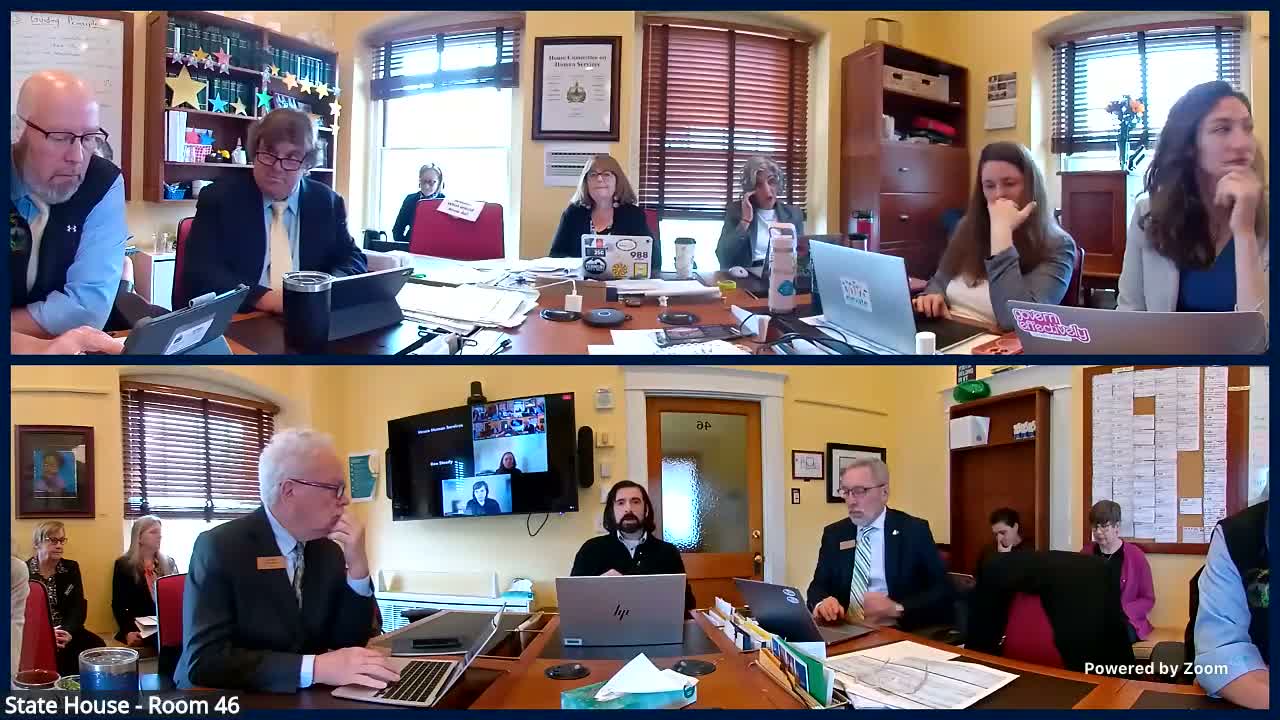
Chair Teresa Wood convened the House Human Services committee to examine the statewide home-delivered meals program and recent funding changes. Jason Palatara, who identified himself as the state unit on aging director with DALE, told the committee Vermont received approximately $1,800,000 in Older Americans Act federal funds for home-delivered meals in federal fiscal year 2025 and that $1,000,000 in state general funds was converted to Global Commitment funding, yielding an estimated $2,400,000 in Global Commitment funds for the same period.
Why it matters: Members said those shifts increase state responsibility for oversight and asked whether the current funding pass-throughs are governed by a formal grant. Without explicit grant agreements, members said, accountability and reporting expectations can be unclear.
Palatara outlined program mechanics and reporting rules. He said Global Commitment HDM funds are issued to area agencies on aging (AAAs) as one-year grants and require AAAs to reimburse meal providers at least $6.50 per meal. "They must reimburse meal providers at least $6.50 per meal," he said, and AAAs also must report quarterly the number of participants with three or more activities-of-daily-living needs and those at or below the federal poverty level. Palatara added that AAAs report results into the state unit on aging quarterly and that the state sends a yearly aggregate report to the federal government.
Members pressed how eligibility and program data are collected. Palatara said practices vary by region: "it's a bit of a mixed bag depending on the region," with some AAAs performing intake and others relying on senior centers in collaboration with AAAs. He said efforts are underway to centralize assessments in some areas to reduce duplicated paperwork.
Several members raised concern about administrative funding and whether the $6.50 reimbursement covers more than the food itself. Palatara said the $6.50 pertains strictly to the meal reimbursement, while AAAs may use federal Older Americans Act administrative funds to cover some program management costs. He acknowledged that for the Global Commitment grant cycle there was no separate allotment for AAAs' administrative costs and that the global-commitment funds in that grant were intended exclusively for meal reimbursement.
On governance, members said it was "odd" there was no traditional grant agreement for the pass-through funding. Palatara described the state plan on aging as the master document containing assurances AAAs must follow and said AAAs provide biannual area-plan updates and yearly federally required reports, but he agreed the state plan is not a contractual grant agreement and pledged to share relevant documents with the committee.
Program scale: Palatara gave final figures for the Global Commitment HDM grant cycle in FY25: 4,422 older Vermonters received 351,648 meals. For the current fiscal year'quarter 1'he reported 3,039 older Vermonters received about 86,000 meals; of those, 23% had three or more ADL needs, 82% had three or more IADL needs and 42% were at or below the federal poverty level.
What comes next: Committee members asked staff to follow up with the department on formal agreements, a clearer breakdown of which entities perform intake and reassessments, and whether additional administrative funding should be built into future grant cycles. The committee recessed until its next scheduled item.
Why it matters: Members said those shifts increase state responsibility for oversight and asked whether the current funding pass-throughs are governed by a formal grant. Without explicit grant agreements, members said, accountability and reporting expectations can be unclear.
Palatara outlined program mechanics and reporting rules. He said Global Commitment HDM funds are issued to area agencies on aging (AAAs) as one-year grants and require AAAs to reimburse meal providers at least $6.50 per meal. "They must reimburse meal providers at least $6.50 per meal," he said, and AAAs also must report quarterly the number of participants with three or more activities-of-daily-living needs and those at or below the federal poverty level. Palatara added that AAAs report results into the state unit on aging quarterly and that the state sends a yearly aggregate report to the federal government.
Members pressed how eligibility and program data are collected. Palatara said practices vary by region: "it's a bit of a mixed bag depending on the region," with some AAAs performing intake and others relying on senior centers in collaboration with AAAs. He said efforts are underway to centralize assessments in some areas to reduce duplicated paperwork.
Several members raised concern about administrative funding and whether the $6.50 reimbursement covers more than the food itself. Palatara said the $6.50 pertains strictly to the meal reimbursement, while AAAs may use federal Older Americans Act administrative funds to cover some program management costs. He acknowledged that for the Global Commitment grant cycle there was no separate allotment for AAAs' administrative costs and that the global-commitment funds in that grant were intended exclusively for meal reimbursement.
On governance, members said it was "odd" there was no traditional grant agreement for the pass-through funding. Palatara described the state plan on aging as the master document containing assurances AAAs must follow and said AAAs provide biannual area-plan updates and yearly federally required reports, but he agreed the state plan is not a contractual grant agreement and pledged to share relevant documents with the committee.
Program scale: Palatara gave final figures for the Global Commitment HDM grant cycle in FY25: 4,422 older Vermonters received 351,648 meals. For the current fiscal year'quarter 1'he reported 3,039 older Vermonters received about 86,000 meals; of those, 23% had three or more ADL needs, 82% had three or more IADL needs and 42% were at or below the federal poverty level.
What comes next: Committee members asked staff to follow up with the department on formal agreements, a clearer breakdown of which entities perform intake and reassessments, and whether additional administrative funding should be built into future grant cycles. The committee recessed until its next scheduled item.
View the Full Meeting & All Its Details
This article offers just a summary. Unlock complete video, transcripts, and insights as a Founder Member.
✓
Watch full, unedited meeting videos
✓
Search every word spoken in unlimited transcripts
✓
AI summaries & real-time alerts (all government levels)
✓
Permanent access to expanding government content
30-day money-back guarantee
