Alabama Senate approves House Bill 1 on congressional lines after heated vote, 27–8
May 08, 2026 | Senate, Alabama Legislative Sessions, Alabama
This article was created by AI summarizing key points discussed. AI makes mistakes, so for full details and context, please refer to the video of the full meeting. Please report any errors so we can fix them. Report an error »
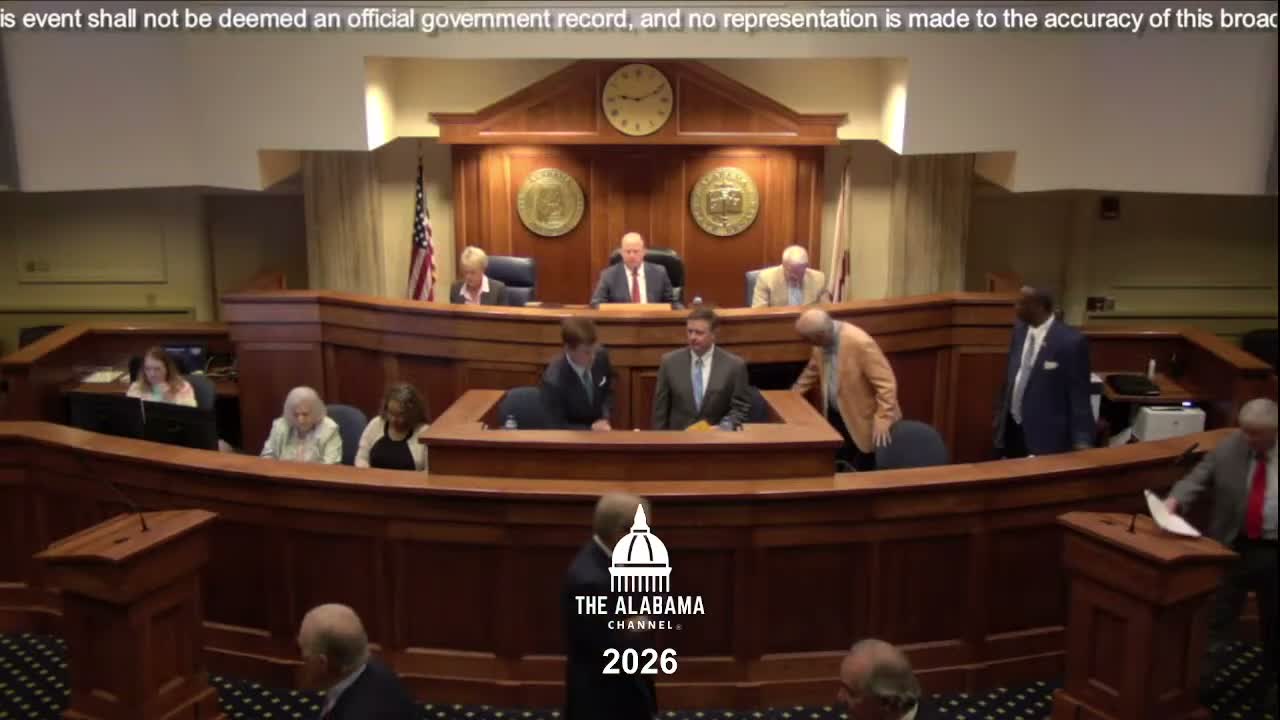
The Alabama Senate passed House Bill 1 on May 4, voting 27–8 after a daylong debate in a special session that centered on whether the Legislature should move now to redraw congressional lines.
Senator Albritton, the bill’s floor sponsor, told the chamber the bill “provides a process for electing candidates for US House District Numbers 1, 2, 6, and 7” and said it would take effect only if a federal court lifts existing injunctions. “Should there be no court order issued, then this bill would have no effect,” he said.
Opponents said the Legislature was acting prematurely and could violate both a federal injunction and Amendment 4 to the state constitution, which bars changes to election conduct within six months of a general election. Senator Singleton argued the court-ordered remedial map remains binding and said lawmakers would be disregarding the judiciary if they implemented changes without court approval. “The state is currently operating on a court-ordered remedial map. That order remains binding unless modified or lifted by the federal court,” he said.
The floor debate ranged from technical redistricting issues — population deviations, community-of-interest lines and runoff timing — to extended historical and civil-rights arguments. Senator Smitherman and others traced the Voting Rights Act’s role in expanding representation, saying HB 1 threatened to dilute Black voting opportunity. “What state leaders are trying to do would dilute their power, silence their voice, and eliminate their ability to elect congressional ... leaders of their choice,” she said.
Proponents characterized the bill as a conditional compliance mechanism that would allow the state to act quickly if a court order authorized new lines. They emphasized economic and geographic community ties as criteria for drawing districts and said the bill’s operation depends on subsequent judicial action.
After the lengthy debate, the Senate called a long-roll vote; the clerk recorded 27 ayes and 8 nays and the presiding officer announced that House Bill 1 had passed. Several senators on the losing side said they expected litigation and vowed to challenge the legislation in court.
The session concluded with a motion to adjourn; the chamber stood adjourned following procedural votes.
What happens next: The bill, as described on the floor, is conditioned on a federal court’s lifting of an injunction and therefore will likely remain the subject of court filings and possible additional legal proceedings. Senators opposing the measure said they would pursue state and federal challenges; supporters said the bill merely prepares a process should judicial circumstances change.
Senator Albritton, the bill’s floor sponsor, told the chamber the bill “provides a process for electing candidates for US House District Numbers 1, 2, 6, and 7” and said it would take effect only if a federal court lifts existing injunctions. “Should there be no court order issued, then this bill would have no effect,” he said.
Opponents said the Legislature was acting prematurely and could violate both a federal injunction and Amendment 4 to the state constitution, which bars changes to election conduct within six months of a general election. Senator Singleton argued the court-ordered remedial map remains binding and said lawmakers would be disregarding the judiciary if they implemented changes without court approval. “The state is currently operating on a court-ordered remedial map. That order remains binding unless modified or lifted by the federal court,” he said.
The floor debate ranged from technical redistricting issues — population deviations, community-of-interest lines and runoff timing — to extended historical and civil-rights arguments. Senator Smitherman and others traced the Voting Rights Act’s role in expanding representation, saying HB 1 threatened to dilute Black voting opportunity. “What state leaders are trying to do would dilute their power, silence their voice, and eliminate their ability to elect congressional ... leaders of their choice,” she said.
Proponents characterized the bill as a conditional compliance mechanism that would allow the state to act quickly if a court order authorized new lines. They emphasized economic and geographic community ties as criteria for drawing districts and said the bill’s operation depends on subsequent judicial action.
After the lengthy debate, the Senate called a long-roll vote; the clerk recorded 27 ayes and 8 nays and the presiding officer announced that House Bill 1 had passed. Several senators on the losing side said they expected litigation and vowed to challenge the legislation in court.
The session concluded with a motion to adjourn; the chamber stood adjourned following procedural votes.
What happens next: The bill, as described on the floor, is conditioned on a federal court’s lifting of an injunction and therefore will likely remain the subject of court filings and possible additional legal proceedings. Senators opposing the measure said they would pursue state and federal challenges; supporters said the bill merely prepares a process should judicial circumstances change.
Don't Miss a Word: See the Full Meeting!
Go beyond summaries. Unlock every video, transcript, and key insight with a Founder Membership.
✓
Get instant access to full meeting videos
✓
Search and clip any phrase from complete transcripts
✓
Receive AI-powered summaries & custom alerts
✓
Enjoy lifetime, unrestricted access to government data
30-day money-back guarantee
