Berkeley adopts surveillance use policies, delays full Flock contract and extends ALPR deal during RFP
May 09, 2026 | Berkeley , Alameda County, California
This article was created by AI summarizing key points discussed. AI makes mistakes, so for full details and context, please refer to the video of the full meeting. Please report any errors so we can fix them. Report an error »
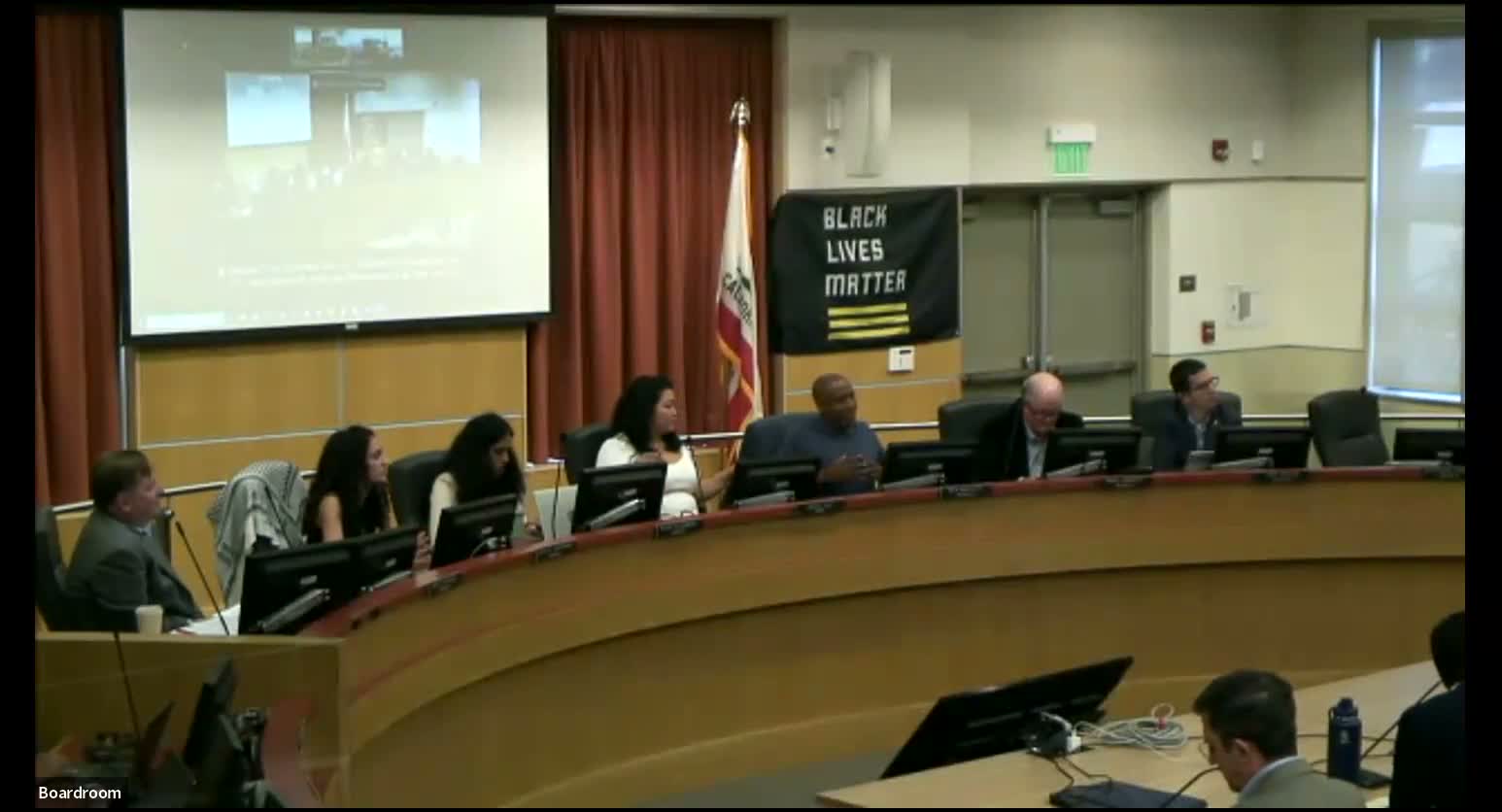
The Berkeley City Council on Thursday adopted new city use policies for unmanned aerial systems, fixed video cameras and community video streams, but stopped short of signing a full master services agreement with vendor Flock Safety and directed staff to open a competitive request for proposals (RFP).
Councilmembers cited both public-safety uses and deep public concern as they split the decision: the council approved the revised use policies and referred the broader procurement and any contract authority to a new RFP process, and separately extended the city's automatic license-plate-reader (ALPR) contract for up to 12 months so systems would not go offline while the city evaluates alternatives.
Why it matters: The measures come after a months-long debate over whether to expand the city's camera network and license-plate readers and whether a single vendor should provide an integrated surveillance platform. Supporters argued technologies have helped solve serious crimes; opponents warned the vendor's past data-sharing problems, possible federal access to data, and the risk to Berkeley's sanctuary policies make a full contract premature.
At the meeting, Berkeley Police officials described the proposed Community Video Streams (CVS) program as an opt-in expansion of the existing camera registry. "CVS, the Community Video Streams, it's our proposal to...expand our current camera registry program," the police chief explained, saying businesses could agree to give officers direct access to live footage for a specific incident and that cameras would be inspected before connections are made.
Flock Safety's public-affairs director, Trevor Chandler, acknowledged past configuration mistakes and said the company has changed its approach. "We have made, and our CEO has made public that we could have and should have done many things better," Chandler said, adding that Flock has disabled certain nationwide lookup features for California agencies and added search filters for immigration and reproductive-health queries.
Councilmembers repeatedly pushed the police and the vendor on data controls, audit logs and subpoenas. Police said ALPR data is retained for 30 days and that only agencies in the nine Bay Area counties and Sacramento County can search Berkeley's ALPR network after signing a letter of agreement and providing a case number and statutory justification.
On subpoenas and federal requests, Chandler said Flock is contractually obligated to notify the city of requests for Berkeley data and to direct the requester to the city because the city contractually owns the data. Police said it would consult the city attorney and city manager and, where appropriate, fight subpoenas. Both cautioned that gag orders or national-security processes can limit notifications.
Public comment was heavily weighted against doing business with Flock. Over three hours, speakers including neighborhood activists, business groups, faith leaders and immigrant-rights organizations urged the council to cancel or refuse expansion of any contract with Flock. Speakers cited media investigations and civil-society reports alleging past instances where data from Flock networks was queried by federal agencies or used in ways that worried sanctuary advocates.
"This proposal represents the largest expansion of surveillance infrastructure in the city's history and directly undermines Berkeley's long standing commitment to being a sanctuary city," a spokesperson for Friends of Adeline said during public comment. Several speakers cited a 2025 audit and the Police Accountability Board's recommendation that the city not tie all surveillance to a single vendor.
Council action and outcome: The council split its votes to separate adoption of use policies from the procurement decision. In a roll-call vote the council adopted the surveillance use policies and related amendments. In a separate roll-call the council approved extending the ALPR contract through the RFP period, with an upper limit on the extension amount and a raised per-violation penalty in negotiations. The council also instructed the city manager to begin a competitive RFP process and consult with the Police Accountability Board on procurement and system integration.
What happens next: The city will run an RFP for the components identified by the council and negotiate contract language and safeguards during that process. The ALPR contract remains in place during the RFP period to avoid a gap in investigative services; staff were directed to try to incorporate as many of the council's protective contract terms as feasible in any interim extension.
Council members said the vote was a compromise intended to keep investigative tools available while giving the city time to seek competitive bids and stronger contractual protections. "I believe tonight it's more important to get it right than to get it fast," Councilmember Brent Blackaby said when he moved the multi-part motion.
The meeting closed after final roll calls and procedural announcements. The council did not approve the vendor's full master services agreement at the meeting and did not finalize procurement authority for an integrated contract with Flock.
Councilmembers cited both public-safety uses and deep public concern as they split the decision: the council approved the revised use policies and referred the broader procurement and any contract authority to a new RFP process, and separately extended the city's automatic license-plate-reader (ALPR) contract for up to 12 months so systems would not go offline while the city evaluates alternatives.
Why it matters: The measures come after a months-long debate over whether to expand the city's camera network and license-plate readers and whether a single vendor should provide an integrated surveillance platform. Supporters argued technologies have helped solve serious crimes; opponents warned the vendor's past data-sharing problems, possible federal access to data, and the risk to Berkeley's sanctuary policies make a full contract premature.
At the meeting, Berkeley Police officials described the proposed Community Video Streams (CVS) program as an opt-in expansion of the existing camera registry. "CVS, the Community Video Streams, it's our proposal to...expand our current camera registry program," the police chief explained, saying businesses could agree to give officers direct access to live footage for a specific incident and that cameras would be inspected before connections are made.
Flock Safety's public-affairs director, Trevor Chandler, acknowledged past configuration mistakes and said the company has changed its approach. "We have made, and our CEO has made public that we could have and should have done many things better," Chandler said, adding that Flock has disabled certain nationwide lookup features for California agencies and added search filters for immigration and reproductive-health queries.
Councilmembers repeatedly pushed the police and the vendor on data controls, audit logs and subpoenas. Police said ALPR data is retained for 30 days and that only agencies in the nine Bay Area counties and Sacramento County can search Berkeley's ALPR network after signing a letter of agreement and providing a case number and statutory justification.
On subpoenas and federal requests, Chandler said Flock is contractually obligated to notify the city of requests for Berkeley data and to direct the requester to the city because the city contractually owns the data. Police said it would consult the city attorney and city manager and, where appropriate, fight subpoenas. Both cautioned that gag orders or national-security processes can limit notifications.
Public comment was heavily weighted against doing business with Flock. Over three hours, speakers including neighborhood activists, business groups, faith leaders and immigrant-rights organizations urged the council to cancel or refuse expansion of any contract with Flock. Speakers cited media investigations and civil-society reports alleging past instances where data from Flock networks was queried by federal agencies or used in ways that worried sanctuary advocates.
"This proposal represents the largest expansion of surveillance infrastructure in the city's history and directly undermines Berkeley's long standing commitment to being a sanctuary city," a spokesperson for Friends of Adeline said during public comment. Several speakers cited a 2025 audit and the Police Accountability Board's recommendation that the city not tie all surveillance to a single vendor.
Council action and outcome: The council split its votes to separate adoption of use policies from the procurement decision. In a roll-call vote the council adopted the surveillance use policies and related amendments. In a separate roll-call the council approved extending the ALPR contract through the RFP period, with an upper limit on the extension amount and a raised per-violation penalty in negotiations. The council also instructed the city manager to begin a competitive RFP process and consult with the Police Accountability Board on procurement and system integration.
What happens next: The city will run an RFP for the components identified by the council and negotiate contract language and safeguards during that process. The ALPR contract remains in place during the RFP period to avoid a gap in investigative services; staff were directed to try to incorporate as many of the council's protective contract terms as feasible in any interim extension.
Council members said the vote was a compromise intended to keep investigative tools available while giving the city time to seek competitive bids and stronger contractual protections. "I believe tonight it's more important to get it right than to get it fast," Councilmember Brent Blackaby said when he moved the multi-part motion.
The meeting closed after final roll calls and procedural announcements. The council did not approve the vendor's full master services agreement at the meeting and did not finalize procurement authority for an integrated contract with Flock.
View the Full Meeting & All Its Details
This article offers just a summary. Unlock complete video, transcripts, and insights as a Founder Member.
✓
Watch full, unedited meeting videos
✓
Search every word spoken in unlimited transcripts
✓
AI summaries & real-time alerts (all government levels)
✓
Permanent access to expanding government content
30-day money-back guarantee
