Committee considers classifying five-plus unit buildings as non-homestead amid short-term rental concerns
May 09, 2026 | Finance, SENATE, Committees, Legislative , Vermont
This article was created by AI summarizing key points discussed. AI makes mistakes, so for full details and context, please refer to the video of the full meeting. Please report any errors so we can fix them. Report an error »
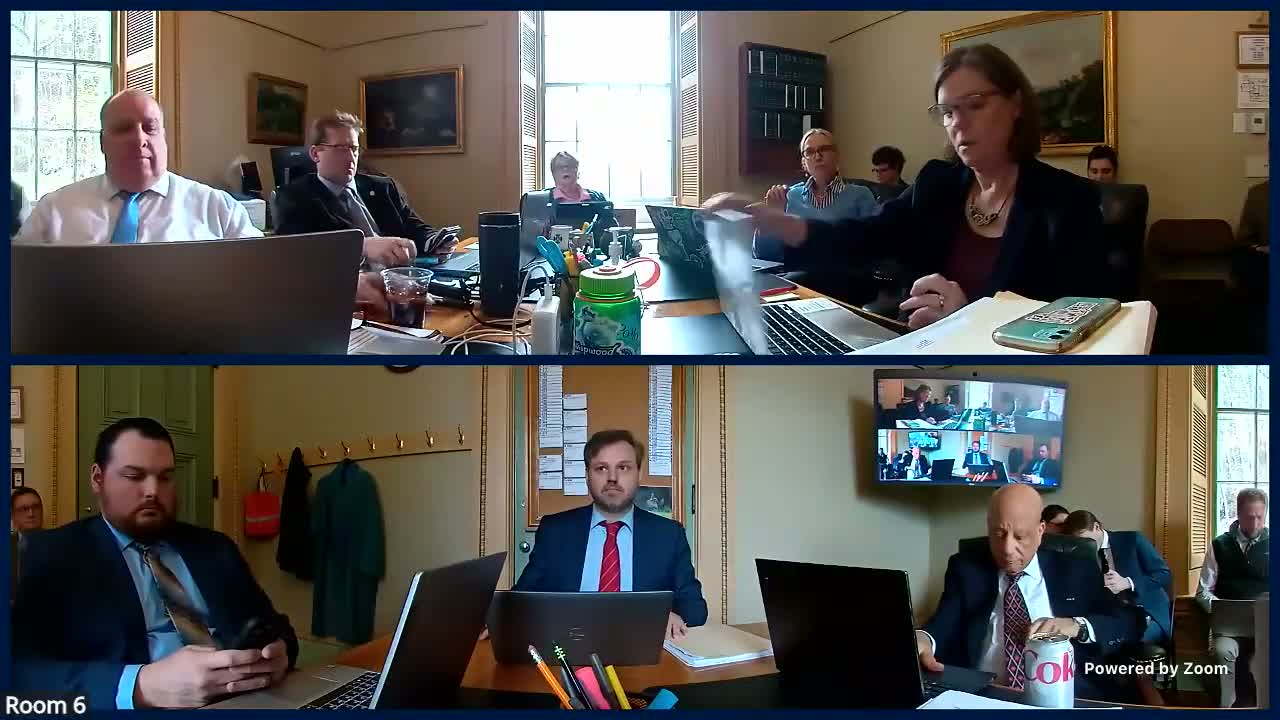
The Senate Finance Committee spent substantial time on how the proposed tax changes would treat lodging establishments and short-term rentals, including a narrow administrative proposal to classify buildings with five or more units as non-homestead.
Jake (S3) of the tax department described the suggestion as an administrative shortcut: "...anything with 5 units or more kinda taken off the table as non homestead residential," he said, framing the change as a way to limit the amount of case-by-case review local listers and tax staff would need to perform.
Supporters said the number of short-term rentals in larger apartment buildings is small and that initially excluding 5+ unit buildings from homestead consideration would make implementation quicker and less costly. "It's like you're really a needle in a haystack situation," Jake said, referencing the small share of short-term rentals located in large apartment buildings.
Opponents and questioners raised practical and fairness concerns. Committee members asked how mixed-use buildings (owner-occupied units plus short-term and long-term rentals) would be classified. Tax staff responded that under current classification such a parcel would be treated as non-homestead, nonresidential (commercial rate), and that local listers’ classifications would capture most cases over time.
Members also discussed legal and behavioral effects: some worried that defining a tax benefit based on rental-duration thresholds (30-day minimums; combined 6 months in a calendar year) could change landlord behavior toward offering longer leases to receive favorable classification. Counsel (Cameron Wood, Office of Legislative Council, S7) and other staff reminded the panel that tax policy can affect incentives and that the landlord-tenant statute and meals-and-rooms definitions remain separate legal frameworks.
What’s next: staff were asked to draft clear definitions for parcel/span treatment (important for condos) and to consider phased or temporary exemptions for large buildings during the initial implementation period. No classification change was enacted at this session; members asked for follow-up language clarifying parcel definitions and enforcement mechanics.
Ending: the committee paused the classification discussion pending revised bill language and additional input from tax staff and local listers.
Jake (S3) of the tax department described the suggestion as an administrative shortcut: "...anything with 5 units or more kinda taken off the table as non homestead residential," he said, framing the change as a way to limit the amount of case-by-case review local listers and tax staff would need to perform.
Supporters said the number of short-term rentals in larger apartment buildings is small and that initially excluding 5+ unit buildings from homestead consideration would make implementation quicker and less costly. "It's like you're really a needle in a haystack situation," Jake said, referencing the small share of short-term rentals located in large apartment buildings.
Opponents and questioners raised practical and fairness concerns. Committee members asked how mixed-use buildings (owner-occupied units plus short-term and long-term rentals) would be classified. Tax staff responded that under current classification such a parcel would be treated as non-homestead, nonresidential (commercial rate), and that local listers’ classifications would capture most cases over time.
Members also discussed legal and behavioral effects: some worried that defining a tax benefit based on rental-duration thresholds (30-day minimums; combined 6 months in a calendar year) could change landlord behavior toward offering longer leases to receive favorable classification. Counsel (Cameron Wood, Office of Legislative Council, S7) and other staff reminded the panel that tax policy can affect incentives and that the landlord-tenant statute and meals-and-rooms definitions remain separate legal frameworks.
What’s next: staff were asked to draft clear definitions for parcel/span treatment (important for condos) and to consider phased or temporary exemptions for large buildings during the initial implementation period. No classification change was enacted at this session; members asked for follow-up language clarifying parcel definitions and enforcement mechanics.
Ending: the committee paused the classification discussion pending revised bill language and additional input from tax staff and local listers.
Don't Miss a Word: See the Full Meeting!
Go beyond summaries. Unlock every video, transcript, and key insight with a Founder Membership.
✓
Get instant access to full meeting videos
✓
Search and clip any phrase from complete transcripts
✓
Receive AI-powered summaries & custom alerts
✓
Enjoy lifetime, unrestricted access to government data
30-day money-back guarantee
