Appeals panel weighs whether judge erred in allowing withdrawal of guilty pleas in Commonwealth v. Harris
May 08, 2026 | Judicial - Appeals Court Oral Arguments, Judicial, Massachusetts
This article was created by AI summarizing key points discussed. AI makes mistakes, so for full details and context, please refer to the video of the full meeting. Please report any errors so we can fix them. Report an error »
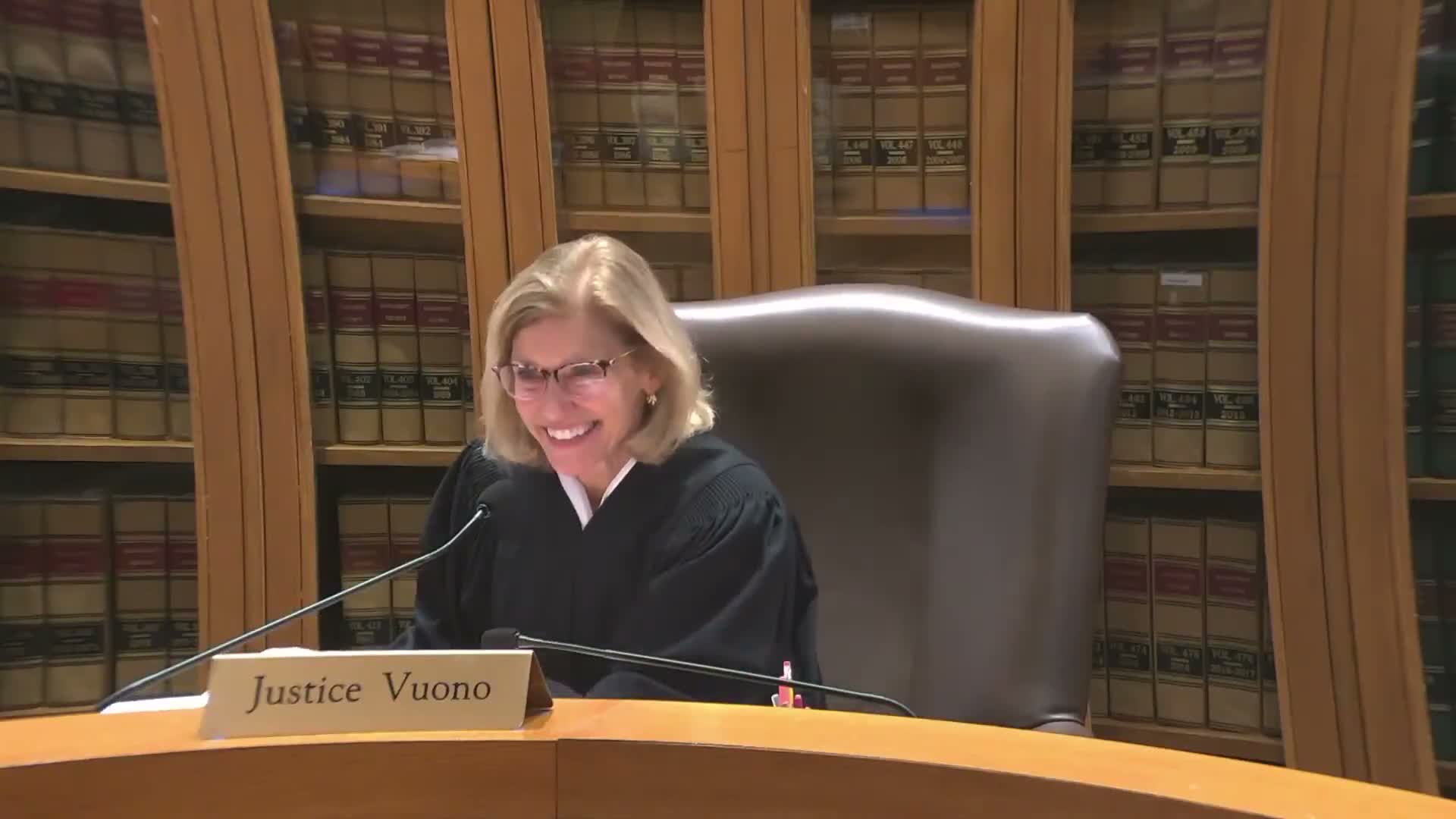
A three-justice panel heard oral argument in Commonwealth v. Darnell Harris, 2025‑1294, as prosecutors asked the court to reverse the motion judge’s allowance of Harris’s motions to withdraw guilty pleas in three district‑court cases.
Christopher Nichols, appearing for the Hampden County District Attorney’s Office, told the court, “The Commonwealth is here on an appeal from the allowance of his motion to withdraw his guilty pleas in 3 district court cases.” Nichols said the Commonwealth takes an expansive view of the appellate record and urged that tendered plea forms, docket entries, prior admissions and other filings attached below should be considered alongside the plea colloquy.
Nichols argued those materials show circumstantial facts—prior tenders of plea, a violation‑of‑probation admission and other procedural history—that support an inference the defendant knowingly and intelligently waived his constitutional rights. He told the panel that, even if the court limited itself to the transcript alone, the Commonwealth would still press its position, but that doing so would make the case “a much harder case.”
Defense counsel, who did not identify themselves on the record, countered that the court should not apply de novo review. “We do not believe that this court should take the case de novo,” counsel said, urging that the motion proceeding below effectively functioned as an evidentiary hearing (extra filings were received, objections were overruled and the parties argued orally) and that the appropriate standard is abuse of discretion.
The panel explored whether the motion judge relied on information outside the plea colloquy when allowing withdrawal of the pleas. One justice noted that the motion judge’s written findings referenced the defendant’s age and described the colloquy as “cursory,” and asked whether the judge improperly imported extraneous facts into her decision. Defense counsel acknowledged strategic choices by the defense, including declining to submit an affidavit from Harris, and explained that the record did not include a sworn statement asserting intoxication at the time of plea.
The justices focused heavily on factual details bearing on voluntariness and intelligence: Harris was 17 at the time of the pleas, reported a “weed problem,” could not clearly state how far he had gone in school and lacked adult family support in court. One justice pressed whether youth and those other facts, considered in 2000 and judged under today’s standards, could undermine a finding that the plea was knowing and voluntary.
The panel also discussed docket entries stamped, on the criminal front pages, that a plea was accepted “freely, willingly, and voluntarily,” and whether clerk stamps and docket notations carry prima facie weight when the motion judge’s findings appear to conflict with those entries. Defense counsel confirmed that later filings attached to the motion below included signed entries and references to subsequent judges and proceedings.
Counsel for the defense told the court that additional post‑plea developments had occurred—defense counsel indicated the defendant later was assaulted and sustained a traumatic brain injury—and that practical difficulties and health issues affected the decision not to file affidavits earlier. The chair asked about the absence of an affidavit from the defendant’s trial counsel; the record contained no statement from that lawyer addressing availability or consultation.
Both sides acknowledged that the outcome hinges on the proper scope of the record and on which standard of appellate review applies. The Commonwealth urged reversal of the motion judge’s allowance of plea withdrawals; defense counsel said the motion judge’s consideration of extra materials and the oral proceedings warranted deferential review. The court took the arguments under advisement and did not announce a decision from the bench.
The appeals court is to decide whether the motion judge erred as a matter of law in allowing withdrawal of the pleas and, relatedly, whether the appellate court should review that decision de novo or for abuse of discretion. That determination will frame whether the court resolves the dispute on the current record or remands for further factfinding.
Christopher Nichols, appearing for the Hampden County District Attorney’s Office, told the court, “The Commonwealth is here on an appeal from the allowance of his motion to withdraw his guilty pleas in 3 district court cases.” Nichols said the Commonwealth takes an expansive view of the appellate record and urged that tendered plea forms, docket entries, prior admissions and other filings attached below should be considered alongside the plea colloquy.
Nichols argued those materials show circumstantial facts—prior tenders of plea, a violation‑of‑probation admission and other procedural history—that support an inference the defendant knowingly and intelligently waived his constitutional rights. He told the panel that, even if the court limited itself to the transcript alone, the Commonwealth would still press its position, but that doing so would make the case “a much harder case.”
Defense counsel, who did not identify themselves on the record, countered that the court should not apply de novo review. “We do not believe that this court should take the case de novo,” counsel said, urging that the motion proceeding below effectively functioned as an evidentiary hearing (extra filings were received, objections were overruled and the parties argued orally) and that the appropriate standard is abuse of discretion.
The panel explored whether the motion judge relied on information outside the plea colloquy when allowing withdrawal of the pleas. One justice noted that the motion judge’s written findings referenced the defendant’s age and described the colloquy as “cursory,” and asked whether the judge improperly imported extraneous facts into her decision. Defense counsel acknowledged strategic choices by the defense, including declining to submit an affidavit from Harris, and explained that the record did not include a sworn statement asserting intoxication at the time of plea.
The justices focused heavily on factual details bearing on voluntariness and intelligence: Harris was 17 at the time of the pleas, reported a “weed problem,” could not clearly state how far he had gone in school and lacked adult family support in court. One justice pressed whether youth and those other facts, considered in 2000 and judged under today’s standards, could undermine a finding that the plea was knowing and voluntary.
The panel also discussed docket entries stamped, on the criminal front pages, that a plea was accepted “freely, willingly, and voluntarily,” and whether clerk stamps and docket notations carry prima facie weight when the motion judge’s findings appear to conflict with those entries. Defense counsel confirmed that later filings attached to the motion below included signed entries and references to subsequent judges and proceedings.
Counsel for the defense told the court that additional post‑plea developments had occurred—defense counsel indicated the defendant later was assaulted and sustained a traumatic brain injury—and that practical difficulties and health issues affected the decision not to file affidavits earlier. The chair asked about the absence of an affidavit from the defendant’s trial counsel; the record contained no statement from that lawyer addressing availability or consultation.
Both sides acknowledged that the outcome hinges on the proper scope of the record and on which standard of appellate review applies. The Commonwealth urged reversal of the motion judge’s allowance of plea withdrawals; defense counsel said the motion judge’s consideration of extra materials and the oral proceedings warranted deferential review. The court took the arguments under advisement and did not announce a decision from the bench.
The appeals court is to decide whether the motion judge erred as a matter of law in allowing withdrawal of the pleas and, relatedly, whether the appellate court should review that decision de novo or for abuse of discretion. That determination will frame whether the court resolves the dispute on the current record or remands for further factfinding.
View the Full Meeting & All Its Details
This article offers just a summary. Unlock complete video, transcripts, and insights as a Founder Member.
✓
Watch full, unedited meeting videos
✓
Search every word spoken in unlimited transcripts
✓
AI summaries & real-time alerts (all government levels)
✓
Permanent access to expanding government content
30-day money-back guarantee
