Ways & Means hears overview of S.198 to revise tobacco substitute rules, shift wholesale licensing and raise fees
May 09, 2026 | Ways & Means, HOUSE OF REPRESENTATIVES, Committees, Legislative , Vermont
This article was created by AI summarizing key points discussed. AI makes mistakes, so for full details and context, please refer to the video of the full meeting. Please report any errors so we can fix them. Report an error »
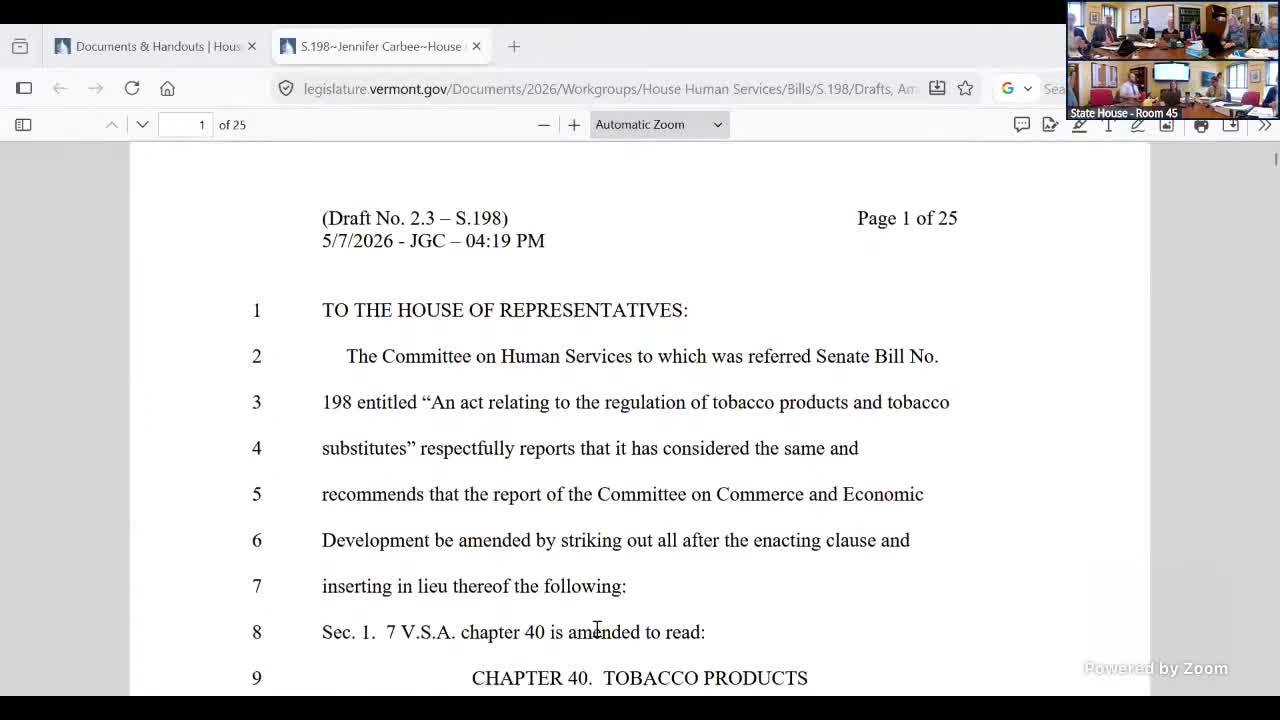
Jen Carvey, legislative counsel, briefed the House Ways & Means Committee on S.198 on Friday, describing a strike‑all bill that would revise how Vermont regulates and taxes tobacco products and "tobacco substitutes," move wholesale licensure to the Department of Liquor and Lottery and raise several fees.
The bill, Carvey said, rewrites definitions and moves regulatory language between Title 7 (tobacco regulation) and Title 32 (taxation) to reflect new products on the market such as electronic cigarettes and nicotine pouches. "We're looking at S.198, an act relating to the regulation of tobacco products and tobacco substitutes," she said, adding that the draft excludes FDA‑approved cessation products and cannabis from the tobacco substitute definition.
Why it matters: the proposal would shift enforcement and fee revenue flows, create a new wholesaler licensing regime, change penalties for unlicensed sales, and add consumer‑protection authority aimed at products that imitate items marketed to children. Committee members flagged the planned study of tax stamps as a particularly controversial next topic.
Key provisions and operational changes
Licensing: Carvey said the bill would move wholesale tobacco dealer licensure from the Department of Taxes to the Department of Liquor and Lottery, with the transfer effective in 2027 to allow time for transition. Wholesalers would need an annual license issued by the Division of Liquor Control.
Fees: Carvey told members the measure raises the retailer license renewal fee from $110 to $150 and the tobacco substitute endorsement from $50 to $75. It also establishes a new wholesaler license fee of $1,245 annually per outlet, an amount she said aligns with liquor wholesaler fees.
Penalties and enforcement: The draft removes misdemeanor treatment for unlicensed sale and replaces it with civil penalties, with substantially higher maximum fines discussed in committee testimony. It also expands prohibitions to include importation, distribution and wholesale sales except by licensed wholesalers; administrative penalties and license suspension or revocation remain possible.
Minors and alternatives to fines: For possession or misrepresentation by people under 21, the bill preserves confiscation but removes small civil fines; instead, it would offer court alternatives such as up to 10 hours of community service or participation in a nationally recognized youth tobacco cessation program determined by the Department of Health, Carvey said. Enforcement for those provisions would proceed through the judicial bureau.
Internet sales and deceptive packaging: Carvey said the draft would restrict online shipments so products may be shipped only to licensed wholesalers (not to retail customers) and would add prohibitions on marketing or packaging that imitates non‑tobacco products commonly marketed to minors, such as snacks, school supplies or portable devices. The Attorney General would have consumer‑protection authority for enforcement of deceptive‑product provisions.
Tax chapter changes and study: Conforming changes in Title 32 would align cigarette and other‑tobacco definitions with the Master Settlement Agreement and carve nicotine pouches into the tax code. The bill directs the Department of Taxes, in collaboration with Liquor and Lottery and the Attorney General, to study taxing tobacco substitutes (including consideration of nicotine concentration and tax stamps) and report findings to legislative committees by Jan. 15.
Questions and dissent in committee
A committee member asked whether the bill bans flavored tobacco; Carvey replied, "This really doesn't get into that issue," emphasizing S.198 focuses on definitions, licensure and enforcement rather than a flavor ban. Another member asked whether municipalities receive any of the fee revenue; Carvey said fees are conceptually a pass‑through in statute but in practice are paid and retained by the Division of Liquor Control, while municipalities keep local approval authority for licenses.
Next steps
Carvey said witnesses from the Department of Liquor and Lottery, the Attorney General's office and the Department of Taxes — and wholesalers — are scheduled to testify next week, and members signaled a lengthy discussion ahead on tax stamps and enforcement resourcing. The draft sets the act to take effect July 1, with the wholesale‑licensure transfer effective 07/01/2027.
The bill, Carvey said, rewrites definitions and moves regulatory language between Title 7 (tobacco regulation) and Title 32 (taxation) to reflect new products on the market such as electronic cigarettes and nicotine pouches. "We're looking at S.198, an act relating to the regulation of tobacco products and tobacco substitutes," she said, adding that the draft excludes FDA‑approved cessation products and cannabis from the tobacco substitute definition.
Why it matters: the proposal would shift enforcement and fee revenue flows, create a new wholesaler licensing regime, change penalties for unlicensed sales, and add consumer‑protection authority aimed at products that imitate items marketed to children. Committee members flagged the planned study of tax stamps as a particularly controversial next topic.
Key provisions and operational changes
Licensing: Carvey said the bill would move wholesale tobacco dealer licensure from the Department of Taxes to the Department of Liquor and Lottery, with the transfer effective in 2027 to allow time for transition. Wholesalers would need an annual license issued by the Division of Liquor Control.
Fees: Carvey told members the measure raises the retailer license renewal fee from $110 to $150 and the tobacco substitute endorsement from $50 to $75. It also establishes a new wholesaler license fee of $1,245 annually per outlet, an amount she said aligns with liquor wholesaler fees.
Penalties and enforcement: The draft removes misdemeanor treatment for unlicensed sale and replaces it with civil penalties, with substantially higher maximum fines discussed in committee testimony. It also expands prohibitions to include importation, distribution and wholesale sales except by licensed wholesalers; administrative penalties and license suspension or revocation remain possible.
Minors and alternatives to fines: For possession or misrepresentation by people under 21, the bill preserves confiscation but removes small civil fines; instead, it would offer court alternatives such as up to 10 hours of community service or participation in a nationally recognized youth tobacco cessation program determined by the Department of Health, Carvey said. Enforcement for those provisions would proceed through the judicial bureau.
Internet sales and deceptive packaging: Carvey said the draft would restrict online shipments so products may be shipped only to licensed wholesalers (not to retail customers) and would add prohibitions on marketing or packaging that imitates non‑tobacco products commonly marketed to minors, such as snacks, school supplies or portable devices. The Attorney General would have consumer‑protection authority for enforcement of deceptive‑product provisions.
Tax chapter changes and study: Conforming changes in Title 32 would align cigarette and other‑tobacco definitions with the Master Settlement Agreement and carve nicotine pouches into the tax code. The bill directs the Department of Taxes, in collaboration with Liquor and Lottery and the Attorney General, to study taxing tobacco substitutes (including consideration of nicotine concentration and tax stamps) and report findings to legislative committees by Jan. 15.
Questions and dissent in committee
A committee member asked whether the bill bans flavored tobacco; Carvey replied, "This really doesn't get into that issue," emphasizing S.198 focuses on definitions, licensure and enforcement rather than a flavor ban. Another member asked whether municipalities receive any of the fee revenue; Carvey said fees are conceptually a pass‑through in statute but in practice are paid and retained by the Division of Liquor Control, while municipalities keep local approval authority for licenses.
Next steps
Carvey said witnesses from the Department of Liquor and Lottery, the Attorney General's office and the Department of Taxes — and wholesalers — are scheduled to testify next week, and members signaled a lengthy discussion ahead on tax stamps and enforcement resourcing. The draft sets the act to take effect July 1, with the wholesale‑licensure transfer effective 07/01/2027.
View the Full Meeting & All Its Details
This article offers just a summary. Unlock complete video, transcripts, and insights as a Founder Member.
✓
Watch full, unedited meeting videos
✓
Search every word spoken in unlimited transcripts
✓
AI summaries & real-time alerts (all government levels)
✓
Permanent access to expanding government content
30-day money-back guarantee
