Manufactured‑home residents press for a 'bill of rights'; industry warns of unintended effects
May 09, 2026 | 2026 Legislature MN, Minnesota
This article was created by AI summarizing key points discussed. AI makes mistakes, so for full details and context, please refer to the video of the full meeting. Please report any errors so we can fix them. Report an error »
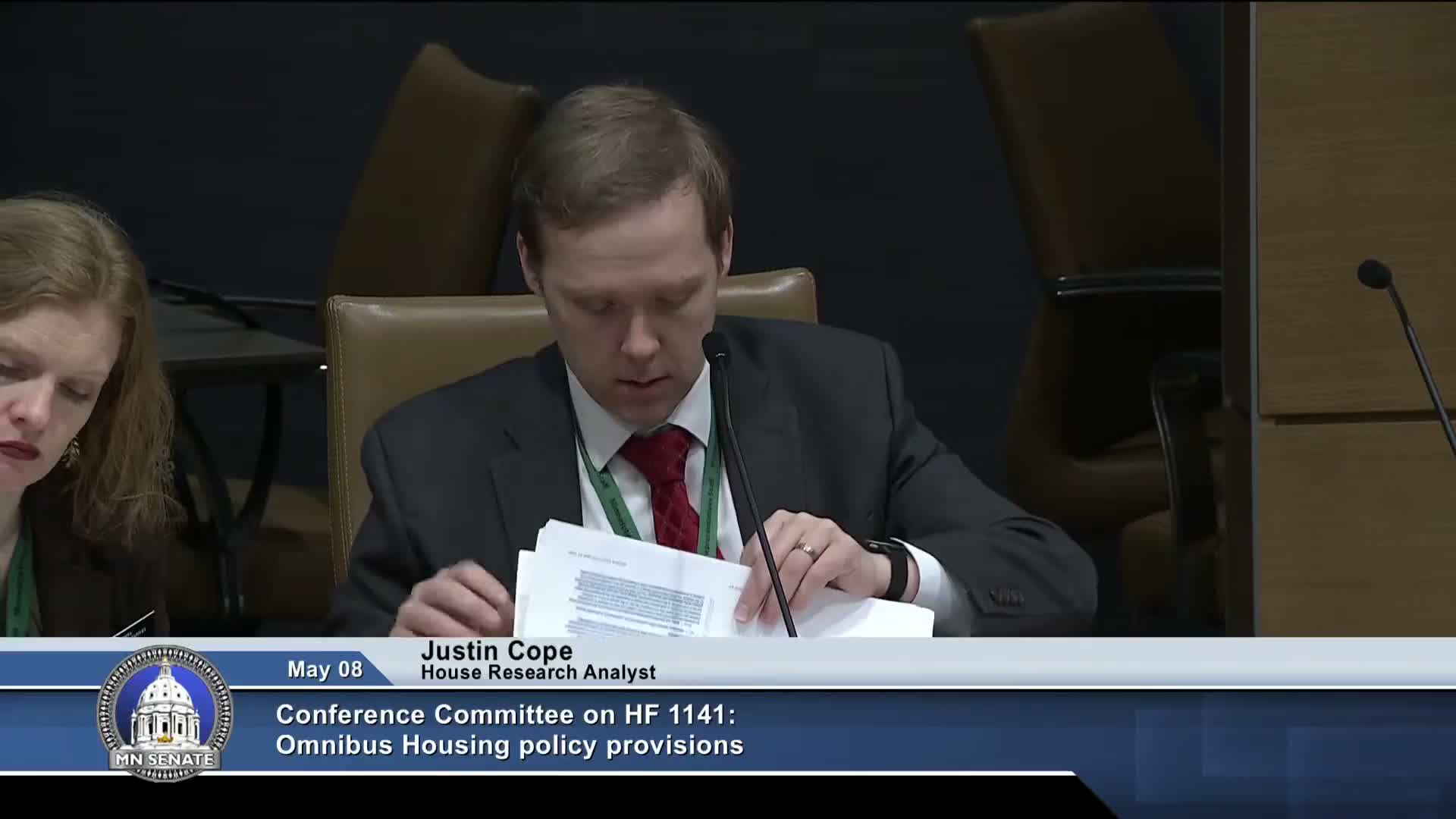
Multiple manufactured‑home residents and advocates urged the conference committee to adopt the sections of HF 1141 that aim to protect homeowners who own their homes but rent the land beneath them.
Staff explained several provisions under discussion: lowering the threshold for a representative acting for park residents from 51% to a bare majority; limiting late fees to no more than 8% of delinquent rent; requiring receipts for cash payments and itemized bills; restricting owners from charging residents for utility repair costs; requiring a 60‑day notice prior to park sale with a resident opportunity to purchase; and limiting rent increases to once per year with a presumption a rent increase is unreasonable if it exceeds 3% of the prior year’s monthly rent (subject to health‑and‑safety exceptions).
Residents described rapid lot‑rent increases after private‑equity purchases. Tammy Fry of Blaine said her organizing involved knocking more than 10,000 doors and collecting over 3,500 petition signatures and criticized large corporate owners and lobbying influence. Natasha Adams said private equity raised lot rents 14% in the first year at her park and that 40 families lost homes after an acquisition. Alex Tierney described his locally owned park as an example of lower lot rents and urged collective purchase rights.
Industry representatives warned of negative consequences. Cecil Smith (Minnesota Multi Housing Association) said economists warn rent control "doesn't work" and called the provisions a path to disinvestment. Mark Bruner (Manufactured and Modular Home Association) argued a 3% cap represents statewide rent control, warned it could prompt capital flight, and said litigation risks would rise if owners had to justify increases through a burdensome process.
Senator Liz Bolden and other conferees responded that patterns of egregious lot‑rent increases exist across Minnesota and that the 2024 notice‑of‑sale approach has not reliably protected homeowners. Members said they would try to balance homeowner protections and owners’ ability to maintain infrastructure.
The committee did not take a vote. Further negotiations will reconcile the scope of protections, enforcement mechanisms, and carve‑outs for cooperatively owned parks.
Staff explained several provisions under discussion: lowering the threshold for a representative acting for park residents from 51% to a bare majority; limiting late fees to no more than 8% of delinquent rent; requiring receipts for cash payments and itemized bills; restricting owners from charging residents for utility repair costs; requiring a 60‑day notice prior to park sale with a resident opportunity to purchase; and limiting rent increases to once per year with a presumption a rent increase is unreasonable if it exceeds 3% of the prior year’s monthly rent (subject to health‑and‑safety exceptions).
Residents described rapid lot‑rent increases after private‑equity purchases. Tammy Fry of Blaine said her organizing involved knocking more than 10,000 doors and collecting over 3,500 petition signatures and criticized large corporate owners and lobbying influence. Natasha Adams said private equity raised lot rents 14% in the first year at her park and that 40 families lost homes after an acquisition. Alex Tierney described his locally owned park as an example of lower lot rents and urged collective purchase rights.
Industry representatives warned of negative consequences. Cecil Smith (Minnesota Multi Housing Association) said economists warn rent control "doesn't work" and called the provisions a path to disinvestment. Mark Bruner (Manufactured and Modular Home Association) argued a 3% cap represents statewide rent control, warned it could prompt capital flight, and said litigation risks would rise if owners had to justify increases through a burdensome process.
Senator Liz Bolden and other conferees responded that patterns of egregious lot‑rent increases exist across Minnesota and that the 2024 notice‑of‑sale approach has not reliably protected homeowners. Members said they would try to balance homeowner protections and owners’ ability to maintain infrastructure.
The committee did not take a vote. Further negotiations will reconcile the scope of protections, enforcement mechanisms, and carve‑outs for cooperatively owned parks.
View the Full Meeting & All Its Details
This article offers just a summary. Unlock complete video, transcripts, and insights as a Founder Member.
✓
Watch full, unedited meeting videos
✓
Search every word spoken in unlimited transcripts
✓
AI summaries & real-time alerts (all government levels)
✓
Permanent access to expanding government content
30-day money-back guarantee
