East Stroudsburg officials propose ending long-standing block schedule; administration seeks feedback on six-period model
May 08, 2026 | East Stroudsburg Area SD, School Districts, Pennsylvania
This article was created by AI summarizing key points discussed. AI makes mistakes, so for full details and context, please refer to the video of the full meeting. Please report any errors so we can fix them. Report an error »
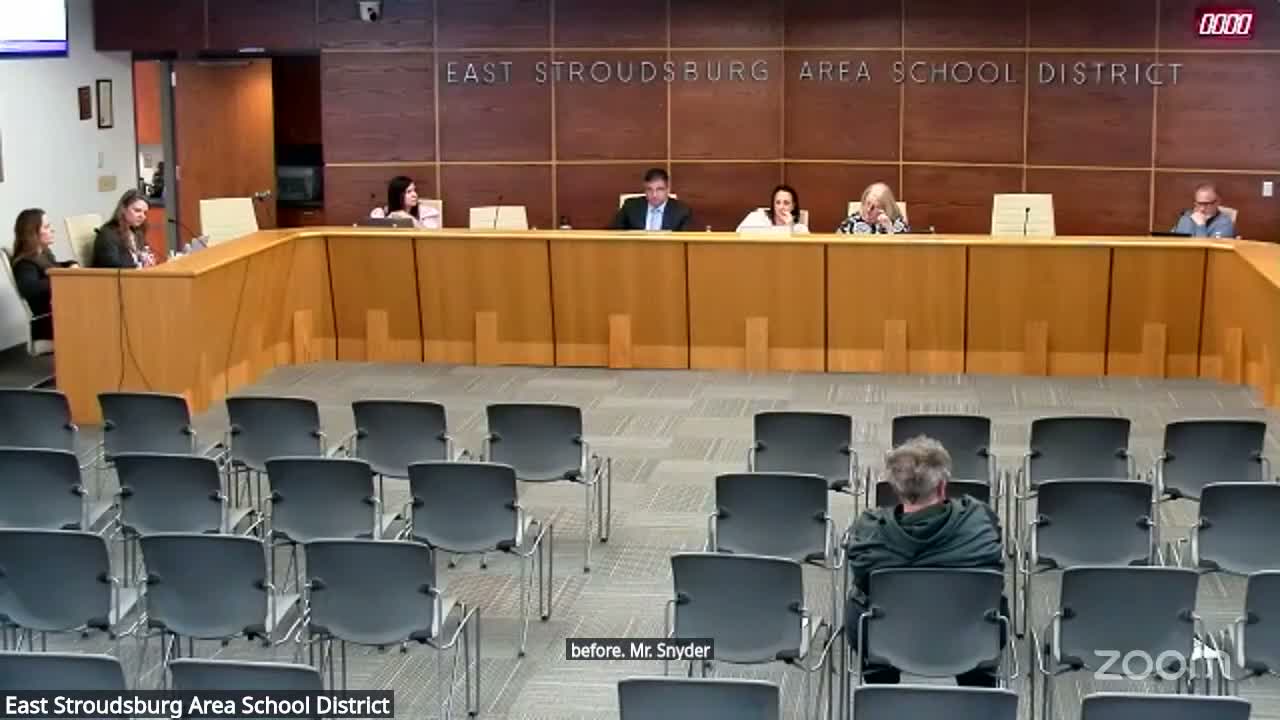
Mr. Snyder, the district official leading scheduling work, told the Education, Policy and Review committee on May 7 that he hopes to replace East Stroudsburg Area School District's long-standing hybrid block schedule with a single, synchronous high-school bell schedule designed to boost instructional time in core subjects and better align AP and Keystone preparation.
"We are the only remaining district on block scheduling in Monroe County," Mr. Snyder said, framing the proposal as an effort to improve instructional continuity. He described a preferred six-period day with classes of roughly 59 65 minutes, five staggered 30-minute lunches, and a mix of semester and yearlong course options. Under his example schedule students would receive about 173 instruction hours per credit; the model would mean a smaller maximum number of total credits available to students (from 32 to about 24) and a proposed phased reduction in the number of credits required to graduate toward a 22-credit target.
Snyder emphasized the proposal is not yet a recommendation. "This was not driven by financial needs, and it was not intended to decrease full time educators," he said, adding that any change would be phased and would require curriculum and course-plan adjustments.
Committee members pressed on effects for electives, arts programs, Advanced Placement sequencing and special programs such as MCTI. Administrator (speaker 2) pushed back on narrowly measuring the district by test scores, saying, "I don't care if we're 35%, 90%. None of that matters. What I care about is that we're competitive with the state average."
Snyder acknowledged the potential trade-offs. He said the proposed model improves AP alignment and master-scheduling efficiency but would require students to choose pathways earlier and could reduce the number of elective slots available. He also told the committee that student outreach to date shows strong resistance: "Over 80% of our students are opposed to any type of change," he reported, summarizing feedback from student meetings and surveys.
Parent input was part of the meeting. Shanika (speaker 11), who identified herself as a parent, said her son had struggled with algebra under the current system and that continuity could benefit some students: "I've continued his tutoring so that he could have that consistency through the year," she said.
Administrators told the committee they will continue roadshows and stakeholder meetings, collect comparative data (including scheduling impacts on AP and Keystones and MCTI alignment), and work with teacher-leaders and union representatives on implementation logistics and any Memoranda of Understanding needed to protect planning time. The presenter said possible start years under discussion are 2027-28 or 2028-29, but no final timetable was set.
Next steps: Mr. Snyder said he will continue meetings with student groups, teachers and parents and expects the committee to hold a Q&A session and additional discussions in the coming months before any formal recommendation goes to the full board.
"We are the only remaining district on block scheduling in Monroe County," Mr. Snyder said, framing the proposal as an effort to improve instructional continuity. He described a preferred six-period day with classes of roughly 59 65 minutes, five staggered 30-minute lunches, and a mix of semester and yearlong course options. Under his example schedule students would receive about 173 instruction hours per credit; the model would mean a smaller maximum number of total credits available to students (from 32 to about 24) and a proposed phased reduction in the number of credits required to graduate toward a 22-credit target.
Snyder emphasized the proposal is not yet a recommendation. "This was not driven by financial needs, and it was not intended to decrease full time educators," he said, adding that any change would be phased and would require curriculum and course-plan adjustments.
Committee members pressed on effects for electives, arts programs, Advanced Placement sequencing and special programs such as MCTI. Administrator (speaker 2) pushed back on narrowly measuring the district by test scores, saying, "I don't care if we're 35%, 90%. None of that matters. What I care about is that we're competitive with the state average."
Snyder acknowledged the potential trade-offs. He said the proposed model improves AP alignment and master-scheduling efficiency but would require students to choose pathways earlier and could reduce the number of elective slots available. He also told the committee that student outreach to date shows strong resistance: "Over 80% of our students are opposed to any type of change," he reported, summarizing feedback from student meetings and surveys.
Parent input was part of the meeting. Shanika (speaker 11), who identified herself as a parent, said her son had struggled with algebra under the current system and that continuity could benefit some students: "I've continued his tutoring so that he could have that consistency through the year," she said.
Administrators told the committee they will continue roadshows and stakeholder meetings, collect comparative data (including scheduling impacts on AP and Keystones and MCTI alignment), and work with teacher-leaders and union representatives on implementation logistics and any Memoranda of Understanding needed to protect planning time. The presenter said possible start years under discussion are 2027-28 or 2028-29, but no final timetable was set.
Next steps: Mr. Snyder said he will continue meetings with student groups, teachers and parents and expects the committee to hold a Q&A session and additional discussions in the coming months before any formal recommendation goes to the full board.
Don't Miss a Word: See the Full Meeting!
Go beyond summaries. Unlock every video, transcript, and key insight with a Founder Membership.
✓
Get instant access to full meeting videos
✓
Search and clip any phrase from complete transcripts
✓
Receive AI-powered summaries & custom alerts
✓
Enjoy lifetime, unrestricted access to government data
30-day money-back guarantee
