Assembly approves voluntary public matching system after hours-long debate on funding and limits
May 08, 2026 | 2026 Legislature NY, New York
This article was created by AI summarizing key points discussed. AI makes mistakes, so for full details and context, please refer to the video of the full meeting. Please report any errors so we can fix them. Report an error »
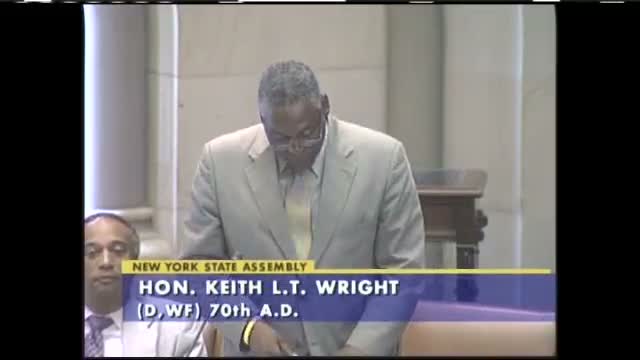
Assemblymember Keith Wright, chair of the Assembly Election Law Committee, introduced the Campaign Finance Reform Act of 2006 as a voluntary program to reduce the role of special‑interest money in statewide and legislative races. “The goal of the bill is to create a democratic political system that allows citizens, regardless of income, status, or financial connections, to run for public office,” Wright said in his explanation to the House.
Wright told colleagues that one financing source for the program would be a voluntary check‑off on state tax returns and that conservative estimates put the potential revenue from that source at about $24 million annually if a modest per‑return contribution were chosen. “One of the sources for the money that would go to finance this campaign system would be a check off on your tax returns,” Wright said.
Members pressed Wright on contingencies if check‑off receipts fell short. “If we don’t raise enough money off the check offs, where’s the money gonna come from then?” asked one member. Wright replied that, in a worst‑case scenario, funds would likely be drawn from the State’s general fund.
Debate also focused on what public funds could pay for. The bill prohibits use of public funds for non‑campaign food, drink or entertainment, for gifts or payments to candidates’ relatives and for paying persons or businesses in which a candidate has an interest, Wright said. He also said the state Board of Elections would remain available to give advisory opinions about allowable expenditures.
Supporters argued the proposal levels the playing field and reduces the influence of large donors. “It is the only way to remove the special interest influence in our campaign system,” one backer said during debate, urging colleagues to back the measure. Opponents raised concerns about asking taxpayers to subsidize campaigns and the reliability of a voluntary check‑off revenue stream.
After extended debate and multiple explanations of vote, the Assembly approved the measure on final passage by roll call (recorded in the House). The bill will now proceed under the usual message procedures to the Senate and the governor for final action.
The floor’s consideration of the measure took place amid a packed calendar; leaders said they expected follow‑up conference work as necessary before enactment.
Wright told colleagues that one financing source for the program would be a voluntary check‑off on state tax returns and that conservative estimates put the potential revenue from that source at about $24 million annually if a modest per‑return contribution were chosen. “One of the sources for the money that would go to finance this campaign system would be a check off on your tax returns,” Wright said.
Members pressed Wright on contingencies if check‑off receipts fell short. “If we don’t raise enough money off the check offs, where’s the money gonna come from then?” asked one member. Wright replied that, in a worst‑case scenario, funds would likely be drawn from the State’s general fund.
Debate also focused on what public funds could pay for. The bill prohibits use of public funds for non‑campaign food, drink or entertainment, for gifts or payments to candidates’ relatives and for paying persons or businesses in which a candidate has an interest, Wright said. He also said the state Board of Elections would remain available to give advisory opinions about allowable expenditures.
Supporters argued the proposal levels the playing field and reduces the influence of large donors. “It is the only way to remove the special interest influence in our campaign system,” one backer said during debate, urging colleagues to back the measure. Opponents raised concerns about asking taxpayers to subsidize campaigns and the reliability of a voluntary check‑off revenue stream.
After extended debate and multiple explanations of vote, the Assembly approved the measure on final passage by roll call (recorded in the House). The bill will now proceed under the usual message procedures to the Senate and the governor for final action.
The floor’s consideration of the measure took place amid a packed calendar; leaders said they expected follow‑up conference work as necessary before enactment.
Don't Miss a Word: See the Full Meeting!
Go beyond summaries. Unlock every video, transcript, and key insight with a Founder Membership.
✓
Get instant access to full meeting videos
✓
Search and clip any phrase from complete transcripts
✓
Receive AI-powered summaries & custom alerts
✓
Enjoy lifetime, unrestricted access to government data
30-day money-back guarantee
