School board approves personnel hire and reviews draft attendance, professionalism policies
May 08, 2026 | NORTH LITTLE ROCK SCHOOL DISTRICT, School Districts, Arkansas
This article was created by AI summarizing key points discussed. AI makes mistakes, so for full details and context, please refer to the video of the full meeting. Please report any errors so we can fix them. Report an error »
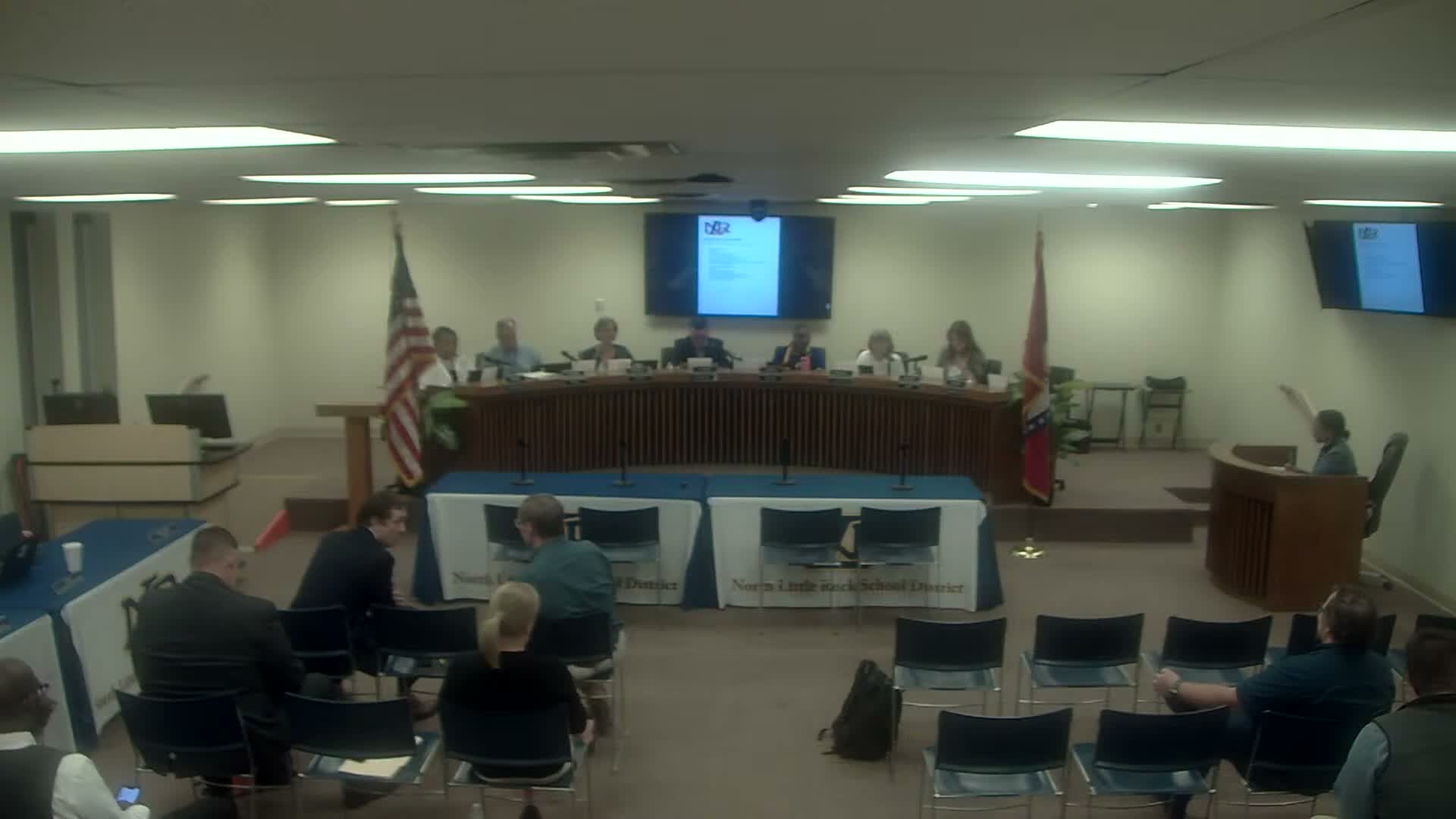
The North Little Rock School District board voted to accept personnel recommended in an executive session and then turned to two high-level draft staff policies at a workshop meeting. Chief of staff Colonel Stanger and department directors presented an attendance policy for classified (hourly) staff and a broader professionalism policy for all employees.
Administrators said the attendance policy aims to standardize how the district counts tardiness and absences for hourly workers and to give supervisors a consistent rubric for progressive discipline. "There's not a policy out there that explains that," Colonel Stanger said, arguing the draft would put "everybody in the same sheet of music." Directors described operational impacts the policy is intended to address: Isaiah Washington, director of facilities and maintenance, said custodial staffing data showed substantial shortfalls — in April, some weeks showed only about 33–45% of custodians working a full 40‑hour week — leaving supervisors to rely on costly temporary agencies and forcing administrators to cover duties outside their roles.
"We started with — using data — the amount of employees from just custodians that worked of the 60 employees in the month of April, week 1 only 33% worked 40 hours," Washington said. Robert Ginder, director of child nutrition, said his department averaged about 50 fewer labor hours per day than contract staffing required, leaving meal service strained.
Board members pressed for details about supervisory discretion, probationary periods and how points would accrue and reset. Administrators said the policy includes a built-in probationary window for new hires and that points would be reset every contract year: "We're gonna reset them every contract year," Colonel Stanger said. They emphasized supervisors would retain some discretion for one-off, documented situations — for example, allowing an employee to make up missed time when a personal emergency requires a late arrival — but said the rubric is intended to prevent inconsistent enforcement across departments.
The professionalism policy was presented as a companion item intended to consolidate scattered standards and reduce the administrative burden of repeated investigations. Chief of staff Colonel Stanger summarized the district's recent disciplinary workload: since January 2026 the district has opened roughly 40–45 investigations, and administrators reported roughly 11 terminations, 10 suspensions and multiple resignations in lieu of termination. "If I could sum all those investigations up… two words: unprofessional behavior," Stanger said, arguing a clearer policy would help supervisors and employees understand expectations and reduce recurring problems.
Administrators said both draft policies have been reviewed by the policy development process; the administration brought them to the board as information items after committee review rather than seeking final action at the same meeting. One administration representative said the draft had been considered at the representative committee (CPPC) and that committee had not approved it, but that the administration wanted board input before deciding next steps. The presenters recommended additional edits — including explicit language about supervisory discretion and training for supervisors — and said implementation would include supervisor training and a July 1 start date for application of the rubric rather than immediate enforcement.
The board took no formal final action on the policies at the workshop; members agreed to additional review, recommended tighter rubrics in places where enforcement could appear subjective, and asked that HR and policy staff return with refined drafts and implementation materials. The acceptance of personnel from the executive session was recorded on the public roll call and the motion passed; the board then closed the special meeting and proceeded with the workshop presentation.
Next steps: administrators will revise the drafts to clarify supervisory discretion, probationary language and training requirements, circulate color/formatting and rubric examples to the board for review, and return the policies for possible board action in a future meeting.
Administrators said the attendance policy aims to standardize how the district counts tardiness and absences for hourly workers and to give supervisors a consistent rubric for progressive discipline. "There's not a policy out there that explains that," Colonel Stanger said, arguing the draft would put "everybody in the same sheet of music." Directors described operational impacts the policy is intended to address: Isaiah Washington, director of facilities and maintenance, said custodial staffing data showed substantial shortfalls — in April, some weeks showed only about 33–45% of custodians working a full 40‑hour week — leaving supervisors to rely on costly temporary agencies and forcing administrators to cover duties outside their roles.
"We started with — using data — the amount of employees from just custodians that worked of the 60 employees in the month of April, week 1 only 33% worked 40 hours," Washington said. Robert Ginder, director of child nutrition, said his department averaged about 50 fewer labor hours per day than contract staffing required, leaving meal service strained.
Board members pressed for details about supervisory discretion, probationary periods and how points would accrue and reset. Administrators said the policy includes a built-in probationary window for new hires and that points would be reset every contract year: "We're gonna reset them every contract year," Colonel Stanger said. They emphasized supervisors would retain some discretion for one-off, documented situations — for example, allowing an employee to make up missed time when a personal emergency requires a late arrival — but said the rubric is intended to prevent inconsistent enforcement across departments.
The professionalism policy was presented as a companion item intended to consolidate scattered standards and reduce the administrative burden of repeated investigations. Chief of staff Colonel Stanger summarized the district's recent disciplinary workload: since January 2026 the district has opened roughly 40–45 investigations, and administrators reported roughly 11 terminations, 10 suspensions and multiple resignations in lieu of termination. "If I could sum all those investigations up… two words: unprofessional behavior," Stanger said, arguing a clearer policy would help supervisors and employees understand expectations and reduce recurring problems.
Administrators said both draft policies have been reviewed by the policy development process; the administration brought them to the board as information items after committee review rather than seeking final action at the same meeting. One administration representative said the draft had been considered at the representative committee (CPPC) and that committee had not approved it, but that the administration wanted board input before deciding next steps. The presenters recommended additional edits — including explicit language about supervisory discretion and training for supervisors — and said implementation would include supervisor training and a July 1 start date for application of the rubric rather than immediate enforcement.
The board took no formal final action on the policies at the workshop; members agreed to additional review, recommended tighter rubrics in places where enforcement could appear subjective, and asked that HR and policy staff return with refined drafts and implementation materials. The acceptance of personnel from the executive session was recorded on the public roll call and the motion passed; the board then closed the special meeting and proceeded with the workshop presentation.
Next steps: administrators will revise the drafts to clarify supervisory discretion, probationary language and training requirements, circulate color/formatting and rubric examples to the board for review, and return the policies for possible board action in a future meeting.
View the Full Meeting & All Its Details
This article offers just a summary. Unlock complete video, transcripts, and insights as a Founder Member.
✓
Watch full, unedited meeting videos
✓
Search every word spoken in unlimited transcripts
✓
AI summaries & real-time alerts (all government levels)
✓
Permanent access to expanding government content
30-day money-back guarantee
