Public debate at PGUSD meeting spotlights concerns about screen time and AI in schools
May 08, 2026 | Pacific Grove Unified, School Districts, California
This article was created by AI summarizing key points discussed. AI makes mistakes, so for full details and context, please refer to the video of the full meeting. Please report any errors so we can fix them. Report an error »
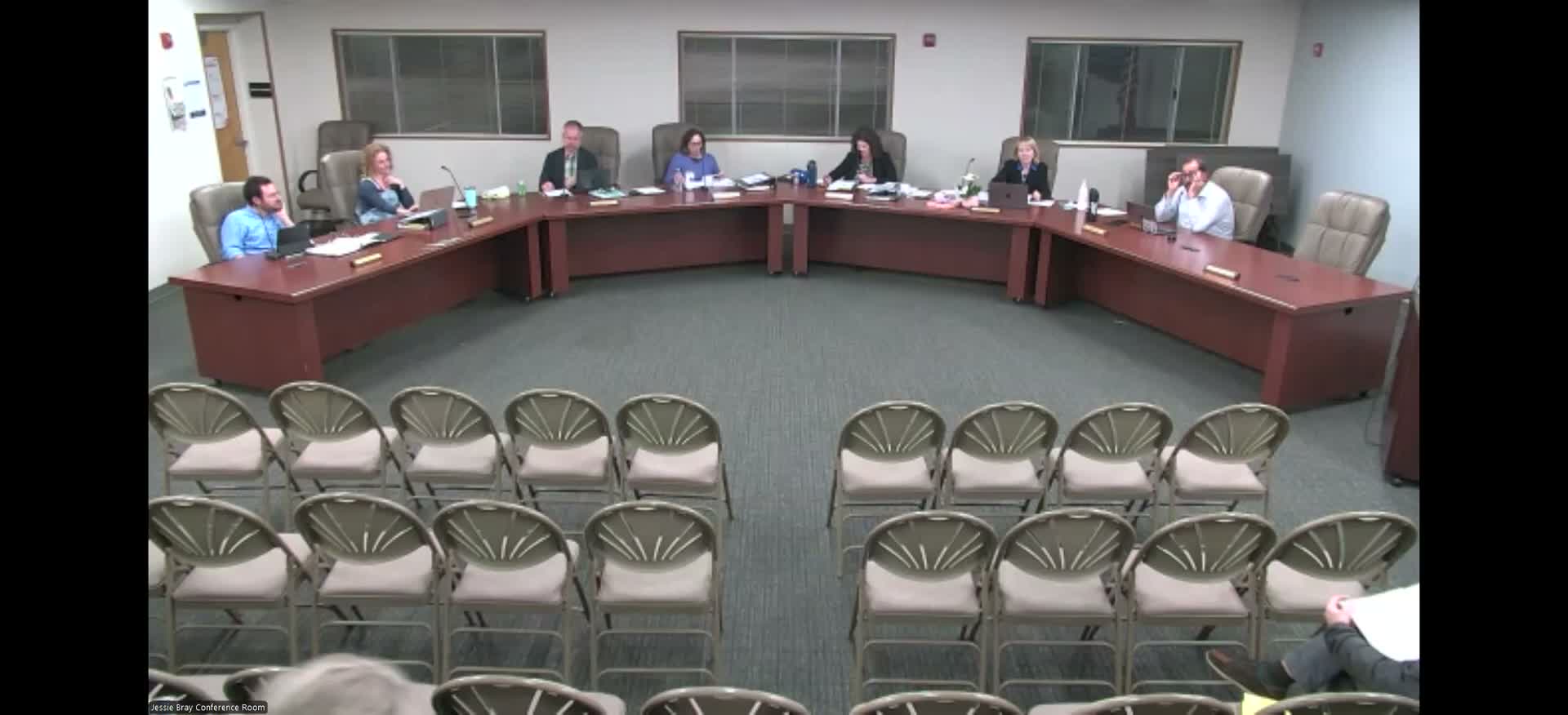
The Pacific Grove Unified School District presented a draft educational-technology plan for 2026–2029 that lays out six priority areas—classroom technology, digital safety/data protection, AI integration, technology management and support, service/support models and signature projects—and a grade-level screen-time framework intended to guide teachers.
Director Binder described the framework as research-based and rooted in active engagement and developmental appropriateness. "This plan represents basically what I would consider a philosophical road map to how we envision managing technological resources both at the classroom level and broader enterprise level," Binder said, citing sources including EverySchool.org, the SAMR model and ISTE standards. Director Algazi outlined cybersecurity measures (next-generation antivirus, two-factor authentication rollout, email filtering) and said only the district's internal Gemini AI will be available to staff while other AI tools are blocked for students for now.
Public commenters and trustees pressed for more specifics. Parents and district staff urged stricter limits on early-grade device use, questioned proposed time allocations for TK–5, asked how the district would enforce screen-time limits across multiple teachers at secondary levels, and requested opt-in/opt-out mechanisms for families. One parent-mitchell said, "I don't see that there is a need for 1-to-1 iPad devices in TK–1," and another recommended eliminating screen-based homework in K–5. Trustees echoed concerns about ergonomic impacts, consistent practice across grade bands, and the need for PD to ensure technology is used to deepen—not substitute—learning.
District leaders acknowledged public concerns and said the plan is a "living document". Director Binder and Dr. Adamson committed to incorporating feedback, adding clearer enforcement metrics (quantitative monitoring of network usage and qualitative classroom observation), and returning a revised plan to the board on June 4 for further review.
Director Binder described the framework as research-based and rooted in active engagement and developmental appropriateness. "This plan represents basically what I would consider a philosophical road map to how we envision managing technological resources both at the classroom level and broader enterprise level," Binder said, citing sources including EverySchool.org, the SAMR model and ISTE standards. Director Algazi outlined cybersecurity measures (next-generation antivirus, two-factor authentication rollout, email filtering) and said only the district's internal Gemini AI will be available to staff while other AI tools are blocked for students for now.
Public commenters and trustees pressed for more specifics. Parents and district staff urged stricter limits on early-grade device use, questioned proposed time allocations for TK–5, asked how the district would enforce screen-time limits across multiple teachers at secondary levels, and requested opt-in/opt-out mechanisms for families. One parent-mitchell said, "I don't see that there is a need for 1-to-1 iPad devices in TK–1," and another recommended eliminating screen-based homework in K–5. Trustees echoed concerns about ergonomic impacts, consistent practice across grade bands, and the need for PD to ensure technology is used to deepen—not substitute—learning.
District leaders acknowledged public concerns and said the plan is a "living document". Director Binder and Dr. Adamson committed to incorporating feedback, adding clearer enforcement metrics (quantitative monitoring of network usage and qualitative classroom observation), and returning a revised plan to the board on June 4 for further review.
View the Full Meeting & All Its Details
This article offers just a summary. Unlock complete video, transcripts, and insights as a Founder Member.
✓
Watch full, unedited meeting videos
✓
Search every word spoken in unlimited transcripts
✓
AI summaries & real-time alerts (all government levels)
✓
Permanent access to expanding government content
30-day money-back guarantee
