Keene council approves narrow-lot rezoning after heated debate over notice and lot design
May 08, 2026 | Keene, Johnson County, Texas
This article was created by AI summarizing key points discussed. AI makes mistakes, so for full details and context, please refer to the video of the full meeting. Please report any errors so we can fix them. Report an error »
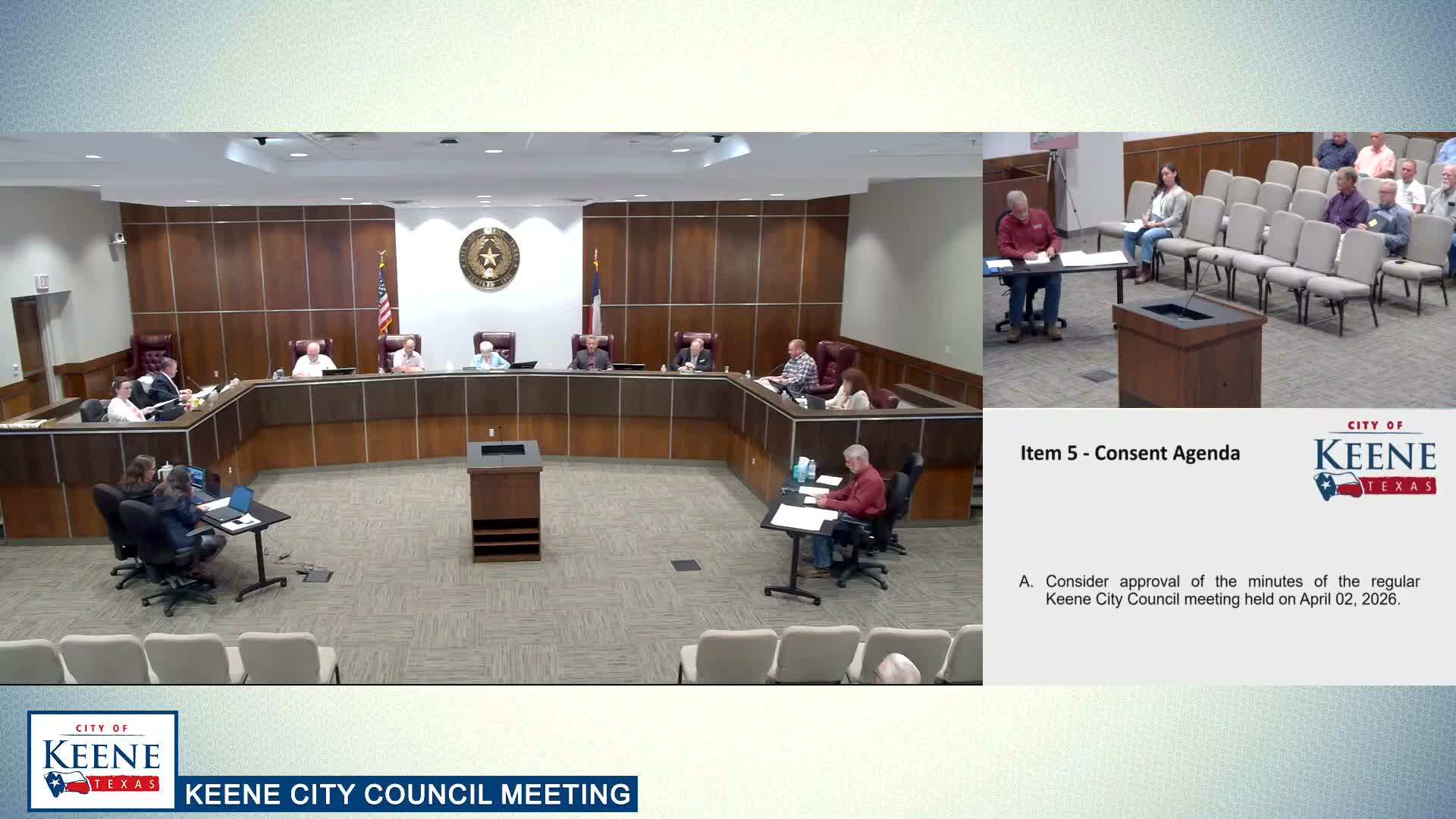
The Keene City Council voted to rezone a 9.27-acre tract in the Jeremiah Williams survey from agriculture to single-family SF-2 after extended discussion and a return vote that followed an earlier motion that failed.
The property owner and applicant, Ambition Group LLC, represented by Adam Bartels, told the council the plan was to subdivide the land into roughly 2–3 acre lots to expand housing options while preserving an "estate-style" character. Bartels said the only practical way to meet the city's minimum road-frontage requirements was by creating long, narrow parcels. "We're looking to subdivide this into approximately 2 acre, 2 to 3 acre lots," Bartels said during the public hearing.
The rezoning drew sustained pushback from neighbors and some council members. Former Mayor Rory Robinson, who said he lives within 200 feet of the proposed development, told the council he and several neighbors did not receive mailed notices about the hearing: "I didn't get anything, and some other people in the area didn't either," he said. Other residents and council members described the proposed lots as "very long and very skinny," raising concerns about compatibility with surrounding properties, traffic, septic/sewer access and whether the layout represented the best use of land.
City staff and the Planning & Zoning Commission supported the rezoning on procedural grounds. The P&Z representative reported that the commission met and recommended approval, saying the narrow lots were designed to meet the city's 75-foot fronting requirement for SF-2 parcels. City staff also explained the legal notice requirements and said mailings had been sent by first-class mail; the city attorney noted that failure of an individual to receive a mailed notice does not automatically void the process if the city can demonstrate it complied with statute.
Council members divided over whether to demand a more conventional plat with a new road or to approve the applicant's proposal as the most feasible path without large infrastructure costs. One council member urged practical consideration for the owner, noting the tract currently generates no revenue for the city and that some decisions could be revisited by a future buyer. Ultimately a motion to approve the rezoning carried after the item was reconsidered on the floor.
Next steps: The council approved the rezoning ordinance to SF-2; the applicant may proceed with platting options consistent with that zoning or return with revised plats if a different configuration is desired. The council recorded the discussion and deferred more detailed civil-infrastructure decisions (streets, drainage, sewer) to future permitting and platting reviews.
The property owner and applicant, Ambition Group LLC, represented by Adam Bartels, told the council the plan was to subdivide the land into roughly 2–3 acre lots to expand housing options while preserving an "estate-style" character. Bartels said the only practical way to meet the city's minimum road-frontage requirements was by creating long, narrow parcels. "We're looking to subdivide this into approximately 2 acre, 2 to 3 acre lots," Bartels said during the public hearing.
The rezoning drew sustained pushback from neighbors and some council members. Former Mayor Rory Robinson, who said he lives within 200 feet of the proposed development, told the council he and several neighbors did not receive mailed notices about the hearing: "I didn't get anything, and some other people in the area didn't either," he said. Other residents and council members described the proposed lots as "very long and very skinny," raising concerns about compatibility with surrounding properties, traffic, septic/sewer access and whether the layout represented the best use of land.
City staff and the Planning & Zoning Commission supported the rezoning on procedural grounds. The P&Z representative reported that the commission met and recommended approval, saying the narrow lots were designed to meet the city's 75-foot fronting requirement for SF-2 parcels. City staff also explained the legal notice requirements and said mailings had been sent by first-class mail; the city attorney noted that failure of an individual to receive a mailed notice does not automatically void the process if the city can demonstrate it complied with statute.
Council members divided over whether to demand a more conventional plat with a new road or to approve the applicant's proposal as the most feasible path without large infrastructure costs. One council member urged practical consideration for the owner, noting the tract currently generates no revenue for the city and that some decisions could be revisited by a future buyer. Ultimately a motion to approve the rezoning carried after the item was reconsidered on the floor.
Next steps: The council approved the rezoning ordinance to SF-2; the applicant may proceed with platting options consistent with that zoning or return with revised plats if a different configuration is desired. The council recorded the discussion and deferred more detailed civil-infrastructure decisions (streets, drainage, sewer) to future permitting and platting reviews.
View the Full Meeting & All Its Details
This article offers just a summary. Unlock complete video, transcripts, and insights as a Founder Member.
✓
Watch full, unedited meeting videos
✓
Search every word spoken in unlimited transcripts
✓
AI summaries & real-time alerts (all government levels)
✓
Permanent access to expanding government content
30-day money-back guarantee
