Senate narrows private right of action in H.816 on AI use in mental health services and passes the bill
May 09, 2026 | SENATE, Committees, Legislative , Vermont
This article was created by AI summarizing key points discussed. AI makes mistakes, so for full details and context, please refer to the video of the full meeting. Please report any errors so we can fix them. Report an error »
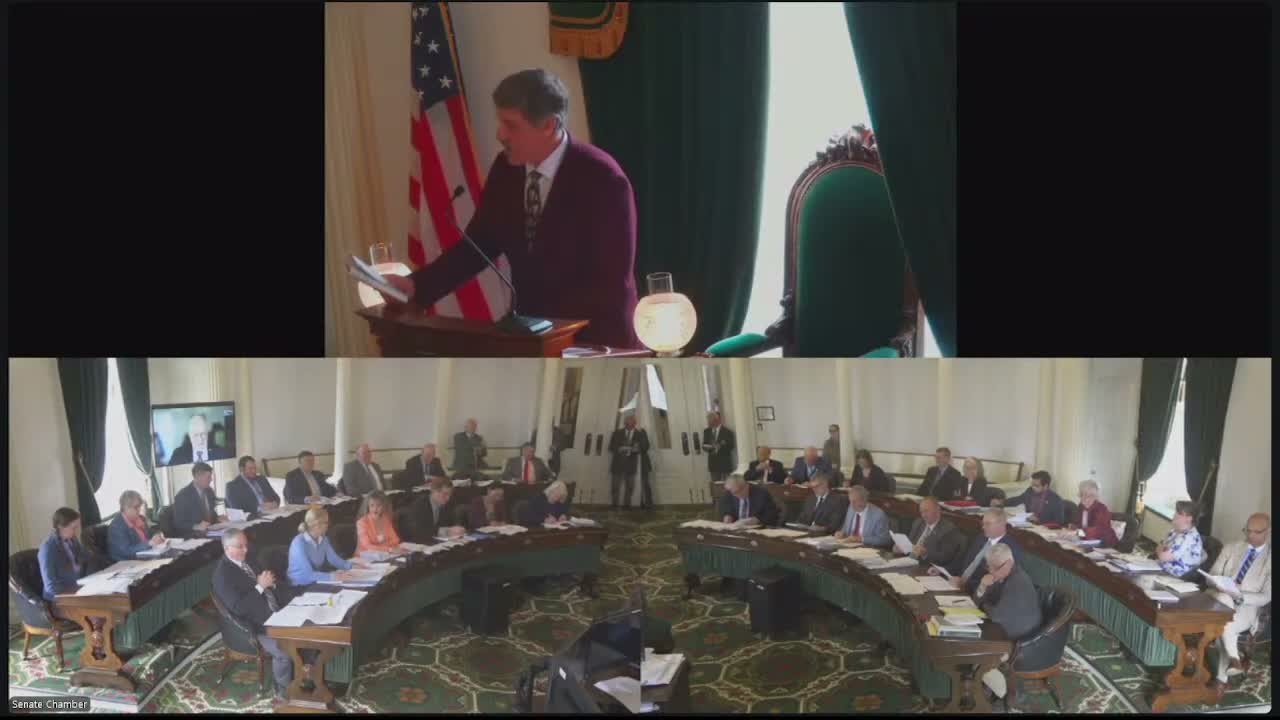
The Senate amended and passed H.816, an act regulating the use of artificial intelligence in the provision of mental health services. On third reading a senator from Wyndham offered an amendment to clarify language and narrow a private right of action so that liability aligns with traditional duty-of-care principles and is focused on licensed professionals and entities responsible for care.
During floor questioning senators sought clarification about the term “entity,” asking whether it would include corporations, AI systems, or non‑licensed individuals. The sponsor and other senators said the amendment intentionally narrowed the private right of action to avoid penalizing parents or other non‑professionals who consult AI for information, while preserving civil remedies when a defendant with a duty of care breaches that duty and causes injury.
After a brief recess for counsel consultation and colleague conferral, supporters said the amended language was appropriately targeted and the presiding officer put the amendment to the chamber. The amendment was adopted by voice vote, and a subsequent third reading and concurrence vote passed H.816.
Senator Madison raised process cautions about regulating AI and noted that AI usage is evolving; other senators emphasized the need to balance consumer protection with avoiding overly broad private litigation exposure. The bill now proceeds as passed in concurrence with the House.
During floor questioning senators sought clarification about the term “entity,” asking whether it would include corporations, AI systems, or non‑licensed individuals. The sponsor and other senators said the amendment intentionally narrowed the private right of action to avoid penalizing parents or other non‑professionals who consult AI for information, while preserving civil remedies when a defendant with a duty of care breaches that duty and causes injury.
After a brief recess for counsel consultation and colleague conferral, supporters said the amended language was appropriately targeted and the presiding officer put the amendment to the chamber. The amendment was adopted by voice vote, and a subsequent third reading and concurrence vote passed H.816.
Senator Madison raised process cautions about regulating AI and noted that AI usage is evolving; other senators emphasized the need to balance consumer protection with avoiding overly broad private litigation exposure. The bill now proceeds as passed in concurrence with the House.
View the Full Meeting & All Its Details
This article offers just a summary. Unlock complete video, transcripts, and insights as a Founder Member.
✓
Watch full, unedited meeting videos
✓
Search every word spoken in unlimited transcripts
✓
AI summaries & real-time alerts (all government levels)
✓
Permanent access to expanding government content
30-day money-back guarantee
