Senate advances H.944 transportation bill after hours of debate; finance substitute and appropriations amendments approved
May 09, 2026 | SENATE, Committees, Legislative , Vermont
This article was created by AI summarizing key points discussed. AI makes mistakes, so for full details and context, please refer to the video of the full meeting. Please report any errors so we can fix them. Report an error »
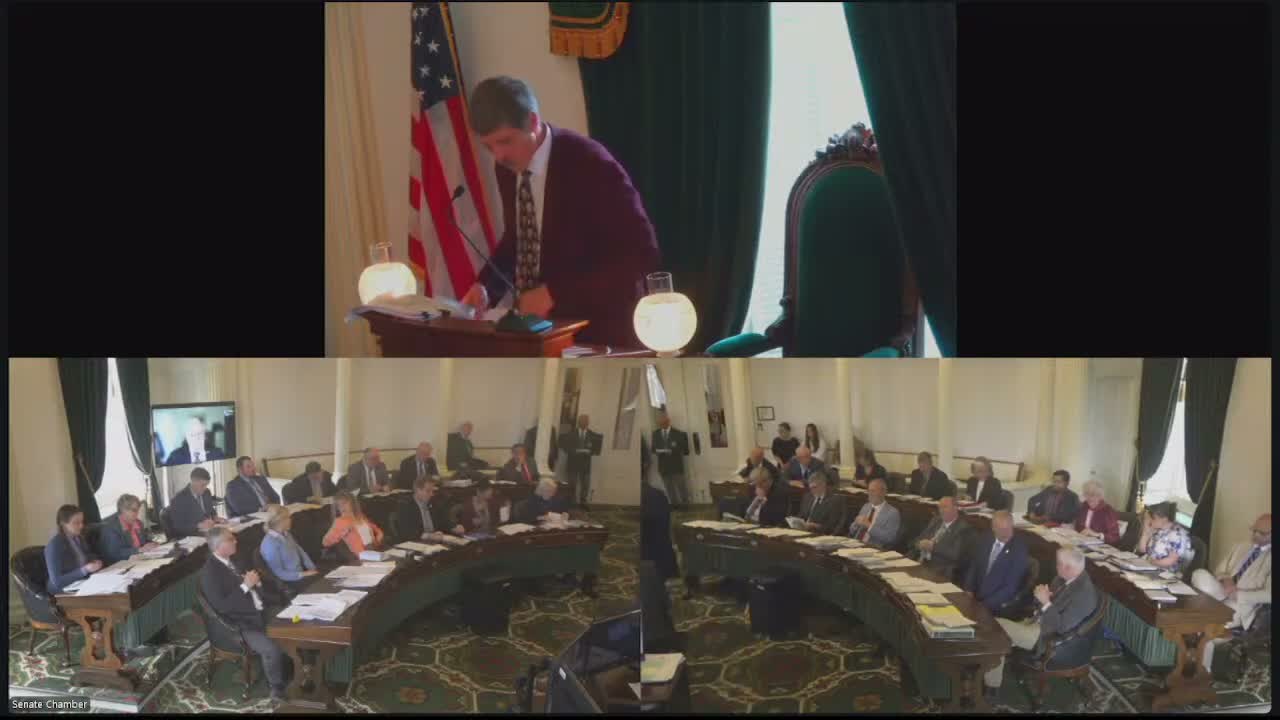
The Senate spent an extended session on H.944, the FY27 transportation program and related statutory changes, receiving detailed committee reports and approving committee amendments and substitutes before ordering the bill for third reading.
Transportation committee members outlined findings that revenue shortfalls and a sharp rise in construction costs threaten the state's ability to maintain roads and bridges. The committee proposed targeted investments — including increases in paving and the shim program for high‑need roads — and identified constraints such as staffing reductions and steep construction‑cost increases (committee presenters cited a roughly 60% rise in the National Highway Construction Cost Index from 2020–2025).
The bill includes a new authorization to issue Transportation Infrastructure Bonds (TIBs) for FY2028–FY2032, contingent on further review by the treasurer and debt‑affordability advisory committee; a sample treasurer analysis was cited showing a $50 million TIB would incur roughly $3.6 million in annual payments in one scenario. The measure also contains a phased mileage‑based user fee (MBUF) plan: initial implementation targeted at battery electric vehicles beginning with odometer‑based reporting in 2027, an $89 baseline for EVs (with alternatives), and expansion to hybrids by 2029 under the substitute amendment. Speakers described multiple payment and reporting options, credits for gas tax already paid, administrative appeal rights, and penalties for nonpayment tied to vehicle registration denial.
Finance moved a substitute amendment that reintroduced or modified out‑year enactments for hybrids and created a fuel tax credit calculation for hybrids to avoid double taxation; the chamber approved the substitute by voice vote. Appropriations offered amendments removing sections related to the local option tax and adjusting appropriations, and added $300,000 for medical transport items; those amendments were accepted. Following floor questions about implementation logistics — how MBUF dollars would flow through inspection and registration processes — senators explained the fees would be assessed as part of vehicle registration and that DMV and AOT would develop forms and digital accounts and that a federal grant (approximately $3 million) will fund much of the IT and planning work.
Committee chairs emphasized the complexity and multi‑year nature of MBUF implementation and said the substitute balances starting implementation with a plan for federal‑funded studies and staged rollouts. After votes on committee substitutes and approvals of appropriations changes, the Senate proposed to the House to amend H.944 as recommended and ordered the bill for third reading.
Transportation committee members outlined findings that revenue shortfalls and a sharp rise in construction costs threaten the state's ability to maintain roads and bridges. The committee proposed targeted investments — including increases in paving and the shim program for high‑need roads — and identified constraints such as staffing reductions and steep construction‑cost increases (committee presenters cited a roughly 60% rise in the National Highway Construction Cost Index from 2020–2025).
The bill includes a new authorization to issue Transportation Infrastructure Bonds (TIBs) for FY2028–FY2032, contingent on further review by the treasurer and debt‑affordability advisory committee; a sample treasurer analysis was cited showing a $50 million TIB would incur roughly $3.6 million in annual payments in one scenario. The measure also contains a phased mileage‑based user fee (MBUF) plan: initial implementation targeted at battery electric vehicles beginning with odometer‑based reporting in 2027, an $89 baseline for EVs (with alternatives), and expansion to hybrids by 2029 under the substitute amendment. Speakers described multiple payment and reporting options, credits for gas tax already paid, administrative appeal rights, and penalties for nonpayment tied to vehicle registration denial.
Finance moved a substitute amendment that reintroduced or modified out‑year enactments for hybrids and created a fuel tax credit calculation for hybrids to avoid double taxation; the chamber approved the substitute by voice vote. Appropriations offered amendments removing sections related to the local option tax and adjusting appropriations, and added $300,000 for medical transport items; those amendments were accepted. Following floor questions about implementation logistics — how MBUF dollars would flow through inspection and registration processes — senators explained the fees would be assessed as part of vehicle registration and that DMV and AOT would develop forms and digital accounts and that a federal grant (approximately $3 million) will fund much of the IT and planning work.
Committee chairs emphasized the complexity and multi‑year nature of MBUF implementation and said the substitute balances starting implementation with a plan for federal‑funded studies and staged rollouts. After votes on committee substitutes and approvals of appropriations changes, the Senate proposed to the House to amend H.944 as recommended and ordered the bill for third reading.
View the Full Meeting & All Its Details
This article offers just a summary. Unlock complete video, transcripts, and insights as a Founder Member.
✓
Watch full, unedited meeting videos
✓
Search every word spoken in unlimited transcripts
✓
AI summaries & real-time alerts (all government levels)
✓
Permanent access to expanding government content
30-day money-back guarantee
