Municipal advisers present TIF outlook; town sees $5.2M projected revenue for 2026
May 08, 2026 | Mooresville Town, Morgan County, Indiana
This article was created by AI summarizing key points discussed. AI makes mistakes, so for full details and context, please refer to the video of the full meeting. Please report any errors so we can fix them. Report an error »
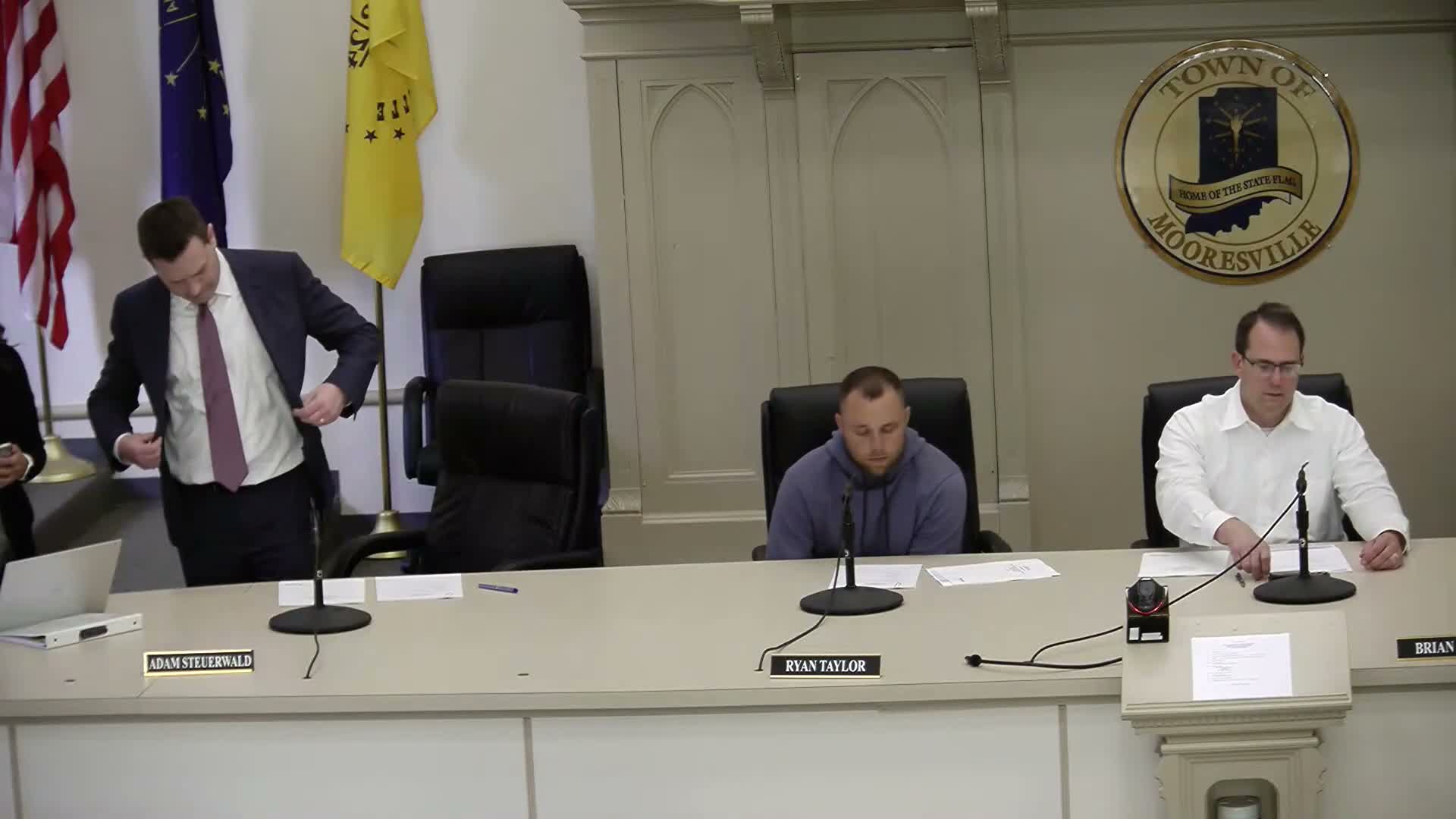
Sam Schrader, municipal adviser with Baker Tilly, told the Mooresville Redevelopment Commission on May 7 that the town’s three tax increment financing (TIF) areas produced about $3.8 million in actual collections for 2025, below an earlier projection of just over $4 million.
"We are anticipating a bump in revenue for '26," Schrader said, projecting roughly $5.2 million for 2026. He cautioned that legislative changes to property-tax deductions rolling in from pay 2026 through 2031 could cause a slight decline in collections beginning in pay 2027.
The presentation outlined two long-term obligations supported by TIF: taxable tax-increment refunding bonds issued in 2021, with $8.9 million principal outstanding and an interest rate the presenter described as "sub‑3%," and 2010 SRF bonds to which TIF contributes about $300,000 annually. Schrader said the 2021 refunding bonds become redeemable beginning in July.
Schrader also reviewed how TIF revenues have been deployed, citing a recent $2.7 million commitment to a sewer expansion along with funding for a fire station, park upgrades and other infrastructure and economic development projects. He presented a tentative budget for 2025–26 showing debt service and professional services remaining broadly consistent with prior years.
On the mechanics of TIF, Schrader explained that the base assessed value of parcels remains with overlapping taxing units (town, county, township, schools, library) while assessed-value growth above that base is captured by the redevelopment district. He offered a hypothetical "release" scenario showing that returning captured assessed value to overlapping units would lower tax rates (he estimated an illustrative 30‑cent reduction in his example) but emphasized this is not a dollar‑for‑dollar transfer of revenue to those units.
Chelsea (staff member) noted a practical caveat: outstanding debt can limit how much assessed value the commission can pass through. "Because we have outstanding debt, we cannot pass it all through," she said, explaining the commission must decide by June 15 whether any pass‑through of assessed value will occur.
The presentation concluded with Baker Tilly contact information and an offer to provide more detailed delinquency lists from the auditor’s office if the commission wanted them.
Next steps: commissioners can follow up with Baker Tilly and consider the June 15 pass‑through decision in light of outstanding debt and project commitments.
"We are anticipating a bump in revenue for '26," Schrader said, projecting roughly $5.2 million for 2026. He cautioned that legislative changes to property-tax deductions rolling in from pay 2026 through 2031 could cause a slight decline in collections beginning in pay 2027.
The presentation outlined two long-term obligations supported by TIF: taxable tax-increment refunding bonds issued in 2021, with $8.9 million principal outstanding and an interest rate the presenter described as "sub‑3%," and 2010 SRF bonds to which TIF contributes about $300,000 annually. Schrader said the 2021 refunding bonds become redeemable beginning in July.
Schrader also reviewed how TIF revenues have been deployed, citing a recent $2.7 million commitment to a sewer expansion along with funding for a fire station, park upgrades and other infrastructure and economic development projects. He presented a tentative budget for 2025–26 showing debt service and professional services remaining broadly consistent with prior years.
On the mechanics of TIF, Schrader explained that the base assessed value of parcels remains with overlapping taxing units (town, county, township, schools, library) while assessed-value growth above that base is captured by the redevelopment district. He offered a hypothetical "release" scenario showing that returning captured assessed value to overlapping units would lower tax rates (he estimated an illustrative 30‑cent reduction in his example) but emphasized this is not a dollar‑for‑dollar transfer of revenue to those units.
Chelsea (staff member) noted a practical caveat: outstanding debt can limit how much assessed value the commission can pass through. "Because we have outstanding debt, we cannot pass it all through," she said, explaining the commission must decide by June 15 whether any pass‑through of assessed value will occur.
The presentation concluded with Baker Tilly contact information and an offer to provide more detailed delinquency lists from the auditor’s office if the commission wanted them.
Next steps: commissioners can follow up with Baker Tilly and consider the June 15 pass‑through decision in light of outstanding debt and project commitments.
View the Full Meeting & All Its Details
This article offers just a summary. Unlock complete video, transcripts, and insights as a Founder Member.
✓
Watch full, unedited meeting videos
✓
Search every word spoken in unlimited transcripts
✓
AI summaries & real-time alerts (all government levels)
✓
Permanent access to expanding government content
30-day money-back guarantee
