Council reviews major overhaul of animal‑keeping rules and proposed expansion of equestrian overlay
May 07, 2026 | Jurupa Valley, Riverside County, California
This article was created by AI summarizing key points discussed. AI makes mistakes, so for full details and context, please refer to the video of the full meeting. Please report any errors so we can fix them. Report an error »
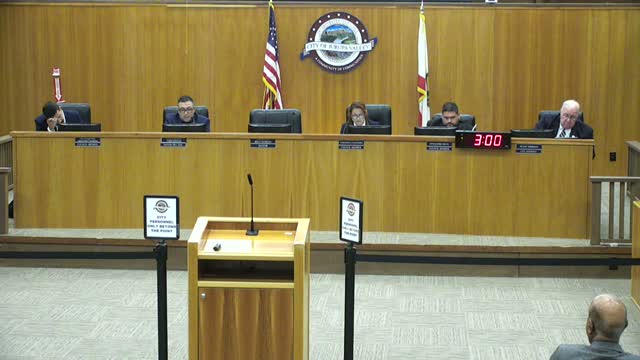
City planning staff presented a comprehensive update to Jurupa Valley’s animal‑keeping rules and an expansion of the equestrian lifestyle protection overlay during Wednesday’s council meeting, proposing a point‑based system to give residents flexible mixes of animals while adding minimum standards and best‑management practices.
Principal Planner Jim Petches described a model that converts the earlier ‘‘animal unit’’ framework into an "animal allowance per acre" and raises the proposed upper limit to 15 points per acre. Using staff’s example, that allowance could be spent on combinations such as six horses, three cattle, 15 goats, 10 sheep and 25 chickens on larger parcels; smaller residential lots would have a by‑right floor that allows up to 15 poultry or small animals, up to two miniature pigs and up to four medium‑sized animals with more intensive uses subject to a minor permit.
Petches said staff recommends adopting a default poultry ratio of one rooster per 15 hens in residential animal‑keeping zones to balance breeding needs and noise control, while allowing an animal‑permit exception for residents with specialized needs (for example breeders). He also proposed reducing farm‑structure side and rear setbacks to 5 feet, retaining a 50‑foot separation between farm structures and neighboring homes for noise and odor mitigation, and requiring permit applicants seeking additional animals to demonstrate compliance with best‑management practices (manure handling, drainage, feed storage, shelter, dust and vector control).
The draft includes a one‑year compliance/grace period from the ordinance’s effective date to allow existing properties time to adjust by attrition, relocation or application for a permit.
Councilmembers voiced broad support for the framework but asked staff to refine geography‑specific overlays and mapping. Several councilmembers asked staff to expand the equestrian overlay in areas they identified — including around the Pedley Metrolink station, portions north of Mission Boulevard and around existing feed‑store nodes — and asked that the ordinance explicitly protect youth agricultural programs (4‑H, FFA) and educational uses. Councilmember Carmona asked for a two‑tier permit approach so staff can process straightforward minor permits quickly while reserving more intensive review for higher‑impact requests.
Petches said staff will draft a formal General Plan amendment and zoning code changes, prepare required CEQA analysis, and return materials for public hearings at the Planning Commission and City Council.
What’s next: staff will incorporate council direction on overlay boundaries and permit clarity, propose fees consistent with statutory cost‑recovery, and return with the draft ordinance and environmental review for formal consideration.
Principal Planner Jim Petches described a model that converts the earlier ‘‘animal unit’’ framework into an "animal allowance per acre" and raises the proposed upper limit to 15 points per acre. Using staff’s example, that allowance could be spent on combinations such as six horses, three cattle, 15 goats, 10 sheep and 25 chickens on larger parcels; smaller residential lots would have a by‑right floor that allows up to 15 poultry or small animals, up to two miniature pigs and up to four medium‑sized animals with more intensive uses subject to a minor permit.
Petches said staff recommends adopting a default poultry ratio of one rooster per 15 hens in residential animal‑keeping zones to balance breeding needs and noise control, while allowing an animal‑permit exception for residents with specialized needs (for example breeders). He also proposed reducing farm‑structure side and rear setbacks to 5 feet, retaining a 50‑foot separation between farm structures and neighboring homes for noise and odor mitigation, and requiring permit applicants seeking additional animals to demonstrate compliance with best‑management practices (manure handling, drainage, feed storage, shelter, dust and vector control).
The draft includes a one‑year compliance/grace period from the ordinance’s effective date to allow existing properties time to adjust by attrition, relocation or application for a permit.
Councilmembers voiced broad support for the framework but asked staff to refine geography‑specific overlays and mapping. Several councilmembers asked staff to expand the equestrian overlay in areas they identified — including around the Pedley Metrolink station, portions north of Mission Boulevard and around existing feed‑store nodes — and asked that the ordinance explicitly protect youth agricultural programs (4‑H, FFA) and educational uses. Councilmember Carmona asked for a two‑tier permit approach so staff can process straightforward minor permits quickly while reserving more intensive review for higher‑impact requests.
Petches said staff will draft a formal General Plan amendment and zoning code changes, prepare required CEQA analysis, and return materials for public hearings at the Planning Commission and City Council.
What’s next: staff will incorporate council direction on overlay boundaries and permit clarity, propose fees consistent with statutory cost‑recovery, and return with the draft ordinance and environmental review for formal consideration.
View the Full Meeting & All Its Details
This article offers just a summary. Unlock complete video, transcripts, and insights as a Founder Member.
✓
Watch full, unedited meeting videos
✓
Search every word spoken in unlimited transcripts
✓
AI summaries & real-time alerts (all government levels)
✓
Permanent access to expanding government content
30-day money-back guarantee
